If you’re running a small to medium-sized enterprise (SME) in the UK, you know the drill. You spend a significant portion of your hard-earned revenue on marketing. You pay for Google Ads, you invest in SEO, and you might even have a social media manager posting updates to keep your brand alive. But here’s the million-pound question: what happens when someone actually shows interest?
Most business owners I talk to are obsessed with "more leads." They think more traffic equals more money. But there is a massive gap, a "leaky bucket", between someone clicking your ad and money landing in your bank account. That gap is lead handling.
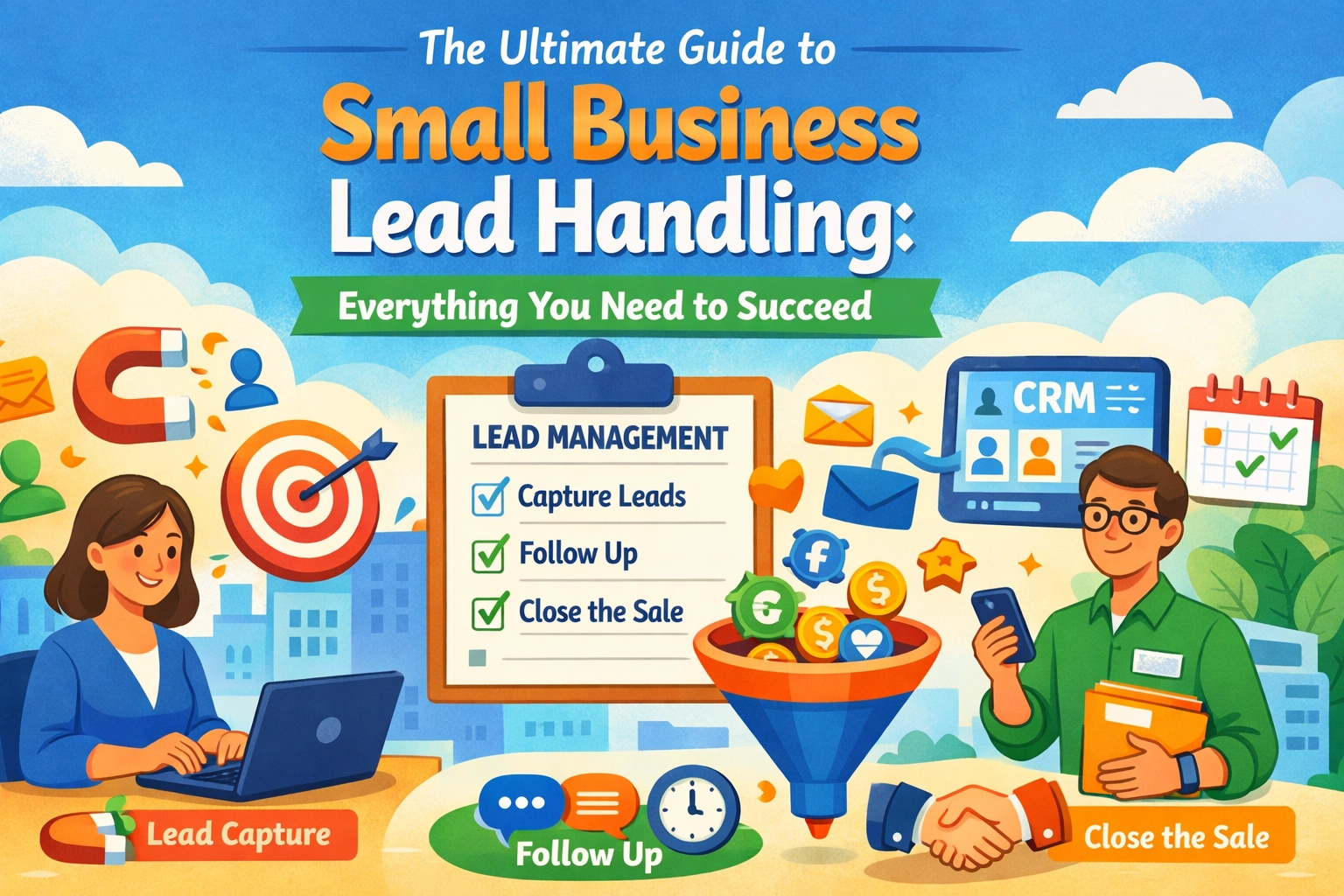
In this guide, we’re going to stop the leak. We’re moving away from the "hope and pray" method of business growth and looking at a structured system based on Visibility, Response, and Conversion. No jargon, no fluff, just the honest truth about why you’re losing leads and how to fix it.
Phase 1: Visibility – Are You Easy to Find and Easy to Hire?
Visibility isn't just about appearing at the top of a Google search. That’s only half the battle. True visibility for an SME means being accessible at the exact moment a prospect decides they have a problem.
According to Google's research on the "Messy Middle", consumers bounce between exploration and evaluation constantly. If your business is "visible" but looks like a fortress that’s hard to get into, they’ll move to the next person on the list.
The Friction Problem
Most SME websites are accidentally designed to repel leads. You have a "Contact Us" page that requires a 12-field form, or a phone number buried in the footer. If a customer has a burst pipe or needs a solicitor for a property deal, they aren’t going to jump through hoops.
To improve your visibility-to-enquiry ratio, you need to address what Marcus Sheridan calls "The Big 5." You need to talk about price, problems, comparisons, reviews, and best-in-class solutions right there on your site. When you are transparent, you become more visible to the right people.
Social Media Presence
Visibility also extends to where your customers hang out. Are you just posting "Happy Monday" graphics, or are you actually engaging? Many businesses forget that social media is a lead-generation tool, not just a digital billboard. If someone comments on a post asking for a quote and you don't reply for two days, you’ve failed the visibility test.

You can learn more about making your social presence work harder in our guide on social media management being more than just updates.
Phase 2: Response – The "First Reply Wins" Strategy
This is where the wheels usually fall off. You’ve done the hard work. The lead is in. They’ve filled out the form or called the office. Now, the clock is ticking.
In the UK service industry, we have a bit of a reputation for being slow. We’ve all called a tradesperson who never called back, or emailed a firm that replied a week later. As a business owner, you might think, "I’m busy doing the work!" That’s fair, but the customer doesn't care. They care about their problem.
The 2-Minute Rule
Research published by the Harvard Business Review shows that businesses that attempt to contact potential customers within an hour of receiving a query are nearly seven times as likely to have a meaningful conversation with a key decision-maker as those who wait even sixty minutes.
But at Every Enquiry, we advocate for the 2-minute rule. In a world of instant gratification, the first business to reply almost always wins the job. It’s not necessarily the best business or the cheapest business, it’s the one that was there when the customer was ready to buy.
Why Speed is Your Best Sales Tool
When you respond instantly, you do three things:
- You stop the search: The moment you engage, the customer stops looking at your competitors.
- You build trust: A fast response signals that you are professional, organised, and value their time.
- You capture intent: You’re talking to them while the problem is still fresh in their mind.
If you struggle to pick up the phone because you're on a job site or in back-to-back meetings, you need a system. This is where a digital receptionist becomes an absolute game-changer for SMEs.
The Cost of a Missed Call
Let’s do some quick maths. If your average job value is £1,000 and you miss five calls a week that you could have converted, you’re losing £5,000 a week. That’s over a quarter of a million pounds a year. The real cost of slow follow-up is usually the difference between a business that’s "getting by" and one that’s dominating its local market.
Phase 3: Conversion – Turning Enquiries into Income
So, you’re visible and you’ve responded quickly. Now, how do you actually close the deal? Lead conversion for SMEs isn't about high-pressure sales tactics. It’s about enquiry management and structured follow-up.
Stop Using Spreadsheets
If your lead tracking consists of a stack of Post-it notes or an Excel spreadsheet that hasn't been updated since 2023, you’re killing your growth. Spreadsheets are where leads go to die.
A proper enquiry management system (or CRM) allows you to:
- See exactly where every lead is in the journey.
- Set automated reminders to follow up.
- Track which marketing channels are actually making you money.
The Power of the "7 Touches"
Most sales don’t happen on the first call. They happen on the fourth, fifth, or sixth touchpoint. But most small businesses give up after one try. If they don't answer the phone or reply to the first email, we assume they aren't interested.
In reality, people are busy. They get distracted. They lose your email in their "Promotions" tab. A structured follow-up system ensures you stay top-of-mind without being a nuisance. This is the "nurturing" phase that separates the pros from the amateurs.
Addressing Fears and Objections
Using the "They Ask, You Answer" philosophy, your conversion process should involve addressing the customer's fears head-on. If you’re a builder, acknowledge that people are scared of "cowboys." If you’re an accountant, acknowledge that people are scared of HMRC. By being the one to bring up these concerns first, you position yourself as the trusted expert.

Comparing Lead Handling Strategies
To help you visualise where your business currently sits, look at this comparison between the traditional "Busy SME" approach and the "Systematised" approach we implement at Every Enquiry.
| Feature | Traditional SME Approach | Systematised Lead Handling |
|---|---|---|
| Response Time | 4 to 24 hours (or never) | Under 2 minutes |
| Lead Capture | Phone & basic contact form | Multi-channel (Web, Social, Chat) |
| Follow-up | One-and-done attempt | Structured 5-7 touch sequence |
| Data Storage | Notebooks, email inbox, memory | Centralised CRM / Lead System |
| Outcome Tracking | "Feeling" like it's busy | Concrete ROI on every pound spent |
| Customer Perception | Disorganised but "probably okay" | Highly professional & reliable |
| Conversion Rate | 10% – 20% | 40% – 60%+ |
The 3 Systems That Fix "Leaky Enquiries"
If you want to stop losing leads without hiring more office staff, you need to implement three core systems. We’ve written about this in depth in our guide on why your enquiries are leaking, but here is the summary:
1. The Instant Capture System
You need a way to capture leads 24/7. Your website shouldn't sleep just because you do. This means having automated workflows that trigger the moment a form is filled out. An automated "Thanks, we've got your message and we're looking at it now" SMS is ten times more effective than a generic "We'll get back to you soon" email.
2. The Digital Receptionist
For many service businesses, the phone is still king. But you can't always answer it. A digital receptionist ensures that every call is handled professionally, filtered for quality, and booked into your diary or passed to you as a high-priority notification. It’s the "human touch" without the full-time salary.
3. The Re-Engagement Loop
What happens to the leads that said "not right now"? Most businesses ignore them. A re-engagement loop uses simple, educational content (like a monthly newsletter or a helpful guide) to keep you in their thoughts. When they are ready to buy in six months, you’re the only person they call.

Why SMEs Fail at Lead Handling (And How to Not Be One of Them)
The biggest hurdle isn't technology; it's mindset. Many business owners view enquiry handling as a "task" rather than the "core" of their business. They think their job is fixing boilers, or writing contracts, or landscaping gardens.
Actually, your job is customer acquisition. The work itself comes second.
If you aren't converting leads, your marketing spend is a donation to Google. You are essentially paying to find customers for your competitors because, when you don't answer the phone or follow up, that customer just goes back to the search results and clicks the next link.
Common Pitfalls to Avoid:
- The "I’ll do it later" trap: "Later" usually means tomorrow evening when you're tired, and the customer has already booked someone else.
- Assuming price is the only factor: Most people will pay a premium for a business that is responsive and professional. Speed beats price more often than you think.
- Over-complicating the tech: You don't need a million-dollar software suite. You need a few simple, connected tools that work while you're busy.
Final Thoughts: Taking Control of Your Growth
Lead handling is the highest-leverage activity in your business. You can spend thousands on a new website or a fancy van wrap, but nothing will impact your bottom line as quickly as cutting your response time in half and following up twice as often.
At Every Enquiry, we specialise in helping UK service businesses stop the leak. We don't just "do marketing": we ensure that the marketing you're already doing actually turns into revenue.
Whether you need to improve your response times or you're wondering if your website is losing you money, the first step is always the same: admit that the system needs to change.
Don't let another high-quality lead slip through your fingers because you were too busy to answer the phone. Systematise your lead handling today, and watch your conversion rates soar.

Frequently Asked Questions
How much does a missed lead actually cost my business?
The cost is higher than just the lost job value. You have to factor in the "Cost Per Lead" (CPL) you paid in marketing to get that enquiry. If you spend £500 on ads to get 10 leads, and you miss 3 of them, you’ve literally thrown £150 in the bin before you even consider the lost profit from the jobs themselves.
Do I really need a CRM for a small team?
Yes. Even if it’s just you and a van, a CRM (Customer Relationship Management) system prevents things from falling through the cracks. It’s your external brain. If you rely on memory, you will forget to follow up, and you will lose money. See our post on why spreadsheets are killing your growth for more.
What is the ideal response time for a web enquiry?
Ideally, under 5 minutes. Realistically, under 2 minutes. The "Golden Window" for conversion closes incredibly fast. If you wait more than 30 minutes, your chances of qualifying that lead drop by over 80%.
Should I use an automated chatbot?
Chatbots can be useful for gathering basic data (name, email, service required), but they shouldn't replace human interaction for high-ticket service businesses. Use them to "triage" the enquiry and then get a human involved as quickly as possible.
How many times should I follow up before giving up?
The industry standard is usually 5 to 7 "touches." This doesn't mean calling them 7 times a day. It means a mix of a phone call, a follow-up text, an educational email, and perhaps a final "break-up" email to see if they are still interested. Most businesses stop after 1 or 2, which is why the ones who do 5 win all the work.
How can Every Enquiry help my business specifically?
We look at your entire "Enquiry Journey." We identify where people are dropping off, implement the tech to capture them faster, and provide the human-backed systems (like digital receptionists) to ensure you never miss an opportunity again. Check out 10 reasons your lead conversion isn't working to see where you might be struggling.