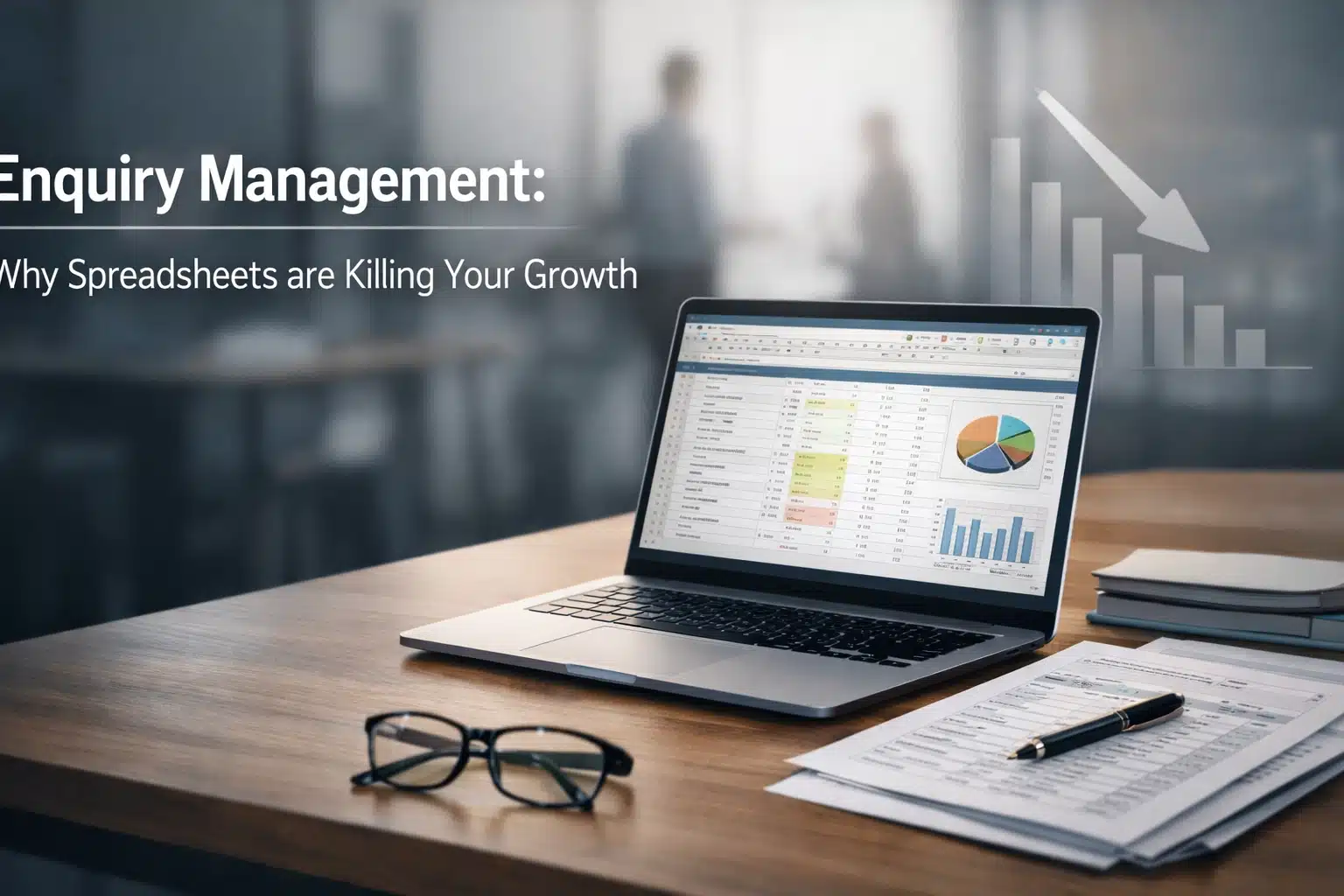
Let's be honest. If you're still using spreadsheets to manage your enquiries, you're losing business. Not occasionally. Daily.
You probably know this already. That nagging feeling every time you open your "Leads 2026" Excel file. The rows that don't quite add up. The enquiry from three weeks ago that somehow fell through the cracks. The customer who called back annoyed because no one followed up.
You're not alone. Thousands of UK service businesses start with spreadsheets because they're free, familiar, and simple. But what works when you're getting five enquiries a week becomes a nightmare at 50. And it's quietly strangling your growth.
Here's why, and what actually happens to your business when you rely on spreadsheets for enquiry management.
The Real Cost: What You're Actually Losing
Before we talk about technical problems, let's talk about money.
When an enquiry lands in a spreadsheet, someone needs to manually type it in. Then someone needs to remember to follow up. Then someone needs to check if that follow-up happened. Then someone needs to chase the customer. Then someone needs to mark it as won or lost.
Every single one of those steps is a chance to drop the ball.

Research shows that 78% of customers buy from the company that responds first. Not the cheapest. Not the best. The first. If your enquiry is sitting in row 47 of a spreadsheet waiting for someone to remember it exists, you've already lost.
Here's what that looks like in real terms. If you're getting 100 enquiries a month, and your spreadsheet process means you're slow or forgetful with just 20% of them, you're losing 20 potential customers every single month. If your average job is worth £500, that's £10,000 in revenue disappearing because of a spreadsheet.
The Five Ways Spreadsheets Kill Growth
1. Everything Is Manual (And That Means Everything Is Slow)
Spreadsheets don't do anything automatically. Someone has to type in the customer's name, email, phone number, what they wanted, when they enquired. Someone has to set a reminder to follow up. Someone has to update the status.
When you're busy, and you're always busy, manual tasks get delayed. Or forgotten entirely.
This isn't about being disorganised. It's about the fact that manual systems don't scale. When you're handling five enquiries a week, fine. When you're handling 50, it's impossible to keep up. And when you can't keep up, enquiries get ignored and customers go elsewhere.
2. There's No Built-In Reminder System
Spreadsheets don't chase you. They don't send you a notification saying "You promised to call Sarah back at 2pm." They just sit there, waiting for you to remember.
And you won't always remember. Because you're running a business, dealing with customers, putting out fires, managing staff. The enquiry that came in on Tuesday morning gets buried by the chaos of Tuesday afternoon.

A proper enquiry management system for small business sends automatic reminders. It nudges you when follow-ups are due. It flags enquiries that haven't been touched in 48 hours. Spreadsheets do none of this.
3. Data Gets Lost, Overwritten, or Corrupted
Here's a scenario you'll recognise. Two people open the same spreadsheet. Both make changes. One person saves. The other person's changes disappear.
Or someone accidentally sorts column A but forgets to select the whole sheet. Now your customer names are matched with the wrong phone numbers. Chaos.
Or someone deletes a row thinking it's a duplicate. It wasn't. That enquiry is gone forever.
Spreadsheets have no version control. No audit trail. No way to see who changed what and when. If something goes wrong: and it will: you've got no way to fix it.
This isn't hypothetical. It happens constantly. And every time it happens, you're losing visibility over your pipeline and potentially losing money.
4. No One Can See the Full Picture
When your enquiries live in a spreadsheet, only the person with the file open can see what's happening. Is Dave following up with that builder from last week? Has anyone called back the woman who enquired on Friday? Who knows.
This lack of visibility creates three problems:
Duplication. Two people follow up with the same enquiry because neither knew the other had already done it. Unprofessional.
Gaps. No one follows up because everyone assumed someone else would. The enquiry dies.
Bottlenecks. The person who "owns" the spreadsheet becomes a single point of failure. If they're off sick or on holiday, nothing happens.
A digital receptionist UK solution gives your whole team real-time visibility. Everyone knows what's been done, what needs doing, and who's responsible. Spreadsheets can't deliver that.

5. You Can't Scale Without Hiring More People
As your business grows, your enquiry volume grows. With a spreadsheet, that means more manual data entry. More time spent updating rows. More opportunities for errors.
Eventually, you hit a wall. You need to hire someone just to manage the spreadsheet. That's an extra salary: £20,000 to £30,000 a year: just to do admin work that software could handle automatically.
And even then, you're still dealing with all the other problems: lost data, no reminders, no visibility, no automation.
Spreadsheets don't grow with you. They hold you back.
What Happens When You Keep Using Spreadsheets
Let's be clear about the trajectory here.
Short term: You get by. It's annoying, but manageable. You lose the odd enquiry, but not enough to cause panic.
Medium term: As you grow, the cracks widen. More enquiries fall through gaps. Customers complain about slow responses. Your team gets frustrated spending hours on admin instead of selling.
Long term: You either hire more people to manage the chaos (expensive) or you accept that you're leaving money on the table every single month (also expensive). Either way, you've created a ceiling on your growth.
The businesses that scale smoothly aren't using spreadsheets. They've moved to proper enquiry management systems that automate follow-ups, centralise data, and give everyone visibility. They're faster, more reliable, and more professional.

The Alternative: Systems That Actually Work
You don't need to become a tech company to fix this. You need a system that handles the boring, repetitive stuff automatically so you can focus on the work that actually matters: talking to customers and closing deals.
Modern enquiry management for small business does a few critical things that spreadsheets can't:
Automatic logging. Every enquiry is captured instantly, no typing required.
Built-in reminders. You get notified when follow-ups are due. Nothing slips through.
Real-time visibility. Your whole team sees the same information at the same time.
Audit trails. You can see exactly what happened with every enquiry and when.
Reporting. You know how many enquiries you're getting, where they're coming from, and what your conversion rate is.
These aren't nice-to-haves. They're the difference between businesses that grow predictably and businesses that plateau because their systems can't keep up.
The Bottom Line
Spreadsheets worked when you were smaller. They don't work now. And they definitely won't work when you're bigger.
Every day you stick with spreadsheets, you're losing enquiries that could have been customers. You're frustrating your team with manual admin. You're creating a reputation for being slow to respond. And you're building a system that can't scale.
The good news? Fixing this isn't complicated or expensive. It just requires admitting that the way you've always done it isn't the way you should keep doing it.
Your competitors are already making the switch. The question is whether you'll do it before or after you've lost another month's worth of business to a system that was never designed for growth.