You know that sinking feeling when you're mid-job and your phone won't stop ringing? Or when you check your messages at 6pm and realise you've missed three potential customers?
For most UK service businesses, this is the daily reality. You're good at what you do: plumbing, electrical work, beauty treatments, property management: but you can't be on the tools and answering calls at the same time.
A digital receptionist might be the solution. But before you dismiss it as "just another service I can't afford," let's look at what it actually does and whether it makes financial sense for your business.
What Actually Is a Digital Receptionist?
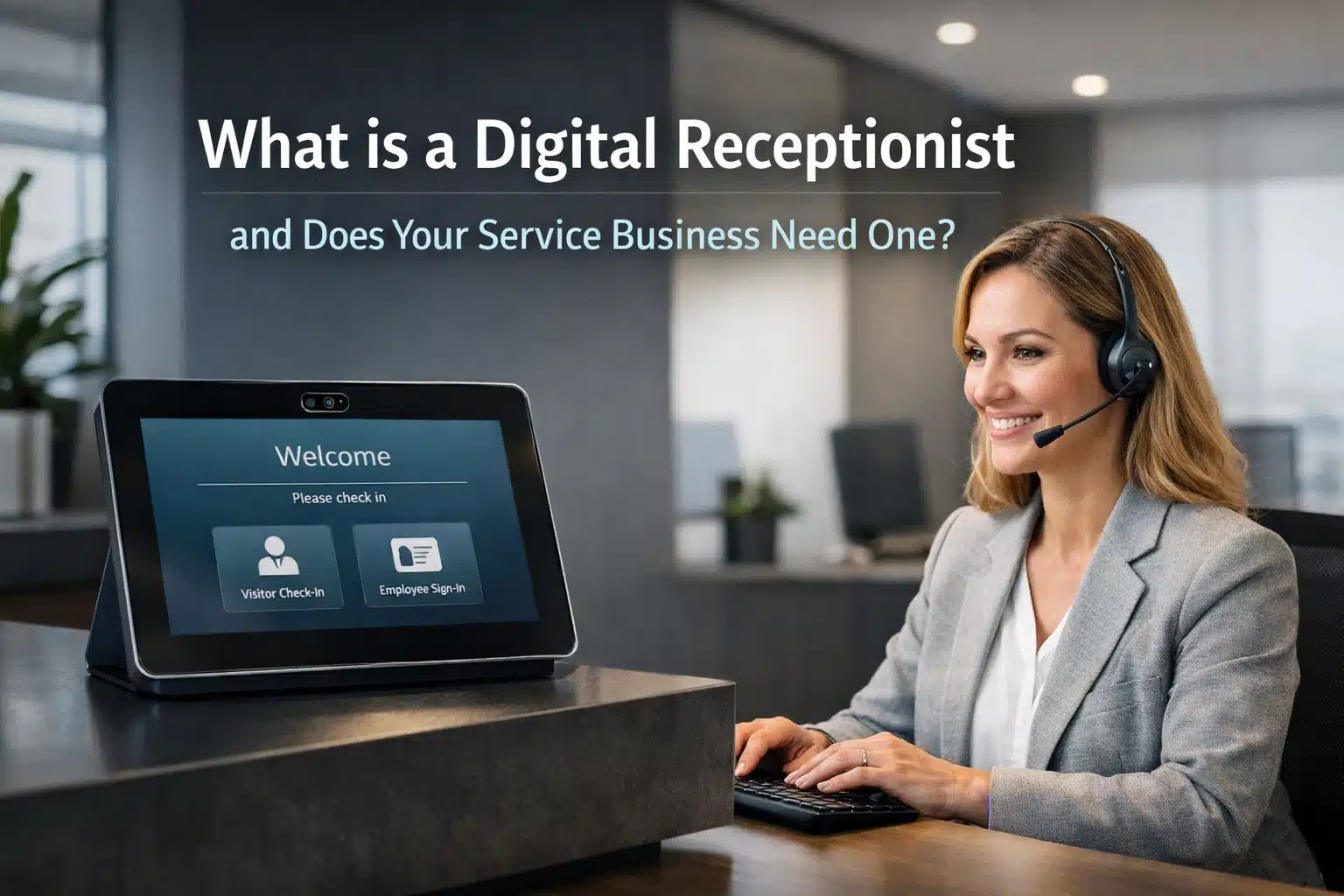
A digital receptionist handles your front-desk responsibilities remotely. Think of it as outsourced call handling and enquiry management.
It's not a robot (though some use AI). Most operate as a hybrid service: technology handles the routing and basic questions, whilst real people manage the conversations that matter.
Here's what they typically do:
- Answer incoming calls with your business name
- Screen calls and filter out sales spam
- Take detailed messages and send them to you immediately
- Book appointments into your calendar
- Capture lead details (name, number, what they need, when they need it)
- Provide basic information about your services or opening hours
- Operate outside your normal working hours
The key difference from a traditional answering service? Integration. A proper digital receptionist connects to your existing systems: your calendar, your CRM, your email. Information flows automatically, not through phone tag.

How Does It Actually Work?
When someone rings your business number, the call routes to the digital receptionist service instead of your mobile.
If it's a simple query: "What are your opening hours?" or "Do you cover my postcode?": the system can handle it automatically using pre-set responses you've approved.
If it's a genuine enquiry or booking request, a real person answers. They introduce themselves as calling on behalf of your business (using your company name, not theirs). They ask the right questions, capture the details, and either book the appointment directly into your calendar or send you the lead information within minutes.
You get a text message or email immediately. You decide whether to call back, accept the booking, or pass.
The entire interaction is logged. You can usually listen to call recordings later if you need to.
The Business Case: Does It Pay for Itself?
This is the question that matters. Services aren't cheap: expect to pay anywhere from £150 to £600+ per month depending on call volume and features.
So let's do the maths.
If you're a tradesperson charging £250 for an average job, you need to convert just one extra customer per month to break even on a basic package. One job that you would have missed because you were up a ladder or elbow-deep in a boiler.
For appointment-based businesses: beauty salons, clinics, mobile services: the calculation is even simpler. How many bookings do you miss per week because no one answered? If it's more than two, you're likely losing more in revenue than the service costs.
The bigger benefit isn't just answering more calls. It's answering them properly, every time, with consistent professionalism.

Who Benefits Most?
Digital receptionists work exceptionally well for specific types of service businesses:
Solo traders and micro businesses who are frequently on-site and can't answer their phone. If you're a mobile hairdresser, electrician, or gardener working alone, you're the ideal candidate.
Appointment-based businesses where scheduling is everything. Clinics, beauty therapists, personal trainers, and service providers who live or die by their diary.
Growing businesses stuck in the middle ground. You're too busy to answer everything yourself but not busy enough to justify a full-time receptionist at £20,000+ per year.
Businesses with after-hours demand. If customers ring you evenings and weekends but you'd rather not be glued to your phone, this solves that problem.
Multi-location operations that need consistent call handling across different sites without employing multiple people.
When It Doesn't Make Sense
Honesty time: it's not right for everyone.
If your business handles mostly complex technical enquiries that require specialist knowledge, a digital receptionist will just become a middleman. You'll end up calling everyone back anyway.
If you have very low call volume: fewer than 10-15 calls per week: you probably don't need it. Just set up proper voicemail and return calls promptly.
If you're a B2B service business where most enquiries come through email and scheduled meetings, you're paying for a service you won't use enough.
And if you already have someone who can reliably answer the phone during business hours, adding a digital receptionist is just doubling up.

What to Look for in a UK Provider
Not all services are created equal. Here's what actually matters:
UK-based operators. Your customers expect to speak with someone who understands British addresses, postcodes, and business etiquette. Offshore call centres sound cheap until you lose bookings because of communication issues.
Integration capabilities. Can it connect to your calendar system (Google, Outlook, etc.)? Does it work with your CRM or booking platform? If everything requires manual data entry, you've just created more work, not less.
Flexible pricing. Avoid contracts with huge per-minute charges that penalise you for being busy. Look for packages that match your actual call volume.
Customisation options. You need to control the script, the questions asked, and when calls get escalated to you. Generic responses make you sound like every other business.
Trial period. Any reputable provider should offer a trial or money-back guarantee. If they won't, that tells you something.
The Alternative: Enquiry Management Platforms
Digital receptionists solve the phone problem. But what about web enquiries, emails, Facebook messages, and all the other channels customers use to contact you?
This is where dedicated enquiry management systems differ. Rather than just handling phone calls, they centralise everything: every enquiry from every source: into one system. You can track, respond, and measure all in one place.
For many service businesses, particularly those getting significant online enquiries, this approach captures more revenue than phone-only solutions.
The best outcome? Visibility of every enquiry, faster response times, and proper tracking of what converts into paying work.

Making the Decision
Here's the simple test: Track your missed calls for two weeks.
Check your call log. How many went to voicemail during working hours? How many came through evenings or weekends?
Now estimate conservatively. If you'd converted just 30% of those missed calls into paying customers, what's the revenue?
If that number is significantly higher than the monthly service cost, you have your answer.
If it's close, consider a trial period. Most services let you test for 30 days.
If the numbers don't add up, focus on other bottlenecks first. Maybe your real problem isn't answering the phone: it's following up quickly with the enquiries you do receive.
The Bottom Line
A digital receptionist works when the cost of missed calls exceeds the cost of the service. It's that simple.
For busy service businesses where the phone is a primary enquiry channel, it often pays for itself within the first month. For others, it's an unnecessary expense that solves a problem they don't really have.
The question isn't "Can I afford it?" It's "Can I afford to keep missing calls?"
Only you can answer that. But now you know what you're actually buying and whether it makes commercial sense for your business.
If you're getting enquiries but struggling to handle them all efficiently: across phone, email, web, and social: that's a different problem. One that needs a different solution. But we'll save that conversation for another day.