You’ve spent thousands of pounds on a shiny new website. You’ve probably paid an agency for SEO, or perhaps you’re running Google Ads that eat into your monthly budget. You see the "clicks" going up. You see the traffic coming in. But at the end of the month, the bank balance isn't reflecting that effort.
Why? Because you’re likely suffering from a "leaky bucket."
In the world of UK service businesses, whether you’re an electrician, a family-run law firm, or a regional roofing contractor, the biggest waste of money isn't bad marketing. It’s bad enquiry handling. We see it every day at Every Enquiry: brilliant businesses losing "lay-down-low" leads simply because they didn't answer the phone or took three days to reply to an email.
Today’s consumer has zero patience. If you don’t reply, they move to the next person on the Google search results page. To beat the competition, you don’t necessarily need a bigger marketing budget; you need a better framework.
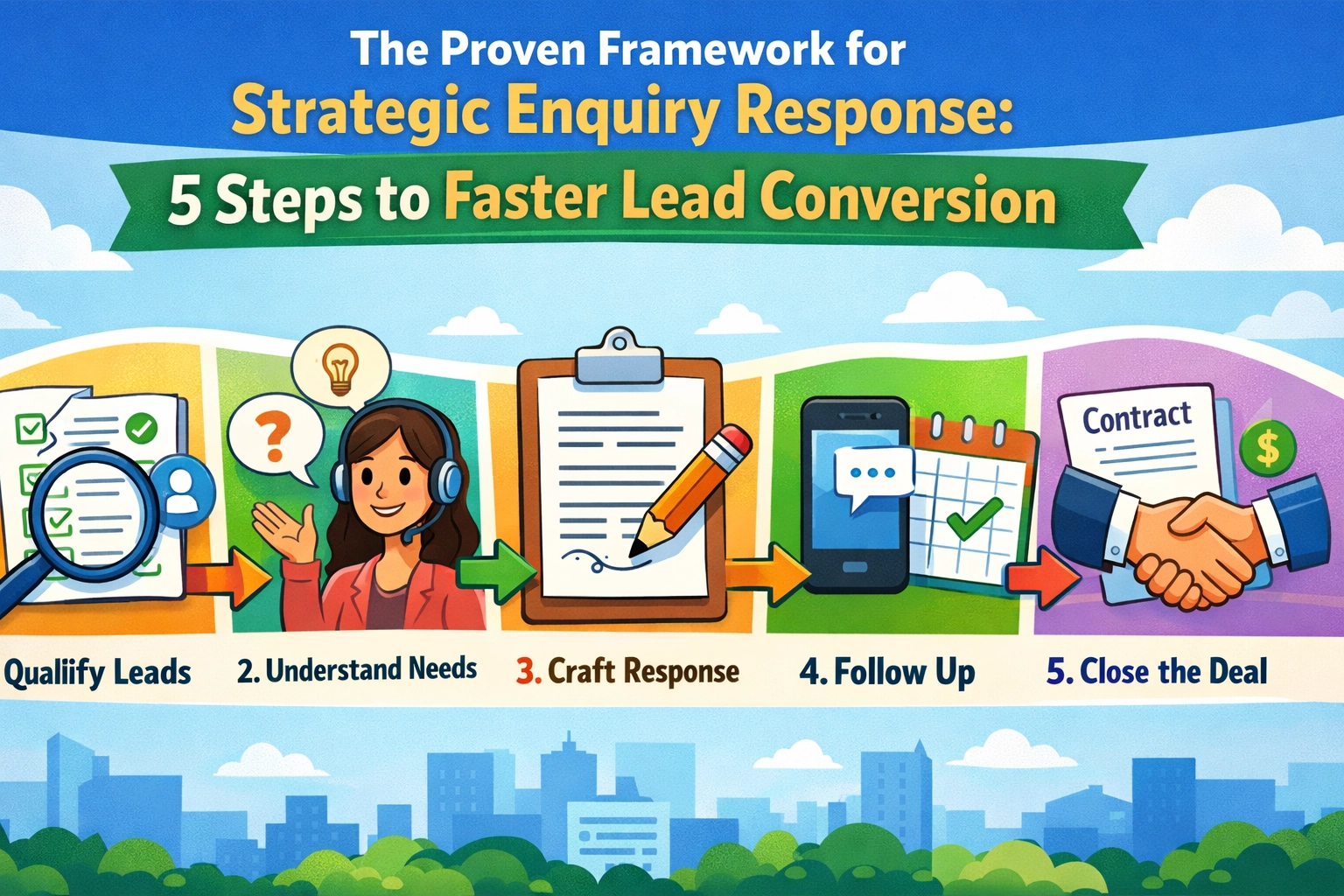
In this guide, we’re going to walk through the five-step framework for strategic enquiry response that shifts the focus from just "being visible" to actually converting those leads into loyal customers.
The Core Philosophy: They Ask, You Answer
Before we dive into the steps, we need to address the mindset. We follow the "They Ask, You Answer" (TAYA) philosophy pioneered by Marcus Sheridan. The concept is simple: if a customer has a question, you answer it, honestly, transparently, and quickly.
Most SMEs hide their prices, avoid talking about their competitors, and ignore the "problems" their customers might face. By being the business that addresses these head-on, you build more trust than any "Award Winning" badge ever could.

Step 1: Visibility – You Can’t Manage What You Can’t See
The first pillar of our framework is Visibility. Most small business owners think they know where their leads come from. "Oh, it's mostly word of mouth," they say. But when we dig into the data, we find leads hiding in Facebook DMs, forgotten contact forms, and missed calls on the office landline.
Audit Your Entry Points
You need a 360-degree view of every way a customer can reach you. This includes:
- Website contact forms.
- Google Business Profile messages.
- Direct phone calls.
- Social media messages (Instagram, Facebook, LinkedIn).
- WhatsApp for Business.
If your enquiries are scattered across three different staff members' personal phones and two different email inboxes, they will fall through the cracks.
Centralise the Chaos
The first step to fixing a leaky bucket is putting it in a place where you can see the holes. Using a basic CRM (Customer Relationship Management) tool or a dedicated enquiry management system is non-negotiable. If you're still using spreadsheets, you’re likely killing your growth. You can read more about why spreadsheets are killing your growth here.
Step 2: Response – The 2-Minute Rule
Once a lead is visible, the clock starts. This is where most UK service businesses fail. According to a landmark study by the Harvard Business Review, businesses that attempt to reach an enquiry within an hour are seven times more likely to have a meaningful conversation with a key decision-maker than those who wait even 60 minutes.
At Every Enquiry, we push for something even tighter: The 2-Minute Rule.
Why Speed is Your Best Sales Tool
When someone fills out your form or calls your office, they are in "problem-solving mode." They want the issue gone. If you reply within two minutes, you catch them while they are still on your website or still thinking about the problem. If you wait until the next day, they’ve already spoken to Joe Bloggs down the road who answered his phone on the second ring.
Speed is a competitive advantage. You don’t have to be the cheapest or the "best" in the world if you are the most responsive. For many customers, "fast" equals "reliable."
The Digital Receptionist Factor
We know what you’re thinking: "I’m on-site at a job!" or "I’m in meetings all day!"
This is where a digital receptionist comes in. You don’t need to hire a full-time staff member to sit by the phone. You just need a system that ensures every call is answered by a human and every message gets an instant, personalised acknowledgement.

Step 3: Qualification – Stopping the "Tyre Kickers"
Responding fast doesn't mean you have to work with everyone. One of the biggest fears SME owners have is that faster response times will just lead to more "tyre kickers" wasting their time.
Using the TAYA methodology, we use the response phase to qualify the lead.
Ask the Hard Questions Early
Don't be afraid to talk about:
- Price: Give them a range or a "starting from" figure immediately.
- Timeline: If you're booked up for three months, say so.
- Suitability: Are they too small for your services? Too far away?
By being transparent about your pricing and your process on your website and in your initial response, you filter out the people who aren't a fit. This saves your sales team (which might just be you) from spending hours on quotes that will never convert. To understand the hidden costs of these lost opportunities, check out our breakdown on the real cost of slow follow-up.
Step 4: Follow-Up – The Fortune is in the Persistent
Most SMEs give up after one phone call or one email. They think, "Well, if they were interested, they’d get back to me."
That is a million-pound mistake.
People are busy. Life gets in the way. Your email might have landed in their spam, or they might have been interrupted by a toddler while reading your quote.
The Structured Follow-Up System
A strategic enquiry response framework requires a minimum of five to seven touchpoints. This sounds like a lot, but it can be automated and personalised so it doesn't feel like spam.
| Follow-Up Stage | Timing | Method | Goal |
|---|---|---|---|
| Instant | < 2 Mins | SMS / Email | Confirmation & Brand Trust |
| Day 1 | + 4 Hours | Phone Call | Direct Engagement / Discovery |
| Day 2 | + 24 Hours | Educational Content (Case Study) | |
| Day 4 | + 72 Hours | Phone Call | Address Objections |
| Day 7 | + 1 Week | SMS | The "Permission to Close" message |
If you want to stop losing leads without hiring an army of staff, you need to implement these 5 steps to stop losing leads.
Step 5: Conversion – Removing the Friction
The final step is the conversion. This is the moment the enquiry turns into a sale. Often, businesses make it incredibly difficult for people to actually give them money.
Make it Easy to Say Yes
Look at your closing process. Do you require people to print, sign, and scan a PDF? That’s friction. Can they pay a deposit via a secure link on their phone? That’s conversion-focused.
Your framework should include:
- Digital Signatures: Use tools like DocuSign or PandaDoc.
- Online Deposits: Integrated payments via Stripe or similar.
- Clear Next Steps: "Once you click this link, we will book you in for Tuesday at 9 AM."
If your website is losing you money, it’s often because the "path to purchase" is too bumpy. You can read more about website optimization here.
Comparison: Enquiry Handling Methods
How does your current system stack up? Most SMEs fall into the "Ad-hoc" category, which is the most expensive way to run a business due to lost opportunities.
| Feature | Ad-hoc (Manual) | Full-Time In-House Admin | Digital Receptionist & System |
|---|---|---|---|
| Response Time | 4 – 48 Hours | 5 – 30 Mins (Business Hours) | < 2 Minutes (24/7) |
| Cost | "Free" (But costs £10k+ in lost leads) | £25k – £35k + NI/Pension | Fraction of a salary |
| Consistency | Low (Depends on mood/busyness) | Medium (Lunch breaks/Sick days) | High (Always on) |
| Lead Tracking | Non-existent / Paper diary | Moderate | Full digital audit trail |
| Scalability | Zero | Hard (Requires more hires) | Easy |

Addressing the "Elephant in the Room": Cost
We’re big believers in the Marcus Sheridan approach, so let’s talk about the cost. Managing enquiries properly isn't free. Whether you spend time doing it yourself, pay an employee, or invest in a system like Every Enquiry, there is an investment involved.
However, the question isn't "How much does enquiry management cost?" The real question is "How much is a missed enquiry costing me?"
If your average job value is £1,000 and you miss just two calls a week, that’s £104,000 in lost revenue a year. Suddenly, spending a few hundred pounds a month on a structured system seems like the best investment you'll ever make. For a deeper dive into the numbers, check out our guide on how much missed calls are really costing your business.
Moving from Busy to Scalable
There is a huge difference between a "busy" business and a "scalable" one. A busy business owner is someone whose phone never stops ringing and who is constantly stressed about getting back to people. A scalable business owner has a framework in place that handles the noise so they can focus on the work.
By implementing this 5-step framework, Visibility, Response, Qualification, Follow-up, and Conversion, you move away from the "hope and pray" method of marketing. You start to see predictable business growth because you are finally capturing the value you’ve already paid for through your marketing efforts.
Don’t let another lead go to your competitor. Start with visibility, master the 2-minute rule, and watch your conversion rates soar.
Frequently Asked Questions (FAQ)
1. I’m a one-person band. How can I possibly reply in 2 minutes?
You don't have to personally reply. This is where automation and digital receptionists come in. An automated SMS that says, "Hi, it's Martyn from Every Enquiry. I've received your message and I'm just finishing a job: I'll call you at 4 PM," is 100x better than silence. It stops the customer from calling the next person on the list.
2. Isn't automated follow-up a bit "spammy"?
Only if it’s boring and pushy. If your follow-up provides value: like a "Guide to Choosing the Right Solicitor" or "5 Things to Check Before Hiring a Roofer": it’s not spam; it’s helpful. Follow the "They Ask, You Answer" principle: use follow-ups to answer the questions they probably have but haven't asked yet.
3. We get a lot of "bad" leads. How does this help?
By responding quickly with a qualifying set of questions or a clear pricing guide, you find out they are a "bad" lead within 5 minutes rather than 5 days. This frees you up to focus on the high-value enquiries that actually pay the bills.
4. What is the most important KPI for lead conversion?
Speed to Lead. While other metrics like "cost per click" matter, the time it takes for a human to acknowledge an enquiry is the single biggest predictor of whether that enquiry will turn into a sale.
5. Do I need expensive software to do this?
Not necessarily. You can start with simple tools, but as you grow, the "DIY" approach usually breaks. The key is having a system, not just a piece of software. A system ensures that no matter how busy you are, the customer experience remains the same. You can learn more about turning enquiries into sales without spending more on marketing here.
6. Why should I use a digital receptionist instead of just letting it go to voicemail?
Because 80% of people who hit a voicemail will hang up and call a competitor. In the UK service industry, a "live" person: even if they are just taking a message and booking a callback: creates a psychological contract with the caller. They feel "looked after," and they stop searching. Check out the power of prompt response for more on this.