You’re doing everything right: or so it seems. You’ve got the website, you’re posting on social media, and you might even be dipping your toes into paid ads. The traffic is coming in, but the phone isn't ringing, and your inbox is looking a bit thin. Or worse, the enquiries are coming in, but they’re fizzling out before they ever turn into a bank transfer.
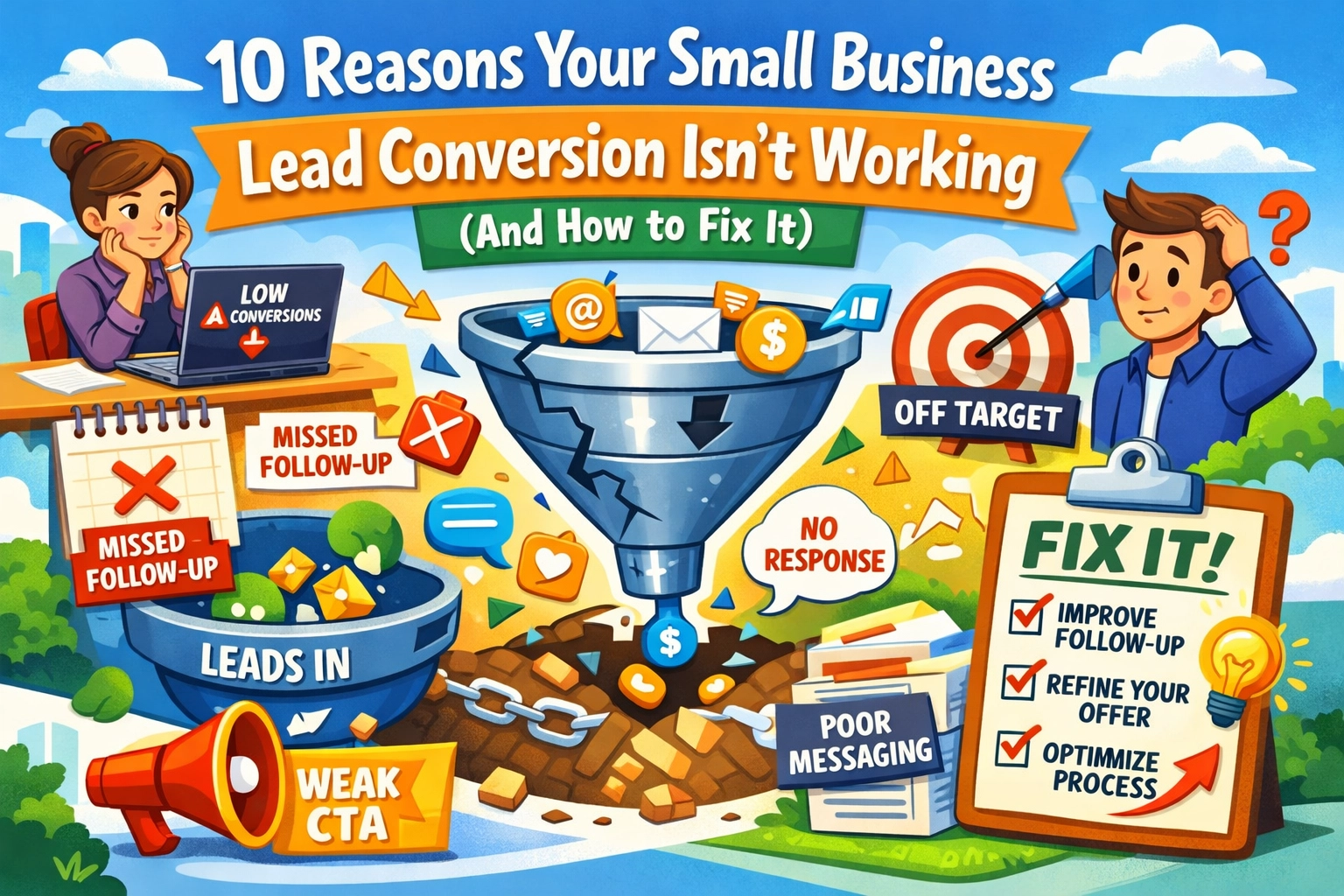
It’s frustrating, isn't it? It feels like you’re pouring water into a leaky bucket. No matter how much you pour in (marketing spend), the bucket never gets full (revenue).
At Every Enquiry, we talk to business owners every day who are exhausted by the "more traffic" treadmill. They think the solution is more SEO or more ads. Usually, it isn't. The problem is almost always conversion.
If your lead conversion is stuck in the mud, it usually boils down to ten specific reasons. Let’s stop the guesswork and look at exactly why your enquiries aren’t turning into customers and how you can fix it today.
1. You’ve Hidden the "Buy" Button (Unclear CTAs)
We see this all the time. A beautiful website with high-end photography, but we have no idea what we’re supposed to do next. Do we call? Do we email? Do we fill out a 12-page form?
According to research, 70% of small business B2B websites lack a clear call-to-action (CTA) on their homepage. If a prospect has to hunt for a way to contact you, they won't. They’ll go to your competitor who has a big "Book a Quote" button in the top right corner.
The Fix: Every single page on your site should have one dominant goal. Use high-contrast buttons with direct language like "Get My Free Quote" or "Book a Discovery Call." Avoid vague phrases like "Learn More" or "Submit." Tell them exactly what happens next.
2. Your Forms are an Interrogation
We get it: you want to qualify your leads. But asking for a home address, budget, and "how did you hear about us" before you’ve even said hello is a conversion killer. Every field you add to a form reduces the likelihood of it being completed.
People are busy. They want the path of least resistance. If your form looks like a tax return, they’ll abandon it. This is a classic case where your website is losing you money.
The Fix: Strip your forms back to the bare essentials: Name, Email, Phone, and a brief message. You can qualify them further during the first follow-up call. If you must use long forms, break them into multi-step processes so they don't look intimidating.

3. The Mobile Experience is a Mess
Over 50% of local searches happen on a mobile device. If your website is "desktop-first," you’re likely losing half your potential business. Common sins include buttons that are too small to tap, "click-to-call" numbers that aren't actually clickable, and forms that are impossible to type into on a small screen.
If your site takes more than three seconds to load on a 4G connection, most people have already hit the back button. Google’s data shows that as page load time goes from one second to three, the probability of bounce increases by 32%.
The Fix: Test your site on your own phone. Can you click the phone number? Does the menu work? Is the text readable? If not, you need to prioritise website optimisation immediately.
4. You’re Fishing in the Wrong Pond
Sometimes the conversion problem starts before the lead even hits your site. If your marketing is too broad, you’ll attract "tyre kickers": people who want the cheapest price or who aren't actually ready to buy.
If you’re a premium landscaping business but your ads target "DIY garden ideas," you’re going to get people looking for advice, not a £20,000 patio. This misalignment wastes your time and your marketing budget.
The Fix: Refine your targeting. In Marcus Sheridan’s "They Ask, You Answer" framework, you focus on the questions your ideal customers are actually asking. Address price, problems, and comparisons head-on in your content. This naturally filters out the wrong leads and attracts the right ones.
5. You Haven't Built a "Trust Bridge"
In the service industry, you aren't selling a product; you’re selling a promise. People are inherently sceptical of service providers. If your website doesn't show real faces, real reviews, and real results, there’s no "trust bridge" for the prospect to walk across.
If you don’t have visible social proof, your lead conversion will always struggle. Prospects are looking for reasons not to trust you. Don’t give them any.
The Fix: Feature Google Reviews prominently. Show photos of your team (not stock photos). Detail your certifications and guarantees. When you show the humans behind the business, conversion rates naturally climb.
6. You’re Chasing Every Rabbit (Lack of Qualification)
Not all leads are created equal. If your sales process treats a "just curious" lead the same as a "ready to buy today" lead, you’re going to burn out. Small businesses often fail because they spend too much time on low-intent enquiries and not enough on the high-value ones.
This is where predictable business growth becomes impossible because your schedule is dictated by who happens to call, rather than who is most likely to convert.
The Fix: Implement a simple lead scoring system. Ask one or two qualifying questions early on. If they don't fit your "ideal customer profile," have an automated way to point them to helpful resources without taking up your sales team’s time.
7. The Silent Killer: Slow Response Times
This is the big one. If you take one thing away from this article, let it be this: Speed is your greatest sales tool.
Research by the Harvard Business Review found that businesses that attempt to reach leads within an hour are nearly seven times more likely to have a meaningful conversation than those who wait even 60 minutes.
In the UK service market, the "first reply wins" rule is absolute. If a prospect enquires with three companies, they almost always go with the one that calls them back first. If you’re waiting 24 hours to reply to an email, you might as well not bother. You’ve already lost the lead. This is why understanding the 2-minute rule is so critical.
The Fix: You need an enquiry handling system. Whether it’s an automated SMS "thank you" or a digital receptionist, you must acknowledge the lead instantly.

8. You’re Flying Blind (No Data)
Do you know which of your marketing channels is actually producing sales? Most small business owners can tell you how many leads they got, but they can't tell you where the converted leads came from.
If you don't know that Facebook leads convert at 2% while Google Ads leads convert at 20%, you might be pouring money into the wrong channel. Using spreadsheets to manage enquiries is a recipe for lost data and missed opportunities.
The Fix: Use a CRM (Customer Relationship Management) tool to track the journey of every lead. Link your sales data back to your marketing spend so you can see your true Return on Investment (ROI).
9. Your Landing Pages are Confusing
If someone clicks an ad for "Emergency Boiler Repair" and lands on your homepage that talks about "General Plumbing, Tiling, and Kitchen Fitting," they’ll get confused. Confusion leads to exits.
A landing page should be a direct continuation of the ad or link that brought the user there. If the message doesn't match, the prospect feels like they’ve made a mistake and will leave.
The Fix: Create dedicated landing pages for your specific services. Keep the messaging consistent from the ad to the headline to the CTA. This "message match" is the secret sauce of high-converting campaigns.
10. Your Sales and Marketing Aren't Talking
In many small businesses, "marketing" is what happens to get the phone to ring, and "sales" is what happens when someone picks it up. If these two functions aren't aligned, leads fall through the cracks.
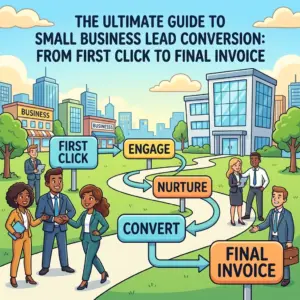
Maybe marketing is promising a "free consultation" but the person answering the phone thinks it’s a "paid site visit." This inconsistency kills trust immediately. You need to turn enquiries into sales by having a seamless transition from the first click to the final handshake.
The Fix: Create a simple internal document that outlines the lead journey. Who answers the phone? What do they say? What is the immediate next step? Consistency breeds confidence.
Comparison: Lead Management Approaches
| Feature | The "Old Way" (Passive) | The "Every Enquiry" Way (Proactive) |
|---|---|---|
| Response Time | 4–24 hours | Under 5 minutes |
| Tracking | Spreadsheets or memory | Integrated CRM & Analytics |
| Follow-up | One call, then give up | Systematic 5-step follow-up |
| Qualification | Talk to everyone | Automated filtering of low-intent leads |
| Outcome | Hit and miss growth | Predictable, scalable revenue |
The Visibility -> Response -> Conversion Framework
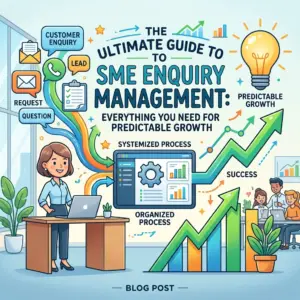
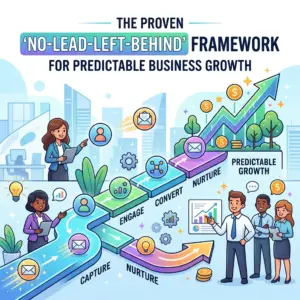
To fix your lead conversion, you have to look at it as a three-stage pipeline. If any stage is broken, the whole system fails.
Phase 1: Visibility
This is where most businesses spend their money. SEO, PPC, and Social Media Management. If nobody sees you, you don't exist. But visibility is just the "invite" to the party. It isn't the party itself.
Phase 2: Response
This is where the magic happens: and where most UK SMEs fail. It's about how to improve response times. When someone reaches out, how do you handle it? Are you answering every call? Are you replying to every DM?
The real cost of slow follow-up isn't just a missed job today; it's the damage to your reputation and the wasted marketing spend that got the lead there in the first place.
Phase 3: Conversion
Once you’ve responded, you need to close the deal. This requires trust signals, clear pricing (or the path to getting it), and a professional sales process. If you follow the 5 steps to stop losing leads, you’ll find that you can grow your business without actually spending more on ads.

Why Your "Leaking" Enquiries are Costing You More Than You Think
Let’s do some quick maths. If you spend £1,000 on ads and get 50 leads, each lead costs you £20.
If you convert 10% (5 customers), your cost per acquisition (CPA) is £200.
If you improve your response and qualification systems to convert 20% (10 customers), your CPA drops to £100.
By fixing your internal systems, you’ve effectively doubled your marketing budget without spending an extra penny. This is why enquiry management is the highest-leverage activity in your business.
Many owners think they need more leads, but they actually have a "leaky pipe" problem. You don't need more water; you need to fix the 3 systems that stop the leaks.
The "They Ask, You Answer" Approach to Lead Conversion
Marcus Sheridan’s philosophy is simple: become the most trusted voice in your industry by answering every question your customers have: even the uncomfortable ones.
In the context of lead conversion, this means:
- Be transparent about price: Stop hiding your "starting from" figures.
- Address the "problems": Talk about what could go wrong and how you fix it.
- Compare yourself: Honestly compare your service to other options (even competitors).
When you provide this level of honesty, your leads are already 80% converted before they even talk to you. They aren't "leads" anymore; they are "prospects" who trust you.
Moving from Busy to Scalable
The ultimate goal for any small business owner is to move from being "the person who does everything" to being the person who "leads the system."
If your lead conversion depends on you personally answering every call and replying to every email, you don't have a business; you have a very stressful job. You will never scale because you are the bottleneck.
By implementing predictable business growth strategies, you build a machine that handles the visibility, response, and conversion for you. This allows you to focus on high-level strategy and service delivery, rather than chasing emails at 9:00 PM on a Tuesday.

Summary: Your Conversion Checklist
- Audit your CTAs: Are they clear and high-contrast?
- Shorten your forms: Ask for the bare minimum.
- Check your mobile speed: Use Google PageSpeed Insights.
- Update your social proof: Get three new Google Reviews this week.
- Implement the 2-Minute Rule: Acknowledge every lead instantly.
- Stop using spreadsheets: Get a CRM to track your data.
- Create specific landing pages: Match your ads to your pages.
If you fix these ten things, your lead conversion will improve. It’s not magic; it’s just better systems. At Every Enquiry, we specialise in helping service businesses build these systems so they can stop worrying about where the next job is coming from and start focusing on growth.
Frequently Asked Questions (FAQ)
1. How quickly do I really need to respond to an enquiry?
Ideally, within 5 minutes. The "2-minute rule" is the gold standard. After 30 minutes, the lead's "hotness" drops significantly. After 24 hours, they have likely already spoken to a competitor and booked them.
2. We are too busy to answer the phone every time it rings. What should we do?
This is a common problem. You can use a digital receptionist or an automated SMS reply system. Even an automated message saying "Thanks for your enquiry, we're on a job but will call you at 2:00 PM" is better than silence.
3. Does having prices on my website scare people away?
The opposite is usually true. If you don't have prices, people often assume you are too expensive or that you’re hiding something. You don't need a fixed price list, but "starting from" or "average project cost" helps qualify leads and build trust.
4. What is the most important metric to track for conversion?
The "Lead-to-Appointment" rate. Getting the enquiry is phase one; getting them to commit to a meeting or quote is the real bridge to a sale. If this rate is low, your response time or trust signals are likely the issue.
5. Why are my Google Ads leads "low quality"?
Usually, it’s a targeting or landing page issue. If your ad is too broad, you attract the wrong people. If your landing page doesn't qualify them with the right information, they’ll enquire without knowing if they are a fit for you.
6. Do I need to hire a sales person to fix my conversion?
Not necessarily. Most SMEs can double their conversion just by fixing their enquiry handling systems and using automation. A system doesn't need a salary or holidays.
7. How much are missed calls actually costing me?
You can work this out easily: (Number of missed calls per month) x (Your average lead-to-sale conversion rate) x (Your average job value). For most UK trade businesses, this figure is often higher than they think, often running into thousands of pounds per month.