Let’s be honest for a second. As a business owner in the UK, you’ve probably spent a fair bit of money, and likely a few sleepless nights, trying to get your phone to ring or your inbox to ping. You’ve invested in SEO, maybe dabbled in Facebook ads, or paid a premium for a shiny new website.
But here’s the uncomfortable truth: getting the enquiry is only half the battle. In fact, it might only be 20% of the battle. The real war is won or lost in how you respond to those enquiries.
At Every Enquiry, we see it every day. Brilliant tradespeople, solicitors, and consultants are literally throwing money away because their enquiry handling is, well, a bit of a mess. It’s not because they’re bad at their jobs; it’s because they’re busy doing the work. But if you’re ignoring a lead for four hours while you’re on a site visit, you’ve already lost them to the competitor who answered in four minutes.
This guide is going to walk you through the three pillars of success: Visibility, Response, and Conversion. We’re using the "They Ask, You Answer" principles pioneered by Marcus Sheridan, which means we’re going to be transparent, direct, and give you the answers you actually need to grow your SME.
Pillar 1: Visibility – If They Can’t Find You, They Can’t Ask
Before we talk about response, we have to talk about how people find you. In the digital age, visibility isn’t just about being on page one of Google; it’s about being the most trusted voice on page one.
The Trust Gap
Most SME websites are basically online brochures. They say "We are the best" and "Call for a quote." This is rubbish. Customers today are skeptical. They want to know three things before they even think about contacting you:
- How much does it cost?
- What could go wrong?
- How do you compare to the other guy?
If your website doesn’t answer these questions, you’re invisible to the most qualified buyers. To improve your social media management, you need to stop posting "Happy Friday" graphics and start posting videos that explain how your service works.
Stop Hiding Your Prices
One of the core tenets of "They Ask, You Answer" is talking about pricing. Most UK businesses hide their prices because they’re "afraid of the competition seeing them" or because "every job is different."
Here’s the reality: your customers know that every job is different. But they still want a ballpark figure. By being transparent about your pricing, you filter out the tyre-kickers and build immediate trust with serious leads. When you hide price, you create friction. Friction kills visibility.

Pillar 2: Response – The "Golden Window" of Opportunity
You’ve got the visibility. A lead has landed in your inbox or left a voicemail. Now what? This is where most UK service businesses fail. According to research by Harvard Business Review, businesses that try to contact potential customers within an hour of receiving an enquiry are nearly seven times as likely to have a meaningful conversation with a key decision-maker than those who wait even 60 minutes.
The 2-Minute Rule
In our world, even an hour is too long. We advocate for the 2-minute rule. If a customer reaches out, they are in "buying mode" right now. If you wait until the end of the day to call them back, they’ve already moved on. They’ve called three other companies, and the one who picked up the phone first is the one getting the deposit.
Speed of response is your best sales tool. Period. It matters more than your logo, your fancy office, or even your price in some cases. People value their time, and a quick response tells them that you value it too.
The Psychology of the First Responder
When a lead is looking for a plumber, a locksmith, or an accountant, they are usually in a state of mild stress or high intent. The first person to acknowledge their problem wins the psychological "anchor." Even if you can’t get to the job for a week, being the first to say "I can help, let’s talk" secures the lead.
This is why many businesses are moving towards a digital receptionist model. You can't be by the phone 24/7, but your business can behave like it is.
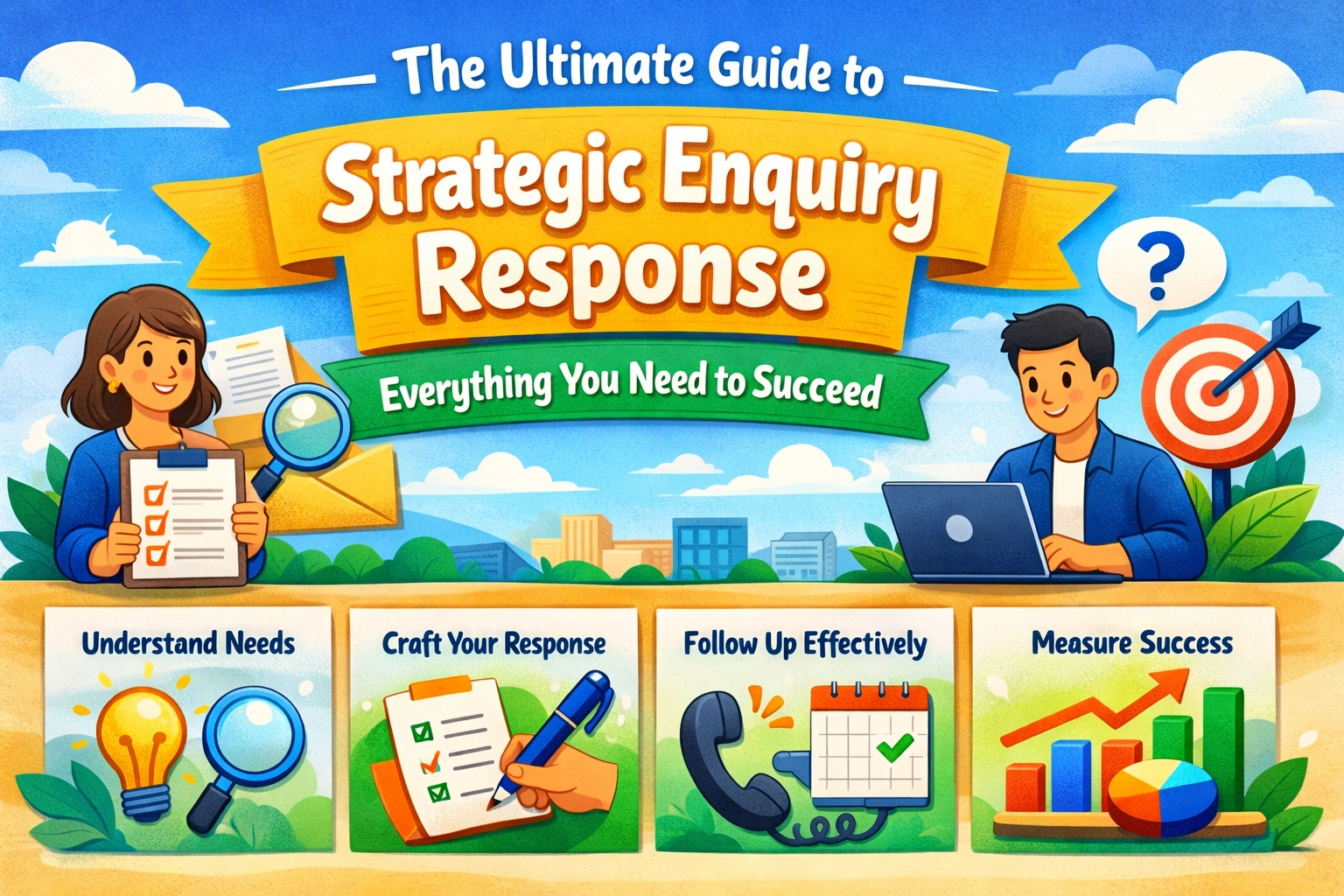
What a Strategic Response Looks Like
A strategic response isn't just "Hi, I'll call you back." It needs to be:
- Prompt: Ideally under 5 minutes.
- Personalised: Use their name and mention their specific problem.
- Educational: Provide a link to a blog post or video that explains what happens next.
- Clear: Tell them exactly when you will call or visit.
If you are struggling with this, you might be surprised at how much missed calls are really costing you. It’s usually thousands of pounds in lost lifetime customer value every single month.

Pillar 3: Conversion – Turning "Just Looking" into "Where Do I Pay?"
Conversion is the final hurdle. You’ve been seen, you’ve responded quickly, but the deal isn't signed yet. This is where structured follow-up systems come into play.
The Death of the Spreadsheet
If you are tracking your leads in a spreadsheet or, heaven forbid, on a notepad, you are losing money. Spreadsheets are killing your growth because they don't remind you to follow up. Most sales happen between the 5th and 12th contact point, yet most small business owners give up after one or two tries.
A strategic conversion system uses a CRM (Customer Relationship Management) tool to ensure no one falls through the cracks. It automates the "nudge" emails and keeps your business top-of-mind.
Addressing Fears and Objections
To convert at a high rate, you must address the "elephants in the room." In every industry, there are common fears:
- Trades: "Will they leave a mess?" or "Will the price spiral?"
- Professional Services: "Is this going to be overly complex?" or "Am I just a number to them?"
Your follow-up content should address these head-on. Send them a guide titled "5 Things to Check Before Hiring a Roofer" or "The Hidden Costs of Legal Advice." By educating them, you stop being a salesperson and start being a trusted advisor. This is the essence of why enquiry handling is key to customer acquisition.
The Comparison Table: DIY vs. Strategic Response
To help you see the difference, let’s look at how most SMEs handle enquiries versus how a strategic system works.
| Feature | The "Busy Owner" DIY Method | The Every Enquiry Strategic Method |
|---|---|---|
| Response Time | 4 to 24 hours (whenever free) | Under 5 minutes (automated/managed) |
| First Impression | "Sorry I missed you, I'm on a roof." | Professional, immediate, and helpful. |
| Follow-up | If they remember to call back. | Automated sequence until a decision is made. |
| Data Tracking | Scraps of paper or mental notes. | Digital CRM with full lead history. |
| Trust Building | Based on "trust me, I'm good." | Based on transparent pricing and education. |
| Conversion Rate | Low (losing leads to faster firms). | High (winning the "speed to lead" race). |
| Cost | High (marketing spend is wasted). | Optimised (every lead is maximised). |

The Real Cost of Doing Nothing
Many business owners think that hiring help for enquiry management is an "expense." We want to challenge that. If you spend £1,000 on ads and get 20 leads, but only close 2 because you were too slow to respond, your cost per acquisition is £500.
If you invest in a proper response framework, and you close 6 of those 20 leads, your cost per acquisition drops to £166.
The real cost of slow follow-up isn't just the lost job today; it’s the lost referrals, the lost reviews, and the wasted marketing budget. Is your website losing you money because there's no one "manning the door" when a customer knocks?
Why "They Ask, You Answer" Works for SMEs
We aren't fans of jargon. We don't care about "synergy" or "holistic paradigms." We care about whether your phone is ringing and if those callers are turning into customers.
The philosophy we follow is simple:
- Listen to what your customers are worried about.
- Answer those worries honestly on your website (even the uncomfortable ones).
- Respond faster than anyone else in your postcode.
If you do these three things, you will beat companies ten times your size. Large corporations are slow, bureaucratic, and often hide behind automated phone menus that everyone hates. As an SME, your superpower is agility. You can be the expert who actually picks up the phone and gives a straight answer.

How to Get Started Today
You don't need a £50,000 software system to start improving your enquiry response. You can start with these three steps:
- Audit your current response time: Have a friend enquiry through your website right now. How long does it take for you to get back to them? Be honest.
- Write down the "Big 5" questions: What are the five things every customer asks you? Write the answers down and put them on your website.
- Fix the "Leaky Bucket": If you can't answer the phone because you're working, look into a service that can. Whether it's a managed chat or a dedicated response service, don't let the call go to voicemail.
If you’re tired of seeing leads go cold, have a look at our 10 reasons your lead conversion isn't working. It might be the most profitable ten minutes of your week.
Frequently Asked Questions
1. Why is speed of response so important?
In a world of instant gratification, customers associate speed with competence. If you respond in two minutes, they assume your work is just as efficient. If you take two days, they assume you'll be just as slow to finish the job. According to Forbes, the first company to contact a lead has a 35-50% chance of winning the business.
2. Should I put my prices on my website?
Yes. Even if it's a "starting from" price or a "typical range." Customers are searching for price. If you don't give it to them, they will go to a competitor who does. Transparency builds trust; secrecy builds suspicion.
3. I'm a one-man band; how can I respond in 2 minutes?
You can't do it manually, and you shouldn't try. Use automated "instant-reply" emails, SMS notifications, or a digital receptionist service. The goal is to let the customer know they've been heard and give them a timeline for the next step.
4. What is the most common mistake in enquiry handling?
Assuming the lead is "dead" after one failed callback. Most business owners call once, don't get an answer, and never call again. A strategic system has a scheduled follow-up process over several days.
5. Isn't a CRM too complex for a small business?
Not at all. Modern CRMs are as simple as an app on your phone. The complexity of not having one: losing leads, forgetting to call people back, and lost revenue: is far greater than the learning curve of using a simple system.
6. Does this work for B2B as well as B2C?
Absolutely. Whether you're selling a boiler to a homeowner or an accounting contract to a CEO, the human brain works the same way. We want our problems solved quickly by people we trust.
7. How do I know if my marketing is actually working?
Marketing is working if it's generating enquiries. If those enquiries aren't becoming customers, the problem isn't the marketing: it's the response and conversion system. You have to fix the bucket before you pour more water in.
If you’re ready to stop guessing and start growing, check out our terms and conditions and privacy policy to see how we handle your data, or simply contact us to chat about your business. We're here to help you turn every enquiry into an opportunity.