If you are running a service-based SME, you probably spend a fair amount of time (and money) trying to get the phone to ring or the inbox to ping. You invest in SEO, you might dabble in PPC, and you definitely try to keep your social media presence from looking like a ghost town.
But here’s the cold, hard truth: getting the lead is only the beginning. Most small businesses in the UK are brilliant at what they do, whether that’s plumbing, legal advice, or landscaping, but they are often accidentally terrible at converting those hard-earned enquiries into paying customers.
We see it every day at Every Enquiry. A business owner complains that "marketing doesn't work," but when we look under the bonnet, the marketing is working fine. The leads are there. They just aren't being handled correctly.
In this guide, we’re going to walk through the three pillars of success: Visibility, Response, and Conversion. If you master these, you stop burning your marketing budget and start building a predictable, scalable business.
Pillar 1: Visibility (Getting Found and Building Trust)
Visibility is more than just being "top of Google." In the world of Marcus Sheridan’s They Ask, You Answer, visibility is about being the most trusted voice in your industry. If a prospect has a question and you are the one who answers it clearly and honestly on your website, you win the visibility game.
The "They Ask, You Answer" Philosophy
Most businesses hide their prices. They avoid talking about their competitors. They definitely don't talk about the "problems" with their service.
This is a mistake.
Today’s buyer is more informed than ever. According to research from Gartner, B2B buyers spend only 5% of their time with a sales rep. The rest of the time, they are researching. If your website doesn't answer their burning questions, especially about costs and common pitfalls, they will find someone else who does.
To improve your visibility and the quality of your leads, you need to create content that addresses "The Big Five":
- Pricing and Cost: Why does it cost what it costs? What factors make the price go up or down?
- Problems: Be honest about what could go wrong or who your service isn’t right for.
- Versus/Comparisons: How do you stack up against the other options?
- Reviews: What are people actually saying?
- Best in Class: Who are the best providers in your area (even if it's not you)?

Social Media: Beyond the "Like"
Visibility also extends to social media. However, many SMEs treat social media as a megaphone for boring announcements. We’ve discussed before how social media management is more than just posting updates. It’s about engagement. If someone leaves a comment or sends a DM, that is a lead. If you ignore it for three days, that lead is dead.
High visibility creates the "Top of Mind" effect, but it’s a double-edged sword. The more visible you are, the more enquiries you get. And if you aren't ready to handle them, you’re just wasting money.
Pillar 2: Response (The 2-Minute Rule)
This is where the wheels usually fall off for small businesses. You’ve done the hard work. You’ve built visibility. Someone has clicked "Submit" on your contact form or dialled your number. Now what?
The Cost of a Missed Call
In the UK service sector, a missed call isn't just a minor annoyance; it’s a lost opportunity with a specific price tag. We’ve calculated the maths of missed calls, and for many businesses, it’s thousands of pounds a month.
When a lead reaches out, they are at their "peak of interest." They have a problem now. If you don't answer, they simply click the next link on Google. You are essentially paying for your competitor's leads.
Speed is Your Best Sales Tool
The statistics are staggering. According to a landmark study in the Harvard Business Review, businesses that attempt to reach out to prospects within an hour are seven times more likely to have a meaningful conversation with a key decision-maker than those who wait even sixty minutes.
But in 2026, an hour is an eternity. We advocate for the 2-minute rule.
The "First Reply Wins" mentality is a competitive advantage. If you can respond to an enquiry within two minutes, even if it’s just a human-sounding automated acknowledgment or a quick "I've seen this and will call you at 2 PM", you have won the psychological battle. You can read more about why speed of response is your best sales tool to understand the mechanics behind this.
Is Your Website Leaking Money?
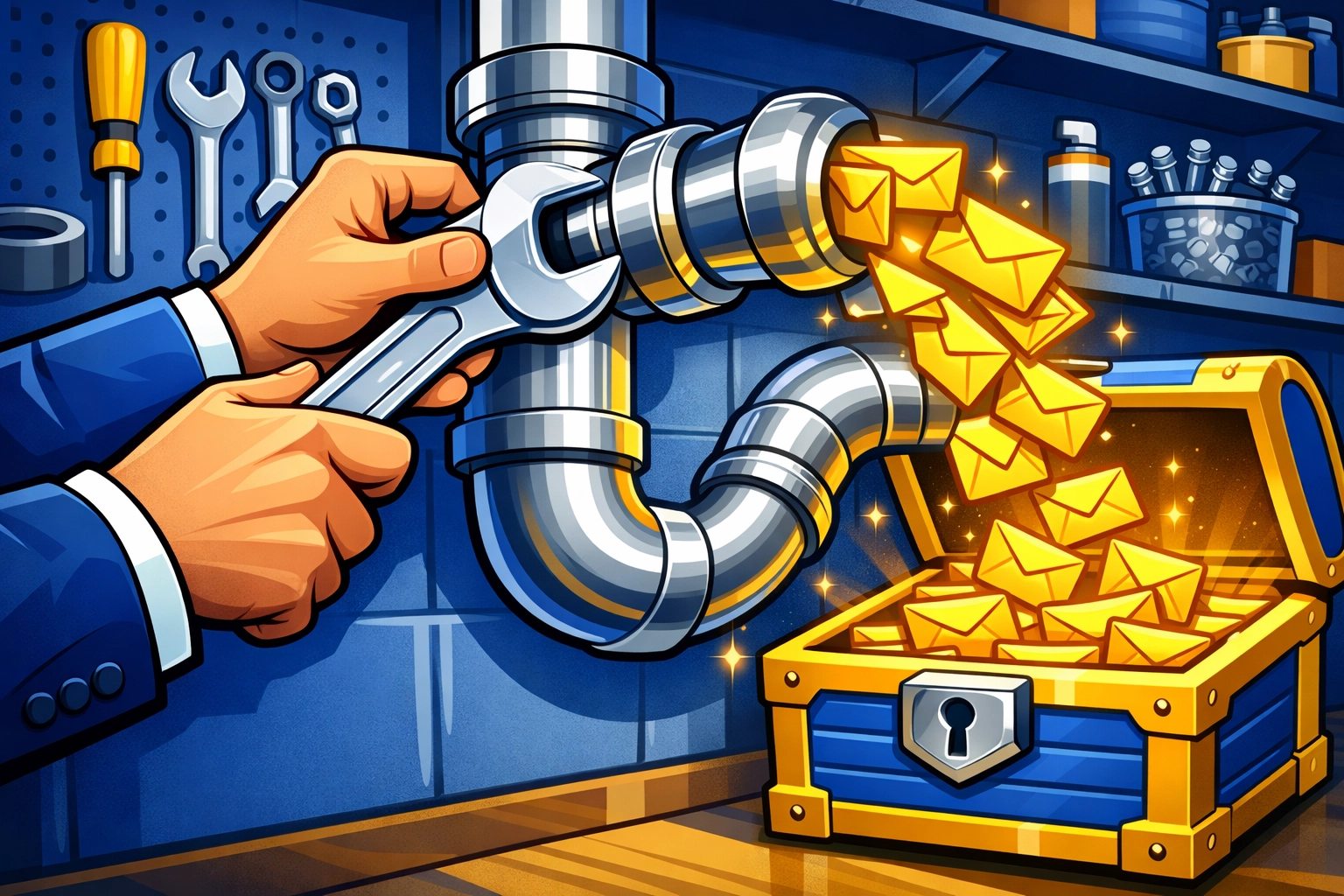
Often, the problem isn't the volume of leads; it’s the "leakage" in the response phase. Is your website losing you money? If you have a contact form that doesn't trigger an immediate internal alert, or if your phone line goes to a generic, full voicemail box, the answer is yes.
Pillar 3: Conversion (The Sales Process)
Once you’ve responded, the goal shifts to conversion. This is the process of moving a lead from "interested" to "invested."
Enquiry Management: Stop Using Spreadsheets
Many SMEs manage their leads in their head, on Post-it notes, or in an Excel spreadsheet. This is the "growth killer." Spreadsheets are static; they don't remind you to follow up, they don't track the history of a conversation, and they certainly don't scale.
If you want to move from being "busy" to being "scalable," you need a system. We’ve seen how spreadsheets are killing growth for UK firms. A dedicated enquiry management system ensures that no lead falls through the cracks.
The Follow-Up Game
Most sales are made on the 5th to 12th contact. Most small business owners stop after the 1st or 2nd.
Conversion requires a structured follow-up sequence. This isn't about being a "pushy salesperson"; it’s about being helpful. If a lead hasn't moved forward, it’s usually because they have an unanswered question or a lingering fear.
By applying the "They Ask, You Answer" principle here, your follow-up emails should provide value.
- "Hi [Name], I thought you might find this guide on [Problem] helpful while you consider our quote."
- "Hi [Name], here is a video showing how we handled a similar project for another client."
This approach builds authority and keeps the conversation alive without the "Just checking in" fluff that everyone hates.
From Busy to Scalable
The ultimate goal of lead conversion is predictable business growth. When you know that for every 10 enquiries you get, you convert 3, and your average job value is £2,000, you can finally plan for the future. You can hire that next staff member or invest in that new van with confidence.
Comparing Lead Handling Methods
To help you decide how to manage your response and conversion, we’ve put together a comparison of the most common methods used by UK SMEs.
| Feature | The "DIY" Owner Approach | The Traditional Call Centre | Every Enquiry System |
|---|---|---|---|
| Response Speed | Unpredictable (depends if you're busy) | Fast, but often robotic | Immediate & Personalised |
| Cost | "Free" (but huge opportunity cost) | Monthly retainer + per call | Performance-based / Scalable |
| Lead Quality | High (if you actually talk to them) | Low (just taking messages) | High (qualified and nurtured) |
| Scalability | Zero (you only have 24 hours) | Moderate | High |
| Data Tracking | Non-existent | Basic logs | Full CRM integration |
5 Steps to Stop Losing Leads (Starting Today)
You don't need a massive team to improve your conversion rates. You just need better systems. Here is a framework to get you started:
- Audit Your Response Time: Send a test enquiry through your own website right now. How long does it take for you to get a notification? How long until someone actually calls you back? Be honest: the results might scare you.
- Kill the Voicemail: If you can't answer the phone, get a digital receptionist or a professional handling service. A human voice (or a sophisticated AI-driven response) is 100x better than a "Beep."
- Use a Simple CRM: Move away from the notebook. Use a tool that allows you to see exactly where every lead is in the journey.
- Implement an "Instant Acknowledge": Set up an automated SMS or email that goes out the second a form is filled. Include a link to a "What Happens Next" page to reduce anxiety.
- Track Your "Cost of Ignored Leads": Start counting how many enquiries you didn't get to in time. Multiply that by your average sale value. That number is your motivation to change.

The Reality of the Modern Market
We are living in an "on-demand" economy. Your customers can order a pizza, a taxi, or a movie with one click. They expect that same level of responsiveness from their solicitor, their builder, and their accountant.
If you are slow to respond, you aren't just being "old-fashioned": you are being invisible. The real cost of slow follow-up is the slow death of your business growth.
However, if you can bridge the gap between Visibility (marketing) and Conversion (sales) with a robust Response system, you will find yourself in the top 1% of small businesses. You will win the work before your competitors even finish their morning coffee.

Final Thoughts from Every Enquiry
Marketing gets them to the door. Response opens the door. Conversion invites them in for a coffee and a chat.
Most businesses spend all their money on the "marketing" part and then leave the door locked. By focusing on the entire journey: from the moment they find you to the moment they sign the contract: you create a business that doesn't just survive but thrives.
If you’re tired of the "feast and famine" cycle, it’s time to look at your enquiry handling. It’s the highest-leverage activity you can perform in your business today.
Frequently Asked Questions (FAQ)
1. I’m a one-person band. How can I respond in 2 minutes if I’m on a job?
This is the classic SME trap. You can’t be in two places at once. This is where automation and digital receptionists come in. You need a system that "catches" the lead and starts the conversation for you, so the prospect feels heard while you finish your current task.
2. Is it better to call a lead back or email them?
Both. Some people hate the phone; some people never check their email. A multi-channel approach (SMS, Email, and Phone) within the first 10 minutes gives you the highest chance of conversion.
3. Does "They Ask, You Answer" really work for service businesses?
Absolutely. In fact, it works better for service businesses because services are built on trust. If you are a carpet cleaner and you have an article titled "Why we are more expensive than the guy on Facebook," you are building massive trust before you even meet the client.
4. How much should I be spending on lead conversion versus lead generation?
Most businesses spend 90% on generation and 10% on conversion. We recommend a more balanced approach. If you improve your conversion rate from 10% to 20%, you effectively double your business without spending an extra penny on ads.
5. Why are my leads "low quality"?
Usually, "low quality" leads are a result of poor visibility/content. If you don't talk about price or who you work with on your website, you will attract everyone, including the tyre-kickers. Use your content to qualify (and disqualify) people before they ever get to your contact form.