Look, I’ll be honest with you. Most business owners I speak to are working far too hard for far too little reward. They’re spending a fortune on Google Ads, they’re posting on LinkedIn until their thumbs ache, and they’re checking their emails at 11 PM on a Saturday.
They’re doing everything right to get noticed. But here’s the kicker: they’re still not growing as fast as they should.
The reason? They’ve got a "leaky bucket." They spend all their time and money pouring water (leads) into the top, but because the bucket is full of holes (poor enquiry handling), most of that potential revenue is leaking out onto the floor before it ever hits the bank account.
If you want predictable growth, you don't necessarily need more leads. You need a better framework for handling the ones you already have. At Every Enquiry, we’ve realised that SME service businesses in the UK usually fail at one of three stages: Visibility, Response, or Conversion.
In this guide, I’m going to walk you through the framework we use to plug those holes and turn a chaotic lead-gen process into a predictable growth engine.
Stage 1: Visibility (Stop Lighting Your Marketing Budget on Fire)
Visibility is usually where everyone starts. You hire an SEO agency, you run some Facebook ads, or you pay for a fancy new website. And that’s fine. You need to be seen to be considered.
However, visibility without a plan for what happens next is just expensive vanity. According to LinkedIn research, LinkedIn accounts for 44% of all B2B leads, but if those leads land on a website that doesn't clearly answer their questions, they’ll leave within seconds.
Following Marcus Sheridan’s "They Ask, You Answer" principles, your visibility should be built on trust. People aren't looking for a sales pitch; they’re looking for answers to their problems. Is your website actually helpful? Or is it just a digital brochure full of jargon?
The Content Gap
If a prospect lands on your site and can't find the answer to "How much does this cost?" or "How long does it take?", they aren't going to call you. They’re going to go to your competitor who is being transparent.
Before you spend another penny on ads, ask yourself:
- Does my website address the "Big 5" (Price, Problems, Comparisons, Reviews, and "Best of" lists)?
- Is it easy for a human to contact us within 10 seconds of landing?
- Is your website losing you money? If you have high traffic but low enquiries, the answer is a resounding yes.

Stage 2: Response (The 2-Minute Rule)
This is where the wheels usually fall off for most UK service businesses. You’ve done the hard work. You’ve got the lead. They’ve filled out your form or left a voicemail.
Now, how long do you wait to get back to them?
If your answer is "a few hours" or "by the end of the day," I have some bad news. You’re probably losing about 80% of your potential sales right there.
A landmark study published in the Harvard Business Review found that firms that tried to contact potential customers within an hour of receiving a query were nearly seven times as likely to qualify the lead as those that waited even an hour longer.
At Every Enquiry, we push this even further. We talk about the 2-minute rule. In the modern world, the first person to answer the phone or reply to the message usually wins the job. Customers don't have patience anymore. They are "solution-shopping." If you don't answer, they’ll simply click the next link on Google.
Why Speed is Your Best Sales Tool
Speed isn't just about being fast; it’s about respect. When you respond instantly, you’re telling the prospect that their problem is important to you. It builds immediate trust.
Most SMEs struggle here because they’re busy doing the actual work. You’re on a job site, in a meeting, or driving. You can't always pick up the phone. This is exactly why digital receptionists and enquiry management systems have become essential.
If you want to improve response times and stop losing leads, you have to remove yourself as the bottleneck.
Stage 3: Conversion (The Sales System)
Once you’ve responded, the goal is conversion. But many businesses treat "conversion" as a one-time event (the sale). In reality, conversion is a series of small "yeses."
A prospect says "yes" to an initial call. Then "yes" to a site visit or a demo. Then "yes" to a quote.
If your follow-up system consists of a messy spreadsheet or a pile of sticky notes, you are definitely letting money slip through the cracks. Spreadsheets are killing your growth because they don't remind you to follow up. They don't track the "temperature" of a lead. And they certainly don't provide a professional experience for the customer.
Predictable Growth requires a Standardised Sales Process:
- Qualify Quickly: Don't waste time on people who aren't a fit. Ask the hard questions early.
- Educate During the Wait: Send them helpful content (videos, guides) between the first call and the proposal.
- The Persistent Follow-up: Most sales happen between the 5th and 12th contact attempt. Most business owners give up after two.
Comparing Your Options: How Should You Handle Enquiries?
Not all lead-handling methods are created equal. Some are cheap but ineffective; others are expensive but don't actually help you close more deals. Here is how they stack up:
| Feature | DIY (Owner Managed) | Traditional Call Centre | Every Enquiry Management |
|---|---|---|---|
| Response Speed | Erratic (depends if you're busy) | High | Immediate (2-Minute Rule) |
| Lead Qualification | High (you know your stuff) | Low (they just take messages) | High (trained on your business) |
| CRM Integration | Rare/Manual | Rarely | Seamless/Automated |
| Follow-up | When you have time | None | Persistent & Managed |
| Cost | "Free" (but high opportunity cost) | Low per call | Value-based / ROI focused |
| Outcome | Burnout & missed leads | A list of names to call back | Booked appointments & sales |
As you can see, simply having someone "answer the phone" isn't enough. You need someone who understands the "Conversion" stage of the framework. A traditional call centre will tell you "Mrs. Smith called about a boiler." An enquiry management partner will tell you "Mrs. Smith called, we’ve qualified her budget, confirmed she’s in your catchment area, and booked her into your diary for Tuesday morning."
Which one do you reckon helps you grow faster?
The Hidden Cost of "Good Enough"
Many SMEs stay small because they are comfortable with "good enough." They realise they miss a few calls a week, but they figure they’re busy enough anyway.
But have you ever sat down and done the maths? If a single customer is worth £1,000 to your business, and you miss just two calls a week, that’s £104,000 in lost revenue every single year.
That isn't just "missed money." That’s the money that could have paid for a new van, a new staff member, or your family holiday. The real cost of slow follow-up is the difference between a business that owns you, and a business that you own.

Implementing the Framework: A Step-by-Step Guide
If you want to move towards predictable growth, you can’t change everything overnight. Start here:
1. Audit Your Current Leaks
Call your own business from a number you don't recognise. How long does it take to answer? Fill out your website form. Does an email arrive in your inbox immediately? If not, fix the tech first. How much are missed calls really costing you? Use that number to motivate your changes.
2. Standardise Your Questions
Stop winging your sales calls. Create a "Discovery Script" that ensures every lead is asked the same qualifying questions. This makes it easier to train someone else to do it later.
3. Automate the "Boring" Stuff
Use a simple CRM to track where every lead is in the journey. If you’re still using a notebook, stop it. You are better than that. There are dozens of affordable tools that can automate a "Thank you for your enquiry" text message the second a form is submitted.
4. Focus on Education
Apply the "They Ask, You Answer" method. If you find yourself answering the same three questions on every sales call, write a blog post about it. Send that post to the prospect before you meet them. It builds authority and saves you time.

Why Predictable Growth is the Ultimate Goal
Most business owners live in a cycle of "Feast or Famine." One month they have more work than they can handle, so they stop marketing. The next month, the work dries up, they panic, and they start spending money on ads again.
This framework, Visibility, Response, Conversion, breaks that cycle.
When you have a system that handles enquiries regardless of how busy you are, your "Conversion" rate stays steady. When your conversion rate is steady, you can accurately predict how much revenue you’ll have in three months' time.
That predictability is where the stress dies. It’s where you stop being a "firefighter" and start being a Director.
If you’re struggling to keep up with the leads you have, or you’re frustrated that your marketing spend isn't turning into profit, it’s time to stop looking for "more leads" and start looking at your framework.
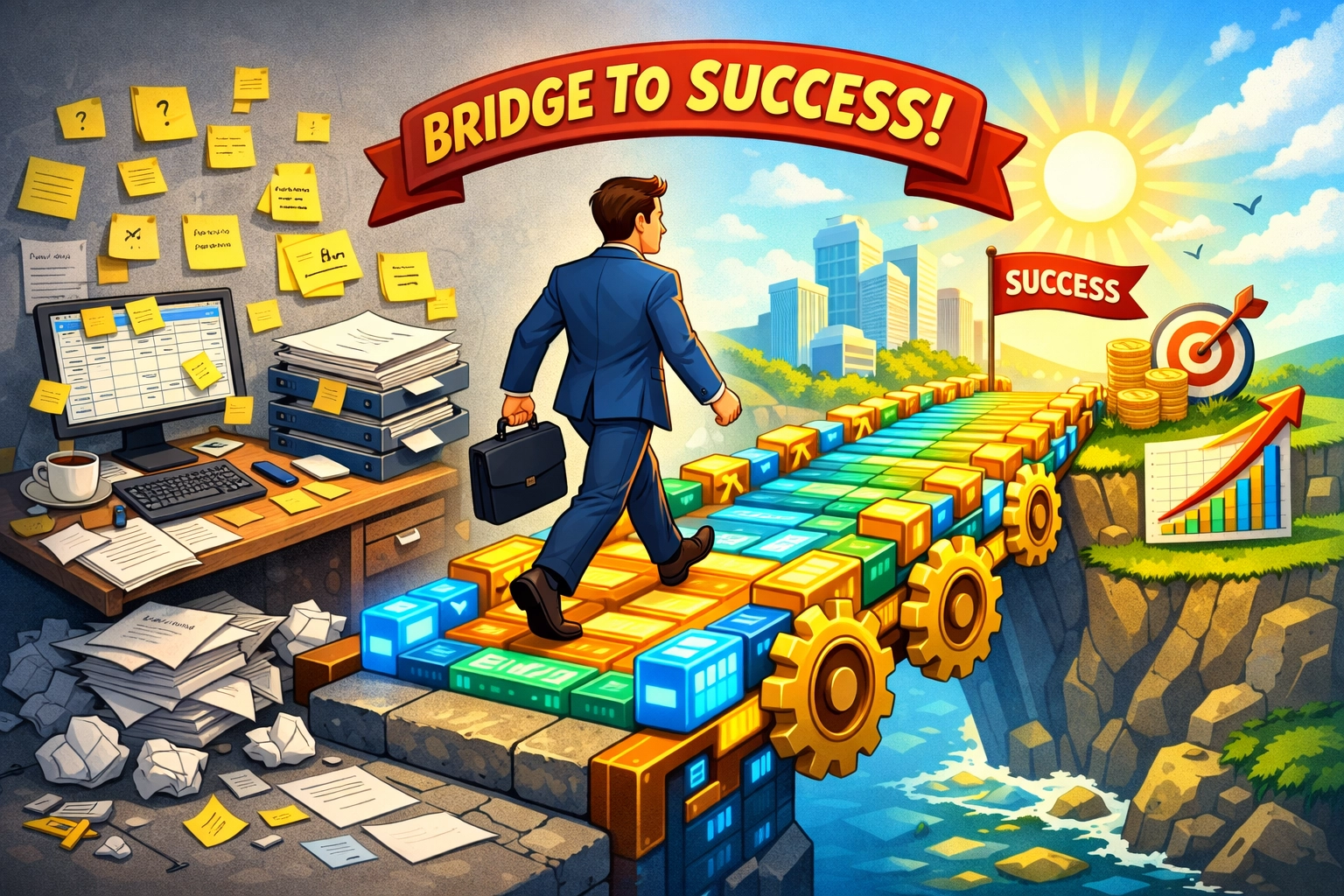
At Every Enquiry, we don't just post updates on social media. We believe social media management is about more than just posting; it’s about creating a bridge to a conversation.
If your bridge is broken, let’s fix it.
Frequently Asked Questions (FAQ)
1. Why is my lead conversion so low even though I get plenty of enquiries?
It usually comes down to one of two things: speed or trust. If you aren't responding within 5–10 minutes, the lead has already moved on. If you are responding quickly but not closing, you might not be answering their "Big 5" questions (like price and process) transparently enough. Check out these 10 reasons your lead conversion isn't working for more detail.
2. I’m a small business; do I really need an enquiry management system?
Honestly? If you want to stay small and work 70 hours a week, then no. But if you want to grow without losing your mind, you need a system. Even a basic CRM and a dedicated person (or service) to handle initial calls will change your life. Enquiry handling is the key to customer acquisition.
3. What is the difference between a virtual receptionist and Every Enquiry?
A virtual receptionist usually just takes a message and emails it to you. That still leaves you with a "to-do" list. Every Enquiry focuses on the full journey: qualifying the lead, answering their questions using the "They Ask, You Answer" philosophy, and booking them directly into your diary. We focus on the outcome, not just the call.
4. Is the "2-minute rule" realistic for a busy tradesperson or professional?
It’s not realistic if you’re doing it yourself: which is exactly the problem. You can't be on a ladder and on the phone at the same time. This is why you need a system or a partner to act as your "front desk" while you’re on-site.
5. How do I know if my website is the problem?
Look at your analytics. If people are visiting your "Contact" page but not filling out the form, your "Visibility" is working, but your "Conversion" setup is failing. Usually, it's because the "Call to Action" isn't clear or you haven't built enough trust through your content yet.