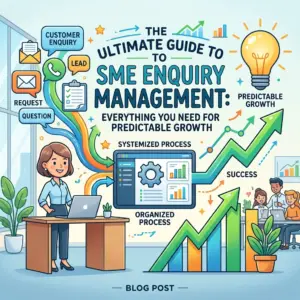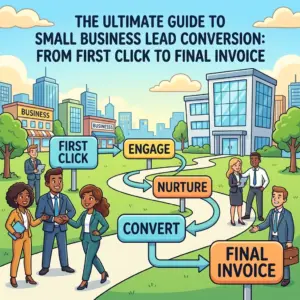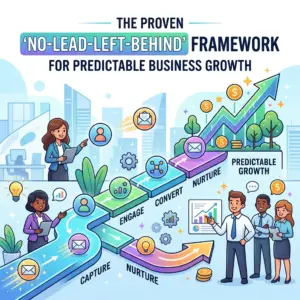
Let’s be honest for a second. Most small business owners in the UK are currently burning money. Not because they have a bad product or a rubbish service, but because they are letting hot leads slip through their fingers like sand.
You spend a fortune on SEO, you pay for Google Ads, and you might even have a decent social media presence. But what happens when the phone rings and you’re on a job? What happens when an enquiry form is filled out at 7:00 PM on a Tuesday? If the answer is "I’ll get to it tomorrow," you’ve already lost the sale.
At Every Enquiry, we see it every day. Businesses are obsessed with "Visibility", getting more eyes on their brand, but they completely ignore "Response" and "Conversion."
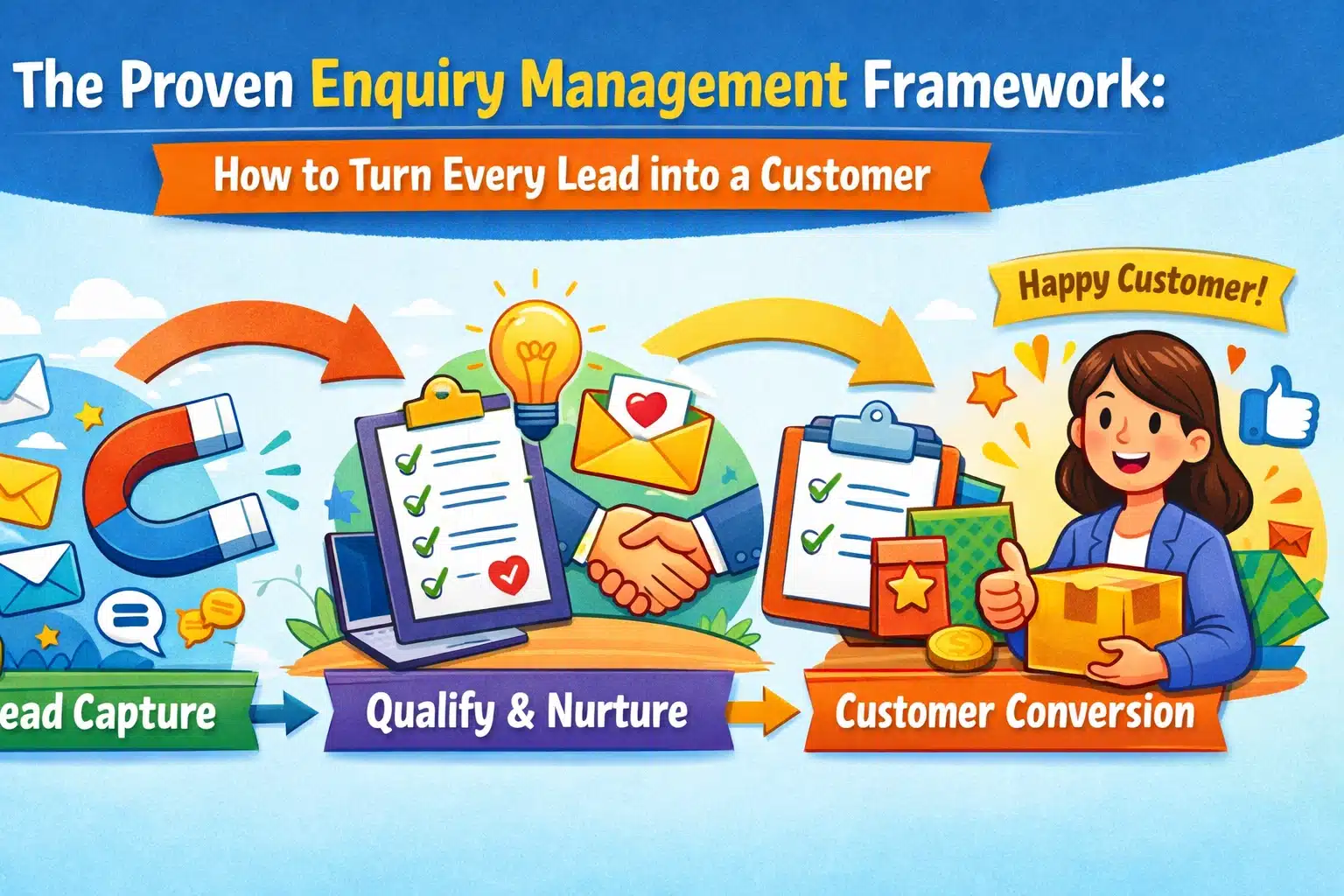
We’ve developed a framework to fix this. It’s not a magic trick; it’s a systematic approach to enquiry management that ensures no lead is left behind. If you want to stop the "leaky bucket" in your business, this is the blueprint you need.
The Reality of the Modern Customer
Before we dive into the framework, we need to address a hard truth: customers have zero patience. We live in an "on-demand" world. If someone needs a plumber, an accountant, or a landscaper, they aren’t going to wait three days for a callback. According to research from Harvard Business Review, businesses that attempt to contact potential customers within an hour are nearly seven times as likely to have a meaningful conversation with a key decision-maker.
Wait longer than 24 hours? You might as well not call back at all.

Phase 1: Visibility – Beyond Just Being "Seen"
Most marketing agencies will tell you that visibility is about ranking #1 on Google. While that’s part of it, true visibility in an enquiry management framework means having a clear, frictionless path for a lead to reach you.
If a customer visits your site and has to hunt for a phone number or fill out a 15-field form, you are invisible to them. They will hit the "back" button and click on your competitor.
Website Optimisation for Conversion
Your website is your 24/7 salesperson. If it’s slow, confusing, or lacks a clear call to action (CTA), it’s costing you money. We talk about this extensively in our guide on whether your website is losing you money.
To improve visibility within your framework, you should:
- Use clear, bold phone numbers in the top right corner.
- Implement "Click-to-Call" buttons for mobile users.
- Use simple enquiry forms (name, email, phone, and a brief message).
- Ensure your Google Business Profile is up to date with correct contact info.
Social Media Visibility
Social media isn't just for posting pretty pictures. It’s a massive source of enquiries. If someone messages your business on Facebook or Instagram, that is a hot lead. However, many SMEs treat social media as an afterthought. Social media management is more than just posting updates; it’s about being available where your customers are.
Phase 2: Response – The 2-Minute Rule
This is where the framework usually breaks for most SMEs. You have the visibility, the leads are coming in, but the response is slow or non-existent.
We advocate for the "2-Minute Rule." It sounds extreme, but the goal is to acknowledge or respond to an enquiry within two minutes. Why? Because that customer is currently sitting at their computer or holding their phone, thinking about their problem. If you call them back immediately, you catch them in the "buying window."
The Cost of a Missed Call
Have you ever sat down and worked out how much missed calls are really costing your business?
- Average Lead Value: £500
- Conversion Rate: 20%
- Missed Calls per Week: 5
- Weekly Loss: £500
- Annual Loss: £26,000
That is a conservative estimate for many service businesses. For some, the number is ten times higher. When you ignore a call, you aren't just missing a conversation; you are handing your marketing budget to your competitors.

Digital Receptionists vs. Enquiry Management
Many businesses try to solve this with a basic call-answering service. While having someone pick up the phone is better than a voicemail, it’s often a sticking plaster. A digital receptionist can take a message, but an enquiry management system qualifies the lead and moves them toward a sale.
If you’re wondering if you need a simple answering service or something more robust, check out our breakdown on what a digital receptionist actually is.
Speed of Response as a Sales Tool
Speed is a competitive advantage. If you are the first person to call a lead back, you set the bar for professionalism. It shows you are organised and that you value their time. We’ve written a full 5-step framework on improving response times that covers the technical side of making this happen.
Phase 3: Conversion – Turning the Lead into Revenue
Response is about speed; conversion is about process. Once you’ve made contact, how do you ensure the lead actually buys from you?
Stop Using Spreadsheets
If your "system" for tracking leads is a spreadsheet, a notebook, or, heaven forbid, your "recent calls" list on your iPhone, you are killing your growth. Spreadsheets are where leads go to die. They don't remind you to follow up, they don't track the history of the conversation, and they don't scale.
Transitioning from manual tracking to a dedicated enquiry management system is the single biggest step you can take toward predictable growth.
The Power of the Follow-Up
Most sales don't happen on the first call. They happen on the third, fourth, or fifth touchpoint. Yet, most SME owners give up after one failed attempt to call back.
A proven framework includes:
- The Initial Response: Within 2-5 minutes.
- The "Thank You" Email: Immediate, with helpful resources (They Ask, You Answer style).
- The 24-Hour Follow-Up: If no contact was made or a quote hasn't been accepted.
- The 3-Day Check-in: Providing additional value or answering common questions.

Qualifying Leads Properly
Not every lead is a good lead. Part of the conversion phase is filtering out the "tyre kickers." By using a structured enquiry framework, you can ask the right questions early on. This saves you from driving out to site visits for jobs that aren't a fit for your business.
If you find you’re talking to lots of people but not closing deals, read our guide on 10 reasons your lead conversion isn’t working.
Comparing Enquiry Management Methods
To help you understand where your business sits, we’ve put together this comparison table. Be honest with yourself about which column currently describes your operation.
| Feature | The "Chaos" Method (DIY) | Basic Call Answering | Every Enquiry Framework |
|---|---|---|---|
| Response Time | 4 – 24+ Hours | Instant (Message only) | < 5 Minutes (Qualified) |
| Lead Capture | Missed calls / Voicemails | Name & Number only | Deep Qualification & CRM Entry |
| Follow-up | When you remember | None | Automated & Manual Sequence |
| Data Tracking | Spreadsheets or None | Basic Log | Full ROI Dashboard |
| Customer Experience | Frustrating / Unprofessional | Functional but Cold | Professional & Proactive |
| Predictability | "Feast or Famine" | Slightly better | Consistent & Scalable |
The "They Ask, You Answer" Principle in Enquiry Management
At Every Enquiry, we follow Marcus Sheridan’s "They Ask, You Answer" philosophy. This means being completely transparent with your leads.
When someone enquires, they usually have five big concerns:
- Price: How much will it cost?
- Problems: What could go wrong?
- Comparisons: How do you compare to others?
- Reviews: What do others think?
- Best in class: Who else is good at this?
A great enquiry management framework doesn't just "take a message." It addresses these questions immediately. For example, if a lead asks about price, don't hide it. Give them a range or explain the factors that influence the cost. This builds instant trust. According to Statista, 37% of consumers expect a response on social media within 30 minutes. If that response also answers their most pressing question, you’ve basically won the job.

The Real Cost of Slow Follow-Up
We’ve talked about the maths of a missed call, but what about the "slow" call? If you call a lead back 4 hours later, the lead isn't just "older", it’s colder. They have likely already spoken to two other companies. They are no longer in the "searching" mindset; they are in the "comparing" mindset.
In the UK service sector, the real cost of slow follow-up is higher than you think. It damages your reputation. People talk. If you’re known as the "guy who never calls back," no amount of marketing spend will save your business.
How to Implement the Framework Today
You don't need to change everything overnight. Start with these three steps:
- Audit your current response time: Have a friend enquiry through your website and call your business number. See how long it takes for someone to actually speak to them.
- Centralise your leads: Stop taking notes on scrap paper. Use a simple CRM or at least a dedicated digital enquiry log.
- Prioritise speed: Make it your #1 KPI for the next month. Every lead gets a response in under 5 minutes.

Final Thoughts
Marketing gets people to the front door. Enquiry management is what invites them in, offers them a seat, and makes them feel like they’re in the right place.
If you are tired of spending money on ads only to see the leads go nowhere, it’s time to move away from the "Chaos Method." Transitioning to a structured framework is the difference between a business that survives and a business that scales.
Frequently Asked Questions (FAQ)
1. I’m a one-person band. How can I possibly respond in 2 minutes while I’m working?
This is the biggest challenge for SMEs. You can't be on the tools and on the phone at the same time. This is where automation and enquiry management services come in. You don't necessarily have to pick up the phone yourself, but someone or something needs to acknowledge that lead immediately and qualify it so you can follow up when you’re free.
2. Is 5 or 10 minutes really "too slow"?
In a competitive market, yes. If a customer is googling "Emergency Plumber" or "Divorce Lawyer," they are clicking the top three results and calling them in order. If the first one doesn't answer but the second one does, they’ve already stopped looking. You need to be that second (or ideally, the first) person.
3. Why shouldn't I just use a cheap call-answering service?
A call-answering service is a "receptionist." They take a message and pass it on. An enquiry management framework is a "sales function." It qualifies the lead, checks if they are a fit for your business, and enters them into a system that ensures follow-up happens. One is passive; the other is proactive.
4. How much does it cost to fix my enquiry process?
The real question is: how much is it costing you not to fix it? Most businesses find that by just converting 10% more of their existing leads, the system pays for itself ten times over. We always recommend starting with a "Missed Call Audit" to see exactly how much money is being left on the table.
5. Will customers feel "pestered" if I follow up multiple times?
Not if you provide value. If you just call to say "Are you buying yet?", they will be annoyed. If you follow up with a helpful guide, a video explaining your process, or an answer to a common question, you aren't pestering: you're being helpful. This is the core of the "They Ask, You Answer" principle.
6. Do I need expensive software to manage enquiries?
No. While there are great tools out there, a framework is a process, not just a piece of software. You can start with simple triggers and a clear workflow. As you grow, you can invest in more robust systems like Every Enquiry to handle the heavy lifting for you.