You’ve spent the money. You’ve tweaked the website, paid for the Facebook ads, and maybe even had some flyers printed for the local area. The traffic is coming in, and the phone is occasionally ringing. But at the end of the month, the bank balance isn't telling the story you expected.
Does this sound familiar? Most small business owners in the UK are brilliant at what they do, whether that’s plumbing, legal advice, or landscaping, but they are often accidentally sabotaging their own growth because of one simple reason: they haven’t mastered enquiry management.
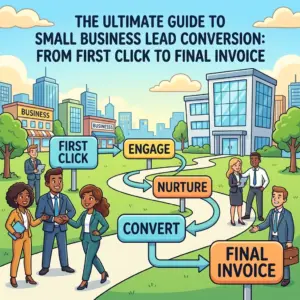
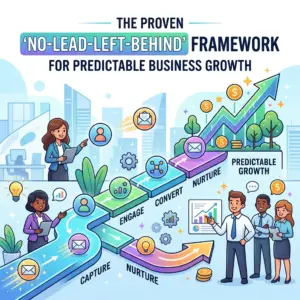
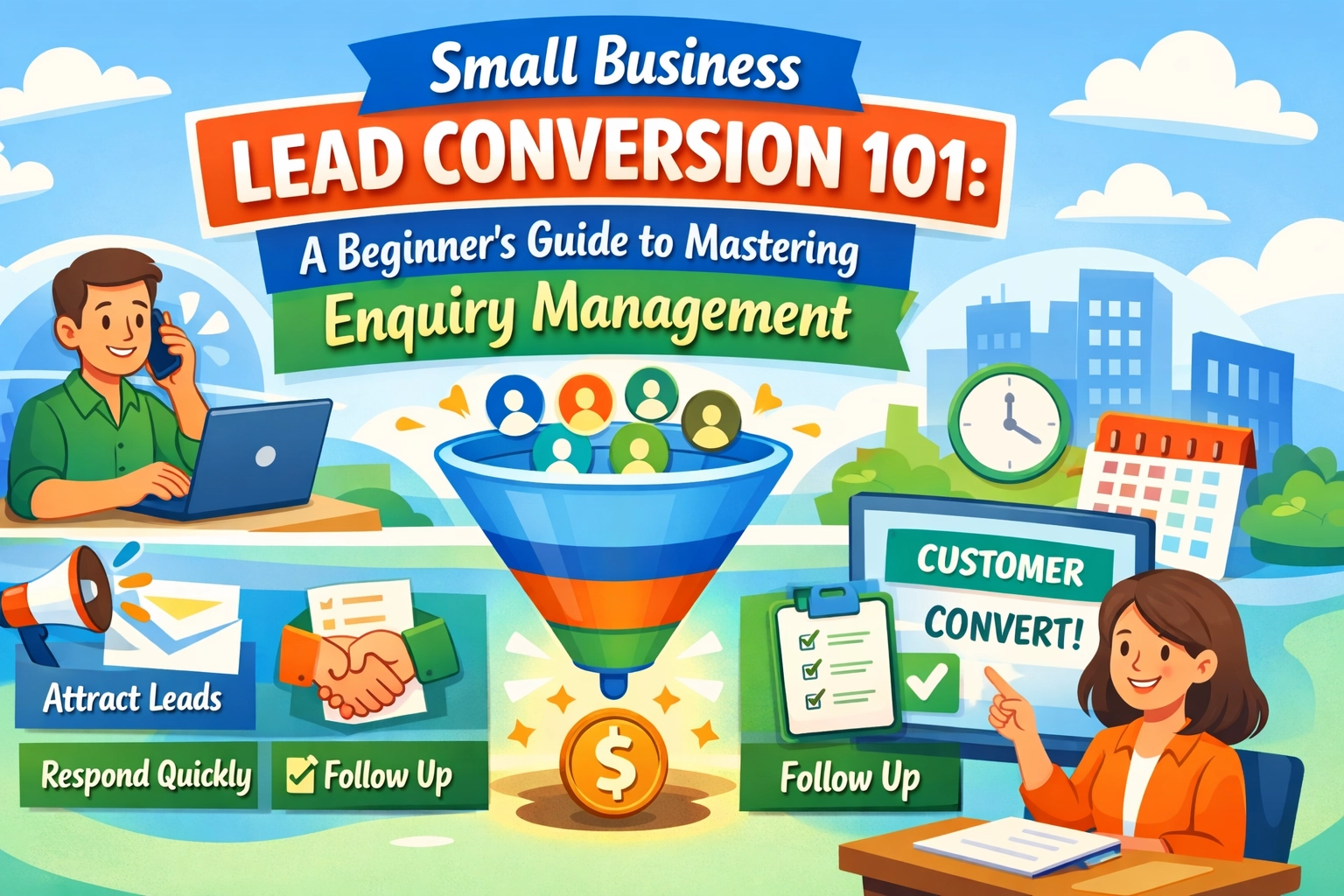
If you’re wondering why your marketing isn’t "working," the truth is often found not in the ads themselves, but in what happens after the click. This is the world of lead conversion. In this guide, we’re going to break down the three pillars of turning a stranger into a loyal customer: Visibility, Response, and Conversion.
Part 1: Visibility – Moving Beyond "Just Being Seen"
In the digital age, visibility is usually the first thing business owners worry about. You think, "If only more people knew I existed, I’d be rich." While traffic is important, the quality of that visibility matters more.
Following the "They Ask, You Answer" philosophy made famous by Marcus Sheridan, visibility isn't just about having a flashy logo. It’s about being the most trusted voice in your industry. Customers today are more sceptical than ever. According to the Office for National Statistics, the UK service sector is highly competitive, meaning your prospects are likely looking at five of your competitors at the same time they are looking at you.
To win at visibility, you need to answer the questions your customers are actually asking, even the uncomfortable ones like "How much does this cost?" or "What are the problems with this service?". When you are transparent on your website, you stop being a "salesman" and start being an educator.
Why Your Website Is Losing You Money
If your website is just a digital brochure with a "Contact Us" page that goes into a black hole, you are losing money every single day. Is your website losing you money? Often, the hidden cost of missed enquiries isn't just the lost job today; it’s the lifetime value of that customer and the referrals they would have brought in.

Part 2: The Response – Speed is Your Best Sales Tool
Let’s talk about the "Response Gap." This is the time between a customer sending an enquiry and you actually picking up the phone or hitting reply.
In the UK service industry, we have a bit of a reputation for being "too busy to call back." While being busy is great, failing to respond quickly is essentially throwing money in the bin. If a prospect fills out a form on your site and doesn't hear back within minutes, they haven't stopped looking for a solution, they’ve just moved on to the next person on Google.
The 2-Minute Rule
We advocate for the "2-minute rule." Research shows that your chances of converting a lead into a sale drop by over 400% if you wait longer than 10 minutes to respond. Why? Because in those 10 minutes, the customer’s emotional intent is at its peak. By the time you call them back three hours later while you're driving home, they’ve already booked a site visit with someone else.
Check out our framework on how to improve response times and stop losing leads. It’s not about working harder; it’s about having a system that ensures the first reply wins.
The Real Cost of Missed Calls
Think about your average job value. If a new lead is worth £500 to your business, and you miss just three calls a week because you were "on a job" or "in a meeting," that’s £1,500 a week. Over a year, that’s £78,000 in lost revenue.
Most small businesses don't need more marketing; they need to calculate how much missed calls are really costing them and fix the leak.
Part 3: Conversion – Turning Enquiries into Sales
Conversion is the final step, but it’s where the most "leakage" happens. Many business owners think they have a "sales problem" when they actually have a "system problem."
If you are tracking your enquiries on a scrap of paper, in your head, or on a cluttered spreadsheet, you are killing your growth. Spreadsheets are killing your growth because they don't remind you to follow up. They don't tell you which leads are "hot" and which are "cold."
Moving From Busy to Scalable
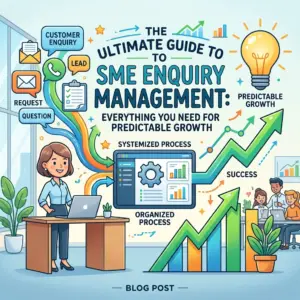
To achieve predictable business growth, you need a system that handles the heavy lifting. This involves:
- Lead Scoring: Not all leads are equal. Someone asking for a "rough price" is different from someone asking for an "installation date."
- Automated Nurturing: If a lead isn't ready to buy today, do you have a system to stay in touch? Or do you just forget about them?
- Digital Receptionists: Many service businesses think they need to hire a full-time admin person. Often, a digital receptionist or a dedicated enquiry management service is a more cost-effective way to ensure no lead is ever ignored.

Comparison: Methods of Handling Enquiries
| Feature | Manual (DIY) | Digital Receptionist | Every Enquiry (Managed) |
|---|---|---|---|
| Response Speed | Slow (Whenever you're free) | Fast (Immediate answer) | Instant (The 2-Minute Rule) |
| Lead Qualification | None (You talk to everyone) | Basic (Taking a message) | Advanced (Filtering high-intent leads) |
| Follow-up | Hit or Miss | None | Automated & Systematic |
| Data Tracking | Scraps of paper / Spreadsheets | Call logs | Full Analytics & CRM Integration |
| Cost | "Free" (but high hidden cost) | Monthly Subscription | High ROI / Performance Based |
| Scalability | Non-existent | Limited | Built for Growth |
Why Your Enquiries are "Leaking"
Imagine your sales process is a bucket. You are pouring expensive water (marketing spend) into the bucket. If the bucket has holes in it (missed calls, slow replies, no follow-up), you have to keep pouring more water just to keep it full.
Eventually, you run out of water (budget).
The goal of enquiry management is to plug those holes. You can actually turn enquiries into sales without spending a penny more on marketing. By simply improving your conversion rate from 10% to 20%, you have effectively doubled your business without increasing your ad spend.
The Power of Prompt Response
We talk a lot about the power of prompt response because it’s the lowest-hanging fruit in business. It requires no creative genius, just a commitment to a system. When you answer the phone or reply to an email instantly, you signal to the customer that you are professional, reliable, and ready to work. In a world where most people are slow, being fast is a massive competitive advantage.

Implementing "They Ask, You Answer" in Your Enquiry Process
To master lead conversion, you must apply honesty to your sales process. When a lead comes in, don't just give them a "sales pitch." Give them the information they need to make an informed decision.
If they ask about price, tell them. If they ask how you compare to the guy down the road, be honest about your differences. This builds an incredible amount of trust. By the time they get to the "conversion" stage, the sale is already half-won because you’ve spent the visibility and response stages proving you are a trustworthy expert.
For more on this, look at why your enquiries are leaking and the 3 systems that fix it.
The 5-Step Framework to Stop Losing Leads
If you’re feeling overwhelmed, start here. You don't need a 20-person sales team to master this. You can stop losing leads without hiring more staff by following these steps:
- Audit Your Current Response Time: Have a friend enquiry through your website and time how long it takes for you (or your team) to get back to them. The result might shock you.
- Centralise Everything: Stop taking enquiries via WhatsApp, Facebook Messenger, Email, and Phone calls and leaving them in four different places. Get them into one "Enquiry Management" system.
- Set an "Instant Reply" Auto-Responder: Even if you can't talk immediately, a personalised auto-response that says "I’ve received your enquiry and I’ll call you in exactly 15 minutes" is better than silence.
- Prioritise Follow-ups: Most sales are made on the 5th to 12th contact. Most small businesses stop after the 1st.
- Measure What Matters: Don't just track "clicks." Track "Enquiry to Sale" percentage.

Final Thoughts: Moving from "Busy" to "Profitable"
Being a "busy" business owner is often seen as a badge of honour. But if you're too busy to answer the phone or follow up on a £2,000 lead, you’re not "busy", you’re losing money.
The transition from a small, struggling business to a scalable, predictable one happens when you stop treating enquiries as "annoying interruptions" and start treating them as the lifeblood of your company.
Mastering lead conversion isn't about being a "closer." It’s about being a communicator. It’s about visibility that educates, responses that impress, and systems that convert.
If you’re ready to see how your business could look with a managed enquiry system, check out our 10 reasons your lead conversion isn't working.
Frequently Asked Questions (FAQ)
1. I’m already getting leads, but they are all "tyre kickers." How do I fix this?
This is usually a visibility problem. If you aren't being transparent about your pricing or who your service is not for on your website, you will attract everyone. Use the "They Ask, You Answer" principle to qualify people before they even contact you. Tell them your "starting from" prices and the types of projects you don't take on.
2. Can’t I just use a standard answering service?
You can, and it's better than nothing. However, a standard answering service usually just takes a name and number. By the time you get that message and call them back, they’ve often moved on. A true enquiry management system focuses on "Speed to Lead" and actually moving the prospect further down the sales funnel, not just taking a message.
3. I’m a one-man band. How can I respond in 2 minutes while I’m on a ladder or with a client?
This is the biggest challenge for SMEs. You can't be in two places at once. This is where automation and digital receptionists come in. You need a system that acts as your "digital front door," welcoming the lead, qualifying them, and even booking them into your calendar while your hands are busy.
4. Is speed really that important? Surely people will wait for quality?
In an ideal world, yes. But in the real world, according to Forbes, customer patience is at an all-time low. While they might wait for the work to be done, they won't wait for the initial response. A fast response is actually perceived as a sign of quality and reliability.
5. What is the most common reason leads don't convert?
Lack of follow-up. Most small businesses call once, don't get through, and never call again. Or they send one quote and never check if the customer received it. A simple, consistent follow-up process can increase your conversion rates by 30-50% almost overnight.
6. Do I need expensive CRM software to manage this?
Not necessarily. While a CRM (Customer Relationship Management) tool is helpful, the most important thing is the process. You can start with a simple system, provided it ensures no lead is forgotten and every response is fast. As you grow, you can move into more website optimization and advanced tools.
7. How much does a "missed enquiry" actually cost me?
To find this out, take your average sale value and multiply it by your typical conversion rate. If your average sale is £1,000 and you convert 1 in 4 leads, every single enquiry (even the ones that don't buy) is worth £250 to you. If you miss that call, you’ve just dropped £250 in the street. The math is simple, but the implications are huge.