You’ve spent the money. You’ve tinkered with your Meta ads, spent hours arguing with your SEO agency about keywords, and finally, the enquiries are starting to drop into your inbox. It’s a great feeling, isn’t it? Seeing those "New Enquiry" notifications pop up while you’re out on a job or sitting in a meeting.
But here is the cold, hard truth: for most UK service businesses, getting the enquiry is the easy part. The real work, and where most SMEs completely fall apart, is what happens in the minutes and hours after that lead arrives.
If you’re feeling like your marketing isn't working, or you’re frustrated because "leads are just tyre-kickers," I want you to take a look at your follow-up process. Most businesses are sitting on a goldmine of potential revenue, but they are letting it leak out of their system because of a few common, easily fixed mistakes.
At Every Enquiry, we see it all the time. Small businesses are busy. You’re wearing twelve different hats, and answering the phone or replying to an email often falls to the bottom of the list. But in 2026, the "I'll get back to them tomorrow" attitude is the fastest way to kill your growth.
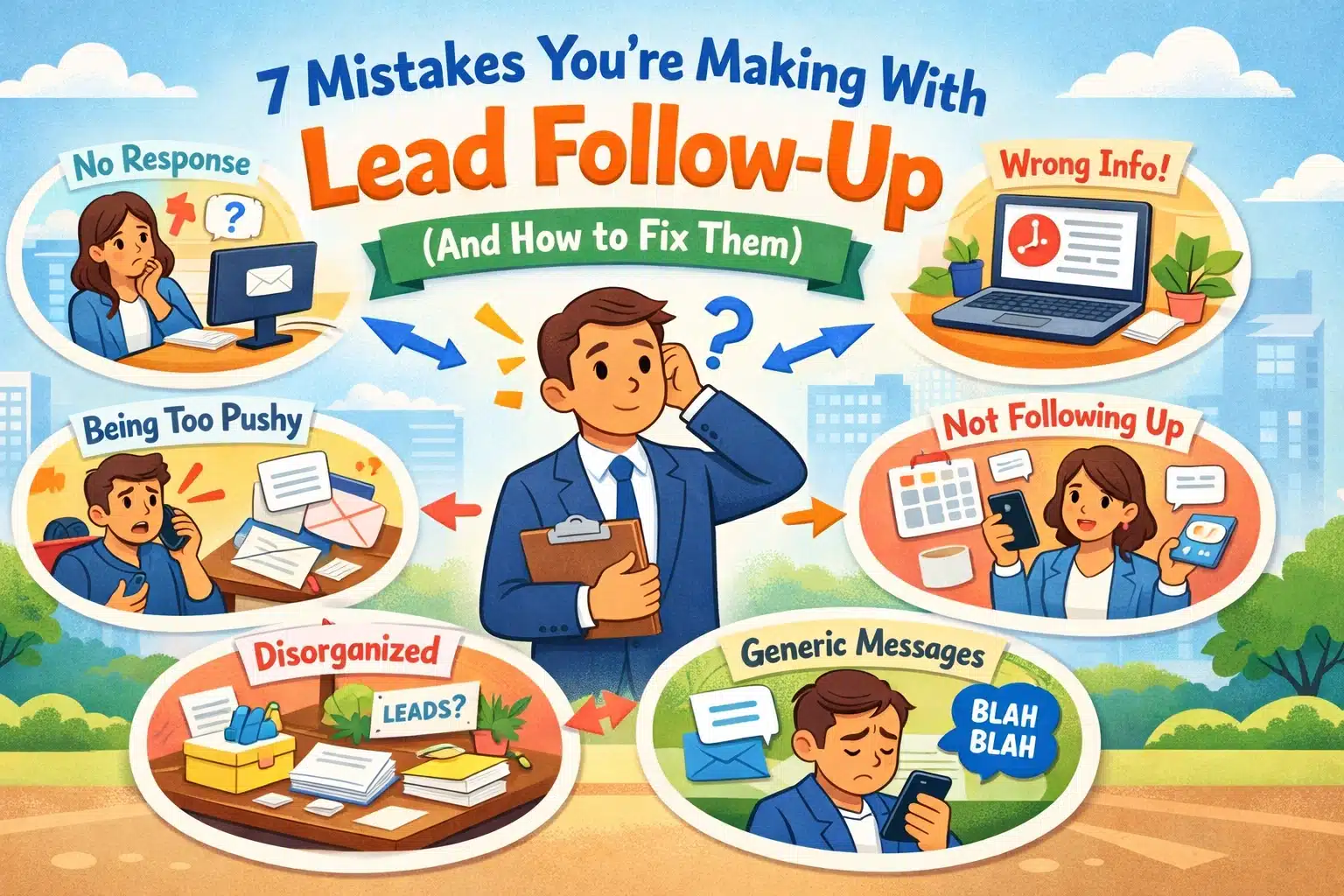
Let’s dive into the seven most common mistakes you’re likely making with your lead follow-up and, more importantly, how to fix them so you can start turning enquiries into sales without spending more on marketing.
1. The "Slow Motion" Response: Waiting Too Long
This is the king of all mistakes. If you take one thing away from this article, let it be this: Speed is your greatest competitive advantage.
Research from the Harvard Business Review shows that businesses that try to contact potential customers within an hour of receiving an enquiry are nearly seven times as likely to have a meaningful conversation as those who wait even sixty minutes. If you wait 24 hours? You might as well not bother.
The modern consumer is impatient. If they are looking for a plumber, a roofer, or a digital marketing agency, they likely have three other tabs open on their browser. They are going to message all of them. The business that responds first isn't just the most efficient; they are the ones who establish trust first.
The Fix: The 2-Minute Rule
You need to aim for a response within minutes, not hours. We call this the "Speed to Lead" principle. If you can’t physically be on your phone 24/7 (and you shouldn't be), you need a system. Implement an automated "Instant Call Back" or an SMS notification that acknowledges the lead immediately.

Check out our guide on the 2-minute rule and why speed is your best sales tool to see how this works in practice.
2. The "One and Done" Approach: Giving Up Too Early
Did you know that 44% of sales representatives give up after just one follow-up attempt? Yet, the majority of sales happen after the fifth or even the tenth touchpoint.
In the SME world, we often feel like we’re "pestering" people if we call them more than once. We think, "Well, if they were interested, they would have replied to my email."
That is simply not true. People are busy. They get an email while they’re picking up the kids, they open it, they mean to reply, and then life happens. If you stop at one attempt, you aren't being polite; you’re being forgettable.
The Fix: Build a Cadence
Stop "checking in" and start "following up." A professional cadence should look something like this:
- Day 1: Immediate call + SMS + Email.
- Day 2: Follow-up call in the afternoon.
- Day 3: Useful resource email (e.g., "A guide to pricing for your project").
- Day 5: Final follow-up call.
By creating a structured sequence, you ensure that you stay top-of-mind until they are ready to make a decision. This is how you move from busy to scalable.
3. Sending Generic, "Cookie-Cutter" Content
"Hi [Name], thanks for your interest. Please find our brochure attached. Let me know if you have questions."
Boring. Rubbish. Deleted.
If your follow-up feels like a template, your lead will treat you like a commodity. According to Marcus Sheridan’s They Ask, You Answer philosophy, the goal of your content should be to address the customer's specific fears, problems, and questions.
The Fix: Personalisation and Value-First Messaging
Instead of a generic brochure, send them a link to a blog post that specifically answers a question they might have. If they enquired about a loft conversion, send them your hidden cost of missed enquiries article or a "Price Guide for 2026."
Show them that you understand their specific situation. Even if you use automation, use "merge tags" to include their name and the specific service they asked about.
4. Relying Solely on Email
In the UK, our inboxes are a graveyard for marketing spam. If you are only following up via email, you are fighting a losing battle against the "Promotions" tab and spam filters.
Different people prefer different communication channels. Some people live on WhatsApp. Others want a direct phone call. Some will only respond to an SMS. If you only use one channel, you are missing out on at least 60% of your potential conversions.
The Fix: The Multi-Channel Blitz
Your follow-up system should include a mix of:
- Phone Calls: Still the most effective way to build rapport.
- SMS/Text: Boasts a 98% open rate.
- WhatsApp: The preferred choice for many UK consumers for quick updates.
- Email: Great for sending long-form information and quotes.
Integrating social media management into your enquiry handling ensures that leads coming from Facebook or Instagram are met in the same environment they started the conversation in.

5. Working Leads in the Wrong Order
Many business owners work through their leads chronologically. They start at the top of the pile (the oldest) and work their way down. This is a massive mistake.
A lead that enquired five minutes ago is much more valuable than a lead that enquired yesterday. The "First In, First Out" method ignores the fact that intent decays rapidly over time.
The Fix: Prioritise by Intent and Recency
You need a system that alerts you to "Hot Leads." If someone is on your website right now looking at your pricing page, they are a higher priority than someone who just downloaded a free guide.
Using a proper enquiry management system allows you to tag leads and move them to the top of the list based on their actions. Stop using spreadsheets; they are killing your growth.
6. Lacking a Clear "Next Step"
Have you ever finished a call with a lead and thought, "That went well," but then nothing happened? Usually, it's because you didn't define exactly what happens next.
"I'll leave it with you" is the death knell of a sale. If the customer has to figure out how to buy from you, they probably won't. You need to lead the dance.
The Fix: The Specific Call to Action (CTA)
Every single interaction, whether it’s a 20-second phone call or a 3-paragraph email, must end with a clear, specific next step.
- "I will send the quote by 4 PM today. Can we jump on a 5-minute call at 10 AM tomorrow to discuss it?"
- "The next step is to book your site survey. Here is a link to my calendar."
Be direct. Be authoritative. People want to buy from experts who have a clear process.
7. No Tracking or Feedback Loop
If you don't measure it, you can't improve it. Do you know your exact conversion rate from enquiry to sale? Do you know which marketing channel produces the leads that actually close?
Most SMEs guess. They think, "Facebook leads are rubbish," without actually tracking the data. This "data blindness" leads to wasted marketing spend and missed opportunities.
The Fix: Implement an Enquiry Management System
You need to see the entire journey from visibility to response to conversion. This is the core of our framework at Every Enquiry. By tracking every touchpoint, you can see exactly where the "leaks" are.
Are leads dropping off because you aren't calling them back fast enough? Or is it because your quote process is too slow? When you have the data, you can stop guessing and start growing predictably.
Comparing Follow-Up Methods
To help you see the difference, let’s look at how a "Traditional SME" handles leads versus an "Every Enquiry Optimised" business.
| Feature | Traditional SME Approach | Every Enquiry Optimised |
|---|---|---|
| Response Time | 4 to 24 hours | Under 5 minutes |
| Follow-up Frequency | 1 or 2 attempts | 6 to 10 attempts (Automated & Manual) |
| Channels | Email or Phone only | Multi-channel (Call, SMS, WhatsApp, Email) |
| Data Storage | Post-it notes, Inbox, or Spreadsheets | Centralised CRM / Enquiry System |
| Communication Tone | "Just checking in" | Value-first (Answering questions) |
| Conversion Rate | Low (Leaky Bucket) | High (Predictable Growth) |
| Owner Involvement | High (Manually chasing everyone) | Low (Systematised & Managed) |
The Visibility -> Response -> Conversion Framework
At Every Enquiry, we don't just "do marketing." We fix the entire system. Most agencies focus purely on Visibility (getting people to look at you). They run ads and tell you how many "impressions" you got.
But impressions don't pay the bills.
Our methodology focuses on the entire chain:
- Visibility: Attracting the right leads through SEO and website optimisation.
- Response: Ensuring that every single person who expresses interest is contacted immediately using our 5-step framework.
- Conversion: Managing those leads through a systematic follow-up process until they become a paying customer.
If you have a visibility problem, you need more traffic. If you have an enquiry problem, you need to fix your website. If you have a sales problem, you have a follow-up problem.

How Much are These Mistakes Actually Costing You?
Let’s do some quick maths. If you get 20 enquiries a month and your average job value is £2,000, that’s £40,000 in potential revenue.
If your current "leaky" follow-up process converts at 10%, you’re making £4,000.
If you fix these seven mistakes and move your conversion rate to 30%, you’re making £12,000.
That is an £8,000 difference every single month without spending an extra penny on advertising. This is why understanding the cost of missed calls is so vital for UK service businesses. It's not just a missed call; it's a missed mortgage payment or a missed opportunity to hire that next staff member.
Stop Losing Leads Today
Fixing your lead follow-up isn't about working harder; it's about working smarter. It’s about moving away from the "hope and pray" method of sales and moving toward a predictable, managed system.
You don't need to hire more staff to do this. You need a better system. Whether it’s implementing a digital receptionist to handle the initial intake or setting up automated sequences, the technology exists to do the heavy lifting for you.
If you’re ready to stop the leaks and start growing, have a look at our 5 steps to stop losing leads without hiring more staff.
Frequently Asked Questions (FAQ)
1. I’m a one-man band (or a very small team). How can I possibly respond in 5 minutes?
We get it. You’re on a roof, under a sink, or in a meeting. You can’t always pick up. The fix isn't for you to be faster; it’s for your system to be faster. An automated SMS that says, "Hi [Name], I've just seen your enquiry about [Service]. I'm currently on a job but will call you at [Time]. Is that okay?" works wonders. It stops them from calling the next person on Google.
2. Doesn’t automated follow-up make my business feel impersonal?
Only if you do it badly. If your automation is robotic and cold, yes. But if it’s written in your voice and provides genuine value (like a helpful guide or a link to a video), it actually feels more professional. It shows the customer that you are organised and that their enquiry is a priority for you.
3. Is it better to call or email a new lead first?
Always try to call first. A phone conversation builds more trust in 2 minutes than 20 emails ever will. However, if they don't answer, immediately send an SMS and an email. Use all the tools at your disposal. Remember: first reply wins.
4. How many times should I follow up before I give up?
For a standard service business, we recommend at least 6 to 8 touchpoints over a 14-day period. This might sound like a lot, but if you vary the medium (call, text, email) and provide value each time, it won't feel like pestering. After that, you can move them into a long-term "nurture" list.
5. Why shouldn't I just use a spreadsheet to track my leads?
Spreadsheets are where leads go to die. They don't give you reminders, they don't automate your emails, and they don't show you real-time data on your conversion rates. As your business grows, a spreadsheet will become a bottleneck that prevents you from scaling. Read why spreadsheets are killing your growth here.
6. What is the "hidden cost" of a missed enquiry?
The cost isn't just the lost profit from that one job. It's the "Lifetime Value" of that customer (future jobs they would have given you) plus the value of the referrals they would have sent your way. One missed £500 job could easily cost you £5,000 over the next three years.