Let’s be honest for a second. Most small business owners in the UK are currently burning money. You’ve spent a fortune on your website, you might be dabbling in Google Ads, and you’re definitely grafting on social media to get noticed. But then the phone pings. An enquiry lands in your inbox at 2:00 PM while you’re mid-job or stuck in a meeting. By the time you get back to them at 6:00 PM, they’ve already booked with your competitor.
It’s frustrating, isn't it? You’re doing the work, but the "sales" side of the business feels like a leaky bucket. At Every Enquiry, we see this every single day. We talk to plumbers, solicitors, architects, and landscapers who are brilliant at what they do but are losing thousands of pounds every month because their enquiry response isn't strategic.
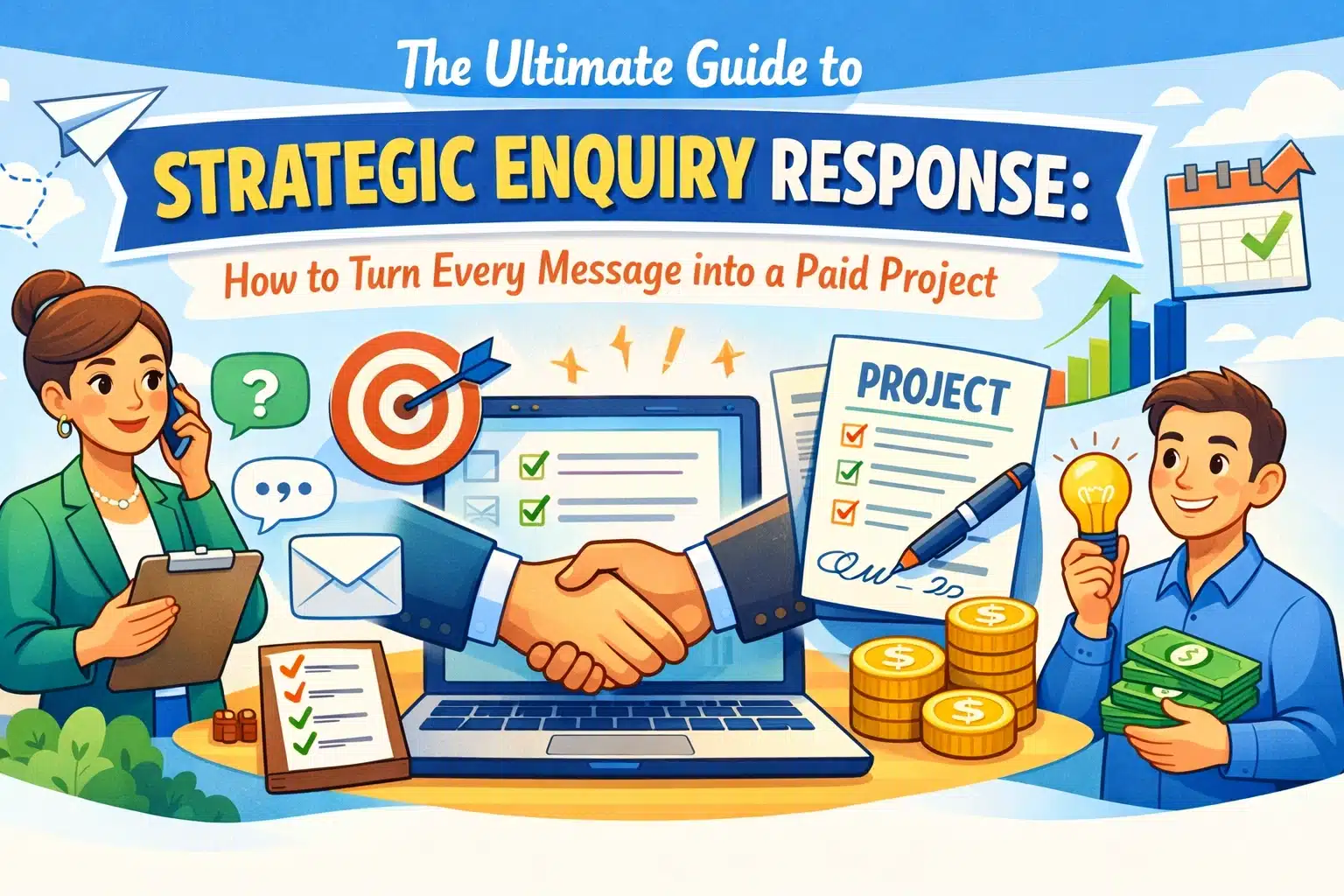
In this guide, I’m going to show you how to stop the rot. We’re moving away from "hope-based marketing" and into a structured system that turns every message into a potential paid project. We’re going to use the "They Ask, You Answer" (TAYA) philosophy made famous by Marcus Sheridan, focusing on transparency, trust, and speed.
Why "Visibility" is Only 20% of the Battle
Most digital marketing agencies will tell you that visibility is everything. They’ll talk your ear off about SEO, PPC, and "brand awareness." While visibility is important: you can't sell to people who don't know you exist: it is only the first hurdle.
If you have 1,000 people visiting your site but your enquiry handling is rubbish, you’re just paying to fail faster. True growth for an SME comes from the transition: Visibility -> Response -> Conversion.
The Problem with the "Visibility First" Mindset
When you focus purely on getting more leads, you end up with a quantity problem. You get "tyre-kickers," people looking for the cheapest price, and leads that don't fit your service. To fix this, your visibility needs to be educational.
According to HubSpot, businesses that prioritise inbound marketing (educational content) see a much higher ROI. You shouldn't just be visible; you should be useful. If your website answers the "Big 5" questions: Price, Problems, Comparisons, Reviews, and Best-of: you’re already ahead of 90% of your competition.

The "Golden Window": The Science of the Strategic Response
Once someone reaches out, the clock starts. In the UK service industry, we’ve noticed a dangerous trend: the "I'll get to it tonight" habit. If you wait more than 15 minutes to respond to a digital enquiry, your chances of converting that lead drop by over 80%.
A strategic response isn't just about speed, though. It’s about the quality of that first interaction. Most businesses reply with: "Thanks for your message, I'll give you a call later."
That is not a strategy. That’s a placeholder.
How to Structure a Strategic Response
A winning response follows a simple framework:
- Acknowledge and Validate: Use their name and mention their specific problem.
- The "TAYA" Educational Link: Don't just say you can help; send them a link to a guide or a video that explains how you solve that specific problem.
- Clear Next Steps: "I have an opening on Thursday at 10:00 AM for a 15-minute discovery call. Does that work?"
By providing value before you’ve even taken a penny, you build "trust equity." This is the core of improving response times and stopping lost leads.
Turning "How Much?" into "When Can You Start?"
The most common enquiry every SME gets is: "How much do you charge?"
Most business owners hate this question. They think, "It depends on the scope," or "I don't want to scare them off." So, they dodge the question. They say, "I'll need to see the site first."
This is a conversion killer.
In the "They Ask, You Answer" world, if they ask about price, you talk about price. You don't have to give a fixed quote, but you must explain the factors that move the price up or down. Transparency is the ultimate sales tool. When you are the only company willing to talk about money openly on your site or in your initial response, you become the most trusted authority.

The Conversion Framework
To move a lead toward a paid project, you need to move them through a "Self-Selection" process.
- Step 1: The Qualifier. Ask questions that make them think about whether they are right for you (and vice versa).
- Step 2: The Proof. Show them a case study of a similar project.
- Step 3: The Frictionless Booking. Make it incredibly easy to book the next stage. No "call me back," just a direct booking link or a confirmed appointment.
Comparison: Handling Enquiries Yourself vs. Professional Management
It’s tempting to think you can handle it all. "I’ve got my phone on me," you say. But let's look at the reality of the "DIY" approach versus a structured system like Every Enquiry.
| Feature | The DIY "Hustle" | The Every Enquiry Way |
|---|---|---|
| Response Time | 2 – 24 hours (whenever you're free) | Under 5 minutes (The Golden Window) |
| Consistency | Hits and misses depending on your workload | 100% consistent, every single time |
| Lead Quality | High volume of "tyre-kickers" | Pre-qualified leads who value your expertise |
| Follow-up | Usually forgotten after the first try | Multi-touch follow-up system |
| Data Tracking | "Gut feeling" | Clear dashboard showing ROI and conversion |
| Customer Perception | "One-man band" or "Too busy" | Professional, responsive, and reliable |
If you want to see why your current conversion might be lagging, check out our post on 10 reasons your lead conversion isn't working.
The Power of the "Anti-Sell"
One of the most effective strategic responses is telling a prospect why they might not want to hire you. It sounds counter-intuitive, doesn't it? But think about it. If a customer asks for a service you know isn't right for them, and you honestly tell them why, your credibility goes through the roof.
This is the ultimate conversion tactic. By filtering out the wrong projects, you leave more room for the high-margin, high-satisfaction projects that actually grow your business. You stop being a "salesperson" and start being an advisor.

Implementing a Structured Follow-up System
Did you know that 44% of salespeople give up after one follow-up? Yet, 80% of sales require five follow-up calls or messages after the initial enquiry.
For a busy SME, five follow-ups feel impossible. This is where most projects are lost. A strategic enquiry response includes a "Long-Term Nurture" plan. If a lead isn't ready to buy today, they shouldn't just be deleted. They should receive helpful, educational content once a month so that when they are ready, you are the only firm they think of.
The 3-Touch Minimum
At a bare minimum, every enquiry should receive:
- The Immediate Response: (Within 5 mins) Acknowledgment and a "Value Gift" (like a guide).
- The Day 2 Check-in: A simple question asking if they found the information helpful.
- The Day 5 Case Study: Showing them a successful project similar to theirs.
Lead Handling for the Modern UK SME
The landscape has changed. Customers are more informed than ever. They’ve done their research before they even email you. They don't want to be "closed"; they want to be helped.
When you treat every enquiry as a strategic opportunity to educate, rather than just a transaction, your business changes. You stop competing on price because your enquiry handling has already proven that you are the expert.

Stop Losing Leads Today
If you’re tired of seeing great enquiries go cold, it’s time to look at your services and see where the gaps are. Are you visible? Yes. Are you responding fast? Maybe. Are you converting? That’s the real question.
If you want to see how we can take this entire burden off your plate: ensuring every message is handled with the speed and strategy it deserves: take a look at our pricing or contact us for a chat. No hard sell, just a conversation about your process.
Frequently Asked Questions (FAQ)
Why shouldn't I just use a basic automated "Out of Office" reply?
An "Out of Office" is a brick wall. It tells the customer, "I'm busy, wait for me." A strategic response says, "I'm busy, but here is exactly how I can help you right now." It should include helpful links, FAQs, or a booking calendar. An automated reply is a missed opportunity to build trust.
How much does "speed to lead" really matter for trades?
It’s everything. If someone’s boiler has burst or their roof is leaking, they aren't going to wait three hours for a callback. They are going down the Google list. The first person to answer professionally usually gets the job. Even for non-emergencies, speed signals reliability. If you're slow to answer the phone, the customer assumes you'll be slow to show up for the job.
I’m a small firm, will I look too "corporate" if I have a structured response system?
There is a big difference between being "corporate" and being "professional." Customers love the personal touch of a small business, but they hate the chaos that often comes with it. A structured response actually makes you look more reliable and trustworthy, which is exactly what people want when hiring a professional firm.
Should I really put my prices on my website?
Yes. You don't need to give a quote, but you should explain your pricing structure. If you don't, customers will assume you’re either too expensive or that you’re hiding something. By being open about costs, you disqualify people who can't afford you and build massive trust with those who can.
What if I don't have time to follow up five times?
That is exactly why systems and partnerships exist. You should be focused on the work you're trained to do. If enquiry management is taking you away from billable hours, it’s costing you twice: once in lost time and once in lost leads. Outsourcing this to a specialist like Every Enquiry ensures it happens perfectly without you lifting a finger.
How do I handle "price shoppers" who just want the lowest quote?
The best way to handle them is to educate them. Write a blog post or send a message explaining why some quotes are lower (cheaper materials, no insurance, unskilled labour). Once they understand the risks of a "cheap" job, they often stop being price shoppers and start being value shoppers.

Summary: Your Next Steps
Turning every message into a paid project isn't about being a better salesperson; it's about being a better communicator.
- Check your response time. If it’s over 15 minutes, fix it.
- Audit your first reply. Is it helpful, or just a placeholder?
- Be brave with your pricing. Talk about it openly.
- Follow up. Then follow up again.
If you're ready to stop the "leaky bucket" in your business, we’re here to help. Let’s turn those enquiries into the projects you deserve. Check out our blog section for more deep dives into lead conversion and digital marketing for SMEs.