If you’re running a small service business in the UK, whether you’re a plumber, a solicitor, or an accountant, you’ve likely felt the frustration of the "leaky bucket." You spend a fortune on Google Ads, you’ve got a website that looks decent, and you’re active on social media. But at the end of the month, the bank balance doesn't reflect the effort you're putting in.
Why? Because generating a lead is only the first step. If that lead falls through the cracks because you didn't answer the phone, or because your follow-up was non-existent, you might as well have thrown your marketing budget straight down the drain.
At Every Enquiry, we see this every day. Business owners are working themselves to the bone, yet they’re losing thousands of pounds in potential revenue simply because they lack a structured system for conversion.
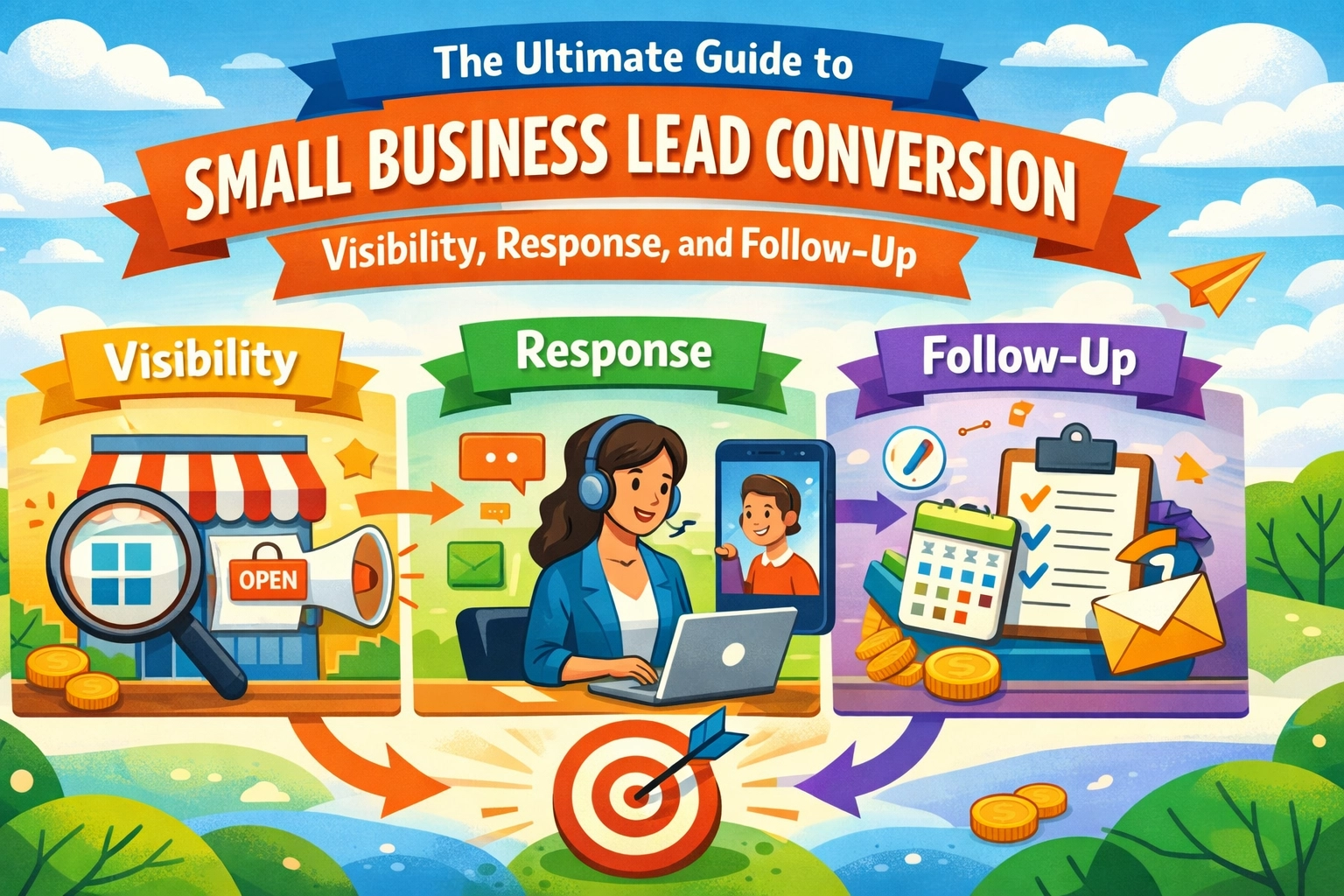
In this guide, we’re going to break down the three pillars of a successful lead machine: Visibility, Response, and Conversion. We aren't interested in "hacks" or "secrets." We’re interested in what works: being honest, being fast, and being consistent.
Pillar 1: Visibility – Being Found for the Right Reasons
Visibility isn’t just about "getting on the first page of Google." It’s about being seen by the right person at the moment they have a problem.
Many SMEs make the mistake of thinking SEO is a dark art. It isn't. It’s about answering the questions your customers are actually asking. Following the "They Ask, You Answer" philosophy pioneered by Marcus Sheridan, your visibility strategy should focus on transparency.
The Big 5 Content Topics
To be visible, your website needs to address the things most businesses are too scared to talk about:
- Cost and Price: Stop hiding your prices. People search for "how much does [service] cost?" if you don't tell them, your competitor will.
- Problems: Be honest about the problems your service solves, and the problems with the service itself.
- Comparisons: How do you stack up against the competition?
- Reviews: What are people actually saying?
- Best of: "Best electricians in Manchester" or "Best ways to fix a leaky tap."
When you create content around these topics, search engines like Google reward you with better rankings because you are actually being helpful. This is the core of our visibility service.
Website Optimization
Your website is your 24/7 shop front. If it’s slow, hard to navigate, or doesn't work on a mobile, you’re invisible to a huge portion of your market. According to Moz, site speed and mobile-friendliness are critical ranking factors. But beyond the technical side, does your site clearly tell people what to do next?
Every page should have a clear Call to Action (CTA). Not "Submit," but "Get My Free Quote" or "Book My Site Survey."

Pillar 2: Response – The Five-Minute Rule
You’ve got the visibility. A lead has landed on your site, read your helpful article about costs, and filled out a form. Or they’ve picked up the phone. This is where most small businesses fail.
Research from the Harvard Business Review shows that businesses that try to contact potential customers within an hour of receiving an enquiry are nearly seven times as likely to have a meaningful conversation as those who wait even an hour later.
If you wait 24 hours? You might as well not bother. The lead has already moved on to the next person on the list who actually answered the phone.
Why Speed is Your Greatest Competitive Advantage
In the SME world, speed beats size every single time. A sole trader who answers the phone on the second ring will beat a massive firm that puts the caller on hold for ten minutes.
At Every Enquiry, we focus heavily on enquiry handling. We know that as a business owner, you can’t always be by the phone. You might be on a building site, in a meeting, or, heaven forbid, having a lunch break.
This is where a Digital Receptionist or a managed response service becomes essential. It’s not just about "answering the phone"; it’s about capturing the data, qualifying the lead, and setting the expectation for what happens next.
Micro-Conversions
Not everyone is ready to buy right now. Some people are just "looking." If your only option is "Buy Now," you’re losing all the people who are in the research phase.
Consider offering:
- A downloadable checklist (e.g., "10 Things to Check Before Hiring a Roofer").
- A newsletter signup.
- A free calculator tool.
These "micro-conversions" allow you to capture an email address so you can stay in touch until they are ready to buy. You can read more about why this matters in our post on the power of prompt response.
Pillar 3: Conversion – The Art of the Follow-Up
Conversion is where the money is made. You’ve been visible, you responded quickly, and now you have to close the deal.
Most SMEs stop after the first follow-up. They call once, the person doesn't answer, and they give up. This is a massive mistake. It often takes 5 to 7 "touchpoints" before a lead converts into a customer.
Structured Follow-Up Systems
You need a system. If you’re relying on your memory or a pile of Post-it notes, you’re losing money. A basic CRM (Customer Relationship Management) system can track where every lead is in the journey.
Your follow-up should be a mix of:
- Immediate Phone Call: As discussed, within 5 minutes.
- Follow-up Email: Confirming what was discussed and providing value (links to relevant blog posts).
- SMS Reminder: People check their texts far more often than their emails.
- Nurture Sequence: If they haven't bought after a week, send them a helpful "how-to" guide or a case study of a similar project you’ve completed.
This isn't about being annoying; it’s about being helpful. If you’ve positioned yourself as an educator in the Visibility phase, your follow-ups will be welcomed as expert advice rather than "salesy" pestering. This is the foundation of our conversion strategy.

Comparing Lead Handling Strategies
To give you an idea of where your business currently sits, look at this comparison table. Be honest with yourself, which column looks most like your current setup?
| Feature | The "Hobbyist" Approach | The "Busy SME" Approach | The Every Enquiry Managed Approach |
|---|---|---|---|
| Response Time | Days (if at all) | 2–4 Hours | Under 5 Minutes |
| Visibility | Word of mouth only | Basic website, some ads | Educational content & high-intent SEO |
| Enquiry Capture | Voicemail | Basic Contact Form | Managed Live Chat & Digital Receptionist |
| Follow-up | None | One follow-up call | Structured 7-step nurture sequence |
| Data Tracking | Notebook / Memory | Excel Spreadsheet | Fully integrated CRM |
| Conversion Rate | Very Low (<5%) | Average (10–15%) | High (30%+) |
Common Pitfalls: Why Small Businesses Struggle
We've worked with hundreds of firms, and the same few problems crop up time and again. If you can fix these, you’ll be ahead of 90% of your competitors.
1. The "I'm Too Busy" Paradox
"I'm too busy to handle leads, so I don't need more marketing."
This is dangerous. Being "busy" often means you're doing low-value work. If you had a system to filter and convert high-value leads, you could charge more, work less, and hire help. Never stop your lead generation just because you’re busy today. You need to fill the pipeline for next month.
2. Lack of Transparency
In the UK, we can be a bit "coy" about money. But customers find it incredibly frustrating when they can't find a ballpark figure on a website. By being the business that openly discusses pricing, you build instant trust. Even if you can't give an exact quote, give a "starting from" price or a "typical project cost."
3. Ignoring Social Media Enquiries
Visibility often starts on social platforms. If someone messages your Facebook page or comments on an Instagram post, that is a lead. Too many businesses treat social media as a place to post pictures of their lunch but ignore the actual enquiries coming in.

Implementing the "They Ask, You Answer" Methodology
If you want to dominate your local market, you need to become the "Wikipedia" of your industry.
- Brainstorm: Sit down with your team (or by yourself) and list every single question a customer has ever asked you.
- Write: Turn those questions into blog posts. Don't use jargon. Write like you're talking to a friend at the pub.
- Link: Ensure those posts link back to your services.
- Update: Keep your content fresh. Prices change, regulations change, and technology changes.
When you do this, you aren't just "doing digital marketing." You’re building a library of assets that work for you while you sleep. They bring people to your site (Visibility), answer their concerns (Trust), and make them more likely to pick up the phone (Response).
How Every Enquiry Can Help
We aren't just another agency that sends you a monthly report full of graphs you don't understand. We focus on the bottom line: Converted Leads.
Our approach is holistic. We look at your visibility to ensure you're attracting the right people. We manage your response so you never miss a call or a message. And we build conversion systems that turn those enquiries into paying customers.
Whether you need a full social media management strategy or a dedicated team to handle your inbound calls, we’ve got you covered.
The Cost of Doing Nothing
Think about your average customer value. If a new client is worth £1,000 to you, and you’re missing just two calls a week, that’s £100,000 in lost revenue every year.
Can you really afford to keep the "leaky bucket" as it is?
Frequently Asked Questions (FAQ)
1. I’m a one-person band. How can I possibly respond in five minutes?
You can’t, and you shouldn't try to do it all yourself. This is where technology and managed services come in. Using an automated "Instant Call Back" tool or a digital receptionist service ensures that even if you’re up a ladder or in a court hearing, the customer feels heard and knows you’ll be in touch.
2. Is SEO really worth it for a local business?
Absolutely. Most people now search for "service + city" (e.g., "Accountant Bristol"). If you aren't in those top results, you don't exist to them. Local SEO is one of the highest ROI activities you can do.
3. Why shouldn't I just use a voicemail?
Because people hate voicemails. In a world of instant gratification, a voicemail is a dead end. Most people will simply hang up and call the next business on Google. You need a human, or a very smart system, to capture their details.
4. How much should I spend on lead conversion?
Instead of thinking about "spend," think about "acquisition cost." If it costs you £50 to acquire a customer worth £500, you should spend as much as you possibly can. We help you figure out these numbers so your marketing becomes an investment, not an expense. Look at our pricing page for more details on how we structure our services.
5. What if I have plenty of leads but they are all "low quality"?
This is a visibility problem. Your content is likely too broad. By using the "They Ask, You Answer" method and being transparent about who you aren't a good fit for, you’ll naturally filter out the "tyre kickers" and attract the high-value clients you actually want.
6. Do I need a CRM?
If you have more than five leads a month, yes. Even a simple, free CRM is better than a spreadsheet. It allows you to automate your follow-ups and ensures no one is forgotten.
Final Thoughts
Lead conversion isn't a mystery. It’s a process of being found, being fast, and being persistent. By focusing on Visibility, Response, and Follow-up, you can stop wasting money on ineffective marketing and start building a business that grows predictably.
Ready to fix your leaky bucket? Contact us today to see how we can help you turn more enquiries into sales. Or, if you want to learn more about our philosophy, check out our blog section for more guides like this one.