Let’s be honest for a second. Most small business owners in the UK are working themselves into the ground trying to get more leads. You’re spending money on Google Ads, you’re posting on LinkedIn, and you’re probably paying some agency to “optimise” your website.
But here’s the cold, hard truth: more leads won’t save a business that doesn't know how to close them.
At Every Enquiry, we see it every single day. A local plumbing firm or a boutique law practice spends a fortune on marketing, the enquiries start rolling in, and then… nothing. The phone rings out. The contact form email sits in an inbox for three days. The "lead" gets bored and calls the next person on Google.
If you’re nodding your head, don’t worry. You’re not alone. But you are losing money. This guide is designed to stop the bleed. We’re going to look at the three pillars of growth: Visibility, Response, and Conversion.
If you want to turn your small business into a conversion machine, grab a cuppa, and let’s dive in.
Pillar 1: Visibility – Stop Hiding from Your Customers
Before we can even talk about conversion, we need to talk about how you’re being found. But this isn't your typical SEO advice. Following Marcus Sheridan’s "They Ask, You Answer" philosophy, visibility isn't just about ranking #1 on Google; it’s about being the most trusted voice in your industry.
The Transparency Trap
Most SMEs are terrified of talking about price or problems on their website. They think, "If I put my prices up, my competitors will see them." Guess what? Your competitors already know what you charge. The only people you’re hiding from are your potential customers.
When a prospect lands on your site, they have questions. If you don't answer them, you aren't "visible" to them in any meaningful way, you’re just another vague brochure site.
To improve your visibility, you need to address the "Big 5" topics that every buyer researches:
- Pricing and Cost: Why does it cost what it costs?
- Problems: What can go wrong? (Be honest!)
- Comparisons: How do you stack up against the "other guys"?
- Reviews: What are people actually saying?
- Best of: Who are the top providers in your area (even if it isn't you)?
By being transparent, you build trust before the first phone call. Trust is the currency of conversion.
Content That Converts
Research from the Content Marketing Institute shows that educational content is the most effective way to build a relationship with a prospect. Don’t just blog about your "new office opening." Blog about "How much a kitchen renovation costs in London in 2026."
That is the kind of content that captures high-intent leads. You can see more about how we handle this on our website optimisation page.

Pillar 2: Response – The "Leaky Bucket" Problem
You’ve got the visibility. The leads are coming in. Now, what happens next? For most SMEs, this is where the wheels fall off.
In the UK, we have a massive "speed to lead" problem. According to studies highlighted by Harvard Business Review, businesses that respond to an enquiry within five minutes are nearly 100 times more likely to have a meaningful conversation than those who wait 30 minutes.
Waiting a day? You might as well set your marketing budget on fire.
The Digital Receptionist: Your Secret Weapon
As a business owner, you can’t be glued to your phone 24/7. You’re on-site, you’re in meetings, or you’re actually trying to have a life. This is where a digital receptionist UK service becomes essential.
An automated or managed enquiry handling system ensures that:
- No call goes unanswered: Even at 8 PM on a Tuesday.
- Instant SMS/Email follow-up: Letting the lead know you’ve received their message and when you’ll call back.
- Qualification on the fly: Filtering out the tyre-kickers before they ever reach your desk.
Structured Follow-Up Systems
If a lead doesn’t buy on the first call, do you have a system to follow up? Most small firms don't. They rely on "remembering to call back."
A structured follow-up system involves:
- Immediate acknowledgement: (SMS/Email).
- The "Assignment Selling" email: Sending them a helpful guide or video to watch before your scheduled call.
- The 24-hour check-in: Seeing if they have any more questions.
Stop trying to manage your business from a sticky note. You need a process.
Pillar 3: Conversion – Turning "Maybe" into "Yes"
Conversion is the final step, but it’s the one that requires the most finesse. This is where you move from being a "service provider" to a "problem solver."
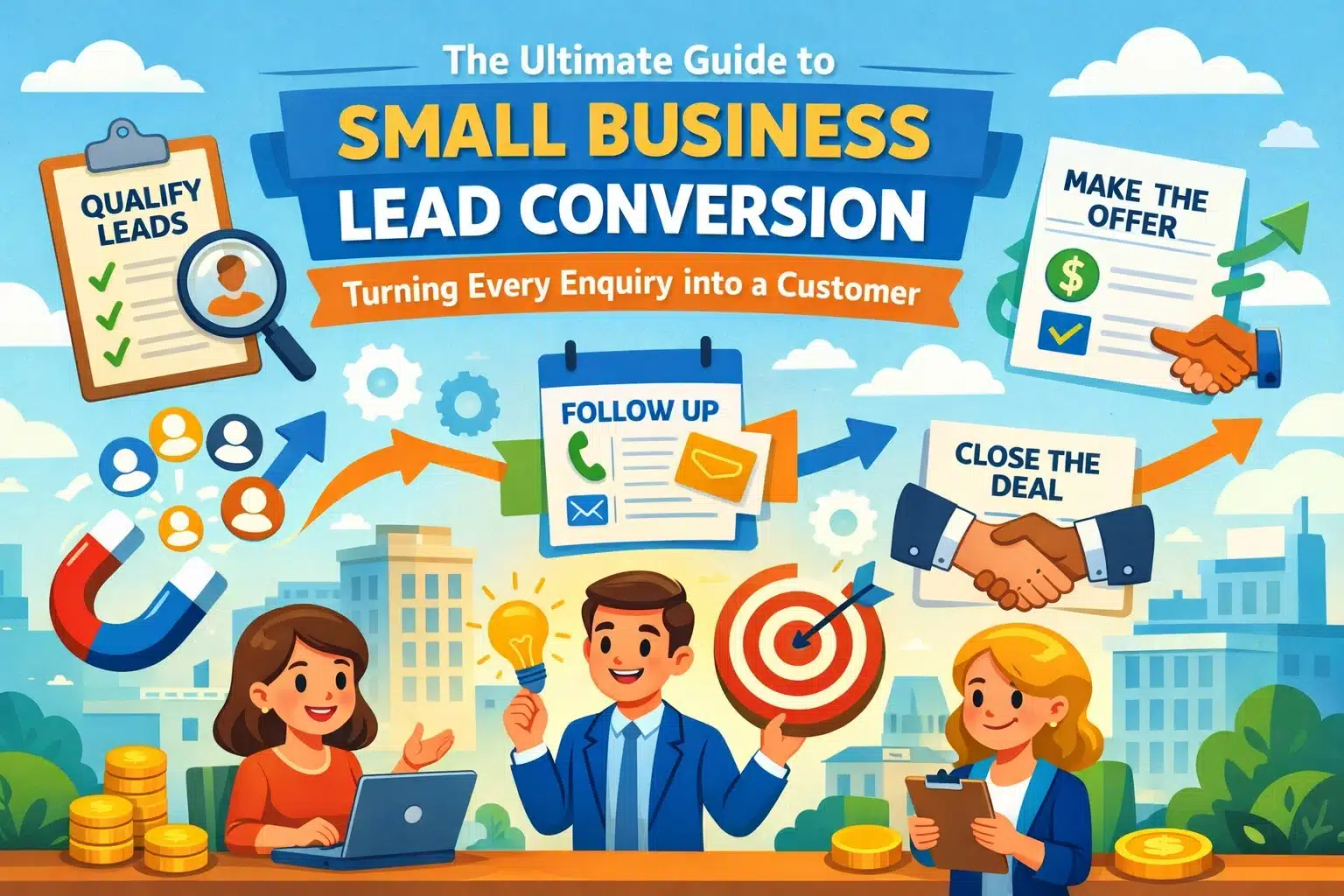
Qualifying Your Leads
Not every enquiry is a good lead. If you’re a high-end architectural firm, you don't want to spend three hours talking to someone who wants a garden shed designed for £500.
Lead conversion starts with qualification. Ask the hard questions early:
- "What is your realistic budget for this project?"
- "What is your timeline?"
- "What happens if you don't solve this problem now?"
By qualifying leads, you focus your energy on the people who are actually going to pay you. This is the core of our services at Every Enquiry.
Micro-Conversions
Sometimes, a lead isn't ready to buy a £10,000 service yet. They need a "micro-conversion" first. This could be:
- Downloading a pricing guide.
- Using an online calculator on your site.
- Signing up for a free webinar.
These small steps build momentum. It’s a lot easier to sell to someone who has already "bought into" your expertise through a smaller interaction.

Comparing Lead Handling Strategies
To give you an idea of where your business might sit, let’s look at the three most common ways SMEs handle their enquiries.
| Feature | The "DIY" Approach | The "Agency" Lead Gen | The Every Enquiry Way |
|---|---|---|---|
| Response Time | Whenever you’re free (Slow) | Fast (but often low quality) | Instant & Personalised |
| Lead Quality | Mixed bag | High volume, low intent | High intent & Pre-qualified |
| Follow-up | Manual/Forgetful | Usually none | Automated & Persistent |
| Cost Control | Cheap (but loses sales) | Expensive (Pay per lead) | Predictable (ROI focused) |
| Trust Building | Low (Reactive) | Medium | High (Educational approach) |
You can check our pricing to see how we help businesses move into that third column without breaking the bank.
The "They Ask, You Answer" Framework for Conversions
If you want to master small business lead conversion, you have to stop selling and start teaching. Marcus Sheridan’s methodology is simple: if a customer has a question, you must answer it.
1. Address Fears Upfront
If you’re a tradesperson, people are scared of being ripped off. If you’re a solicitor, people are scared of "hidden fees." Address these fears on your website and in your initial enquiry response.
"We know some firms hide their disbursements until the final bill. We don't. Here is exactly what you will pay."
That single sentence converts more leads than a thousand "award-winning" badges ever will.
2. Use "Assignment Selling"
Before you meet a lead, send them something to read or watch. It could be a video explaining your process or a PDF of "10 things to ask before hiring a [Your Profession]."
This does two things:
- It educates the lead, making the sales call much faster.
- It filters out people who aren't serious. If they can't spend 5 minutes reading your guide, they likely won't be a great client.
3. The Power of "No"
A huge part of lead conversion is knowing who not to work with. When you tell a prospect, "Honestly, we might not be the best fit for you because of X," your credibility with them skyrockets. Paradoxically, being willing to say "no" often makes the right customers desperate to say "yes."
Lead Handling for SMEs: The Practical Checklist
If you want to improve your results by next Monday, follow this checklist:
- Audit your contact forms: Fill them out yourself. Do they work? Do you get an auto-reply? Is it boring?
- Check your "Speed to Lead": Have a friend call your business at lunch. Does anyone answer? How long does it take for a callback?
- Create a "Pricing" page: Even if you can't give an exact quote, give ranges. "Most of our clients spend between £X and £Y."
- Set up an automated SMS: When someone fills out a form, they should get a text immediately saying, "Hi [Name], we’ve got your enquiry. Martyn will call you at 2 PM to discuss."
- Review your Terms and Conditions: Make sure your process is clear from the start.

Why Most SMEs Fail at Conversion
It’s rarely a lack of talent. It’s almost always a lack of systems.
Small business owners are the world's best jugglers. You’re handling HR, finance, operations, and marketing. But lead conversion is a game of minutes and consistency. You cannot "wing it" and expect to grow.
By implementing a structured follow-up system, you’re not just hoping for the best; you’re engineering success. You’re moving from a "hope and pray" model to a predictable growth model.
If you’re tired of seeing leads go to waste, it might be time to look at how a Digital Marketing partner can help you plug the holes in your bucket. We don't just find you leads; we make sure those leads turn into money in the bank.
Frequently Asked Questions (FAQ)
1. Why are my leads not converting?
Most likely, it’s a combination of slow response times and a lack of trust. If you take longer than 15-30 minutes to respond, the "buying heat" has already dissipated. Additionally, if your website doesn't answer their basic questions (like cost), they don't trust you enough to commit.
2. How can I handle enquiries when I’m out on a job?
This is a classic SME struggle. You should look into a digital receptionist or an automated enquiry management system. These tools can acknowledge the lead, ask qualifying questions, and even book a time in your calendar while you’re busy working.
3. Is "automated" follow-up too impersonal for a small business?
Not if you do it right. An automated SMS that says, "Hi, I’m out on a site visit right now but I’ve seen your message. I’ll give you a shout at 4 PM," feels very personal. It’s much better than the "impersonal" experience of being ignored for two days.
4. Should I really put my prices on my website?
Yes. 100%. If you don't, the customer will find a competitor who does. You don't need to give a final quote, but providing "starting from" prices or "average project costs" builds immediate authority and filters out people who can't afford you anyway.
5. What is the best way to "qualify" a lead quickly?
Use your contact form. Instead of just "Name" and "Email," add a dropdown for "Estimated Budget" or "Desired Start Date." People who are serious will fill it out. People who are just "browsing" won't: and that’s a good thing for your schedule.
6. How many times should I follow up with a lead?
Research suggests it takes between 5 to 8 touchpoints to close a sale. Most SMEs stop after one or two. A mix of phone calls, helpful emails (not "just checking in" emails!), and SMS messages is the best approach.
Final Thoughts from Martyn
At Every Enquiry, we believe that every small business deserves to grow. But growth doesn't come from a bigger ad budget; it comes from a better system.
Stop losing leads to your competitors because you were too busy to answer the phone. Start being the business that answers the questions, provides the value, and follows up like a pro.
If you want to chat about how we can help you set this up, feel free to contact us or check out our blog section for more tips on dominating your local market.
Let’s turn those enquiries into customers.