Let’s be honest for a second. Most small business owners in the UK are brilliant at what they do, whether that’s fixing a boiler, designing a home extension, or providing legal advice, but they’re often rubbish at handling the leads that come their way.
You spend a fortune on SEO, Google Ads, or Facebook to get the phone ringing, only to let those calls go to voicemail because you’re "on a job." Or worse, you see an enquiry form land in your inbox at 10 AM, and you don’t reply until 6 PM. By then, that potential client has already called three of your competitors and booked the one who answered the phone first.
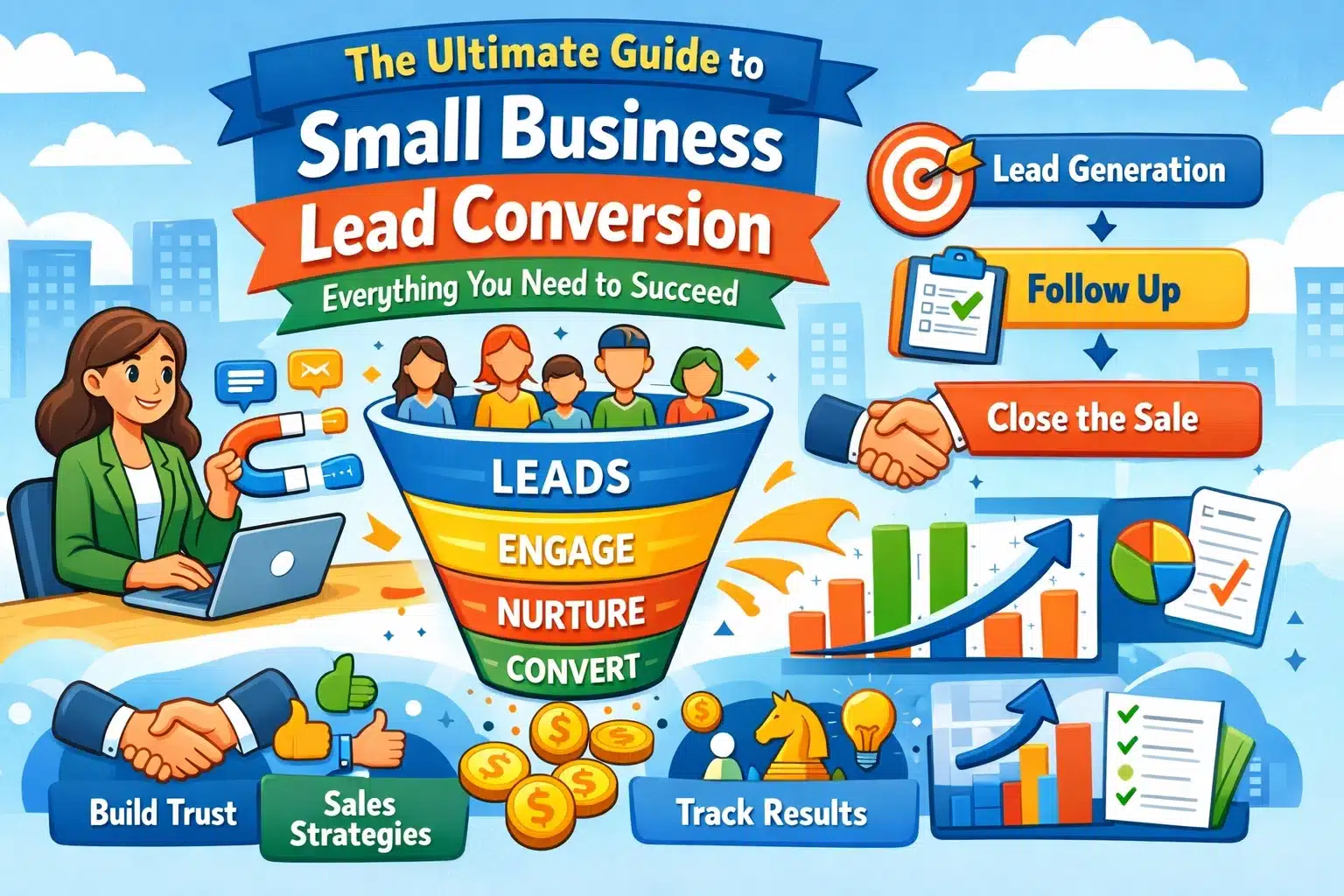
At Every Enquiry, we see this every single day. You don’t have a lead generation problem; you have a lead conversion problem. This guide is here to fix that. We’re going to look at the entire journey, from getting noticed (Visibility) to answering the call (Response) and finally, closing the deal (Conversion).
No fluff, no marketing jargon, just the straight talk you need to stop burning money and start growing your business.
Part 1: Visibility, Being Found for the Right Reasons
Before you can convert a lead, they have to find you. But here’s the mistake most SMEs make: they think visibility is just about being "Number 1 on Google."
Visibility is actually about trust. According to Marcus Sheridan’s "They Ask, You Answer" philosophy, people don’t just want to see your logo; they want answers to their questions. If your website is just a digital brochure that says "We are the best," you’re invisible to someone looking for real information.
The "Big 5" Questions You Must Answer
To truly be visible to your ideal customer, your content must address the five things every buyer is thinking but most businesses are too scared to talk about:
- Cost and Price: Why is your service £500 while the guy down the road is £300? Be honest about it.
- Problems: What can go wrong? If you’re a roofer, talk about why some repairs fail.
- Comparisons: How do you stack up against other options?
- Reviews: What do people actually think of you (the good and the bad)?
- Best: Who are the best in your area? (Yes, even mentioning competitors builds massive trust).
By answering these questions on your visibility pages, you aren’t just getting clicks; you’re qualifying leads before they even contact you. You want people who value your expertise, not just people looking for the cheapest quote.

Part 2: Response, The 5-Minute Window
This is where the wheels fall off for most UK small businesses. You’ve done the hard work, the prospect has read your blog, they’ve seen your prices, and they’ve filled out a form. They are "hot."
If you wait two hours to call them back, their "buying temperature" has dropped. If you wait until the next day, they’ve probably forgotten who you are.
Research from Harvard Business Review shows that businesses that try to contact potential customers within an hour of receiving a query are nearly seven times as likely to have a meaningful conversation as those who wait even an hour longer. At Every Enquiry, we reckon that’s too slow. You should be aiming for five minutes.
The Silent Killer: Voicemail
For many trades and professional firms, the mobile phone is the office. But if you’re in a meeting or on a ladder, you can’t answer.
This is why enquiry handling is the most critical part of your sales funnel. Every missed call is a missed opportunity. Think of it this way: if every lead is worth £1,000 in lifetime value, and you miss five calls a week, you’re throwing £5,000 into the bin every single week.
A digital receptionist UK service or a structured response system ensures that every person who reaches out gets a human response immediately. You can read more about why this matters in our post on the power of prompt response.
Part 3: Conversion, Closing the Deal Without the Hard Sell
Conversion isn't about being a "closer" or using high-pressure sales tactics. In the SME world, conversion is about making it as easy as possible for the customer to say "yes."
Form Optimization
Most small business contact forms are a nightmare. They ask for too much information or look like they were designed in 1998. To boost your conversion rates, your forms should:
- Be Above the Fold: Don’t make people scroll to find you.
- Be Short: Only ask for what you need to make the first call (Name, Phone, Email, Brief Issue).
- Use Inline Validation: Show them a green tick when they’ve filled a field correctly.
- Tell Them What Happens Next: Instead of a button that says "Submit," use "Get My Free Quote" or "Book My Consultation."
Micro-Conversions
Not everyone is ready to buy today. Some people are just "looking." If your only call to action is "Buy Now," you’re losing 90% of your traffic.
Instead, offer micro-conversions. These are smaller steps like:
- Downloading a "Pricing Guide."
- Signing up for a "Maintenance Checklist."
- Using a calculator tool on your site.
These actions allow you to capture an email address and nurture that lead over time until they are ready to pull the trigger.

Comparing Approaches: Manual vs. Managed
To give you an idea of where your business might be sitting, let’s look at the difference between the "Standard SME" approach and the "Every Enquiry" approach.
| Feature | The DIY/Standard Approach | The Every Enquiry Approach |
|---|---|---|
| Initial Contact | Customer leaves a voicemail or sends an email. | Customer speaks to a person or gets an instant reply. |
| Response Time | 4 to 24 hours (or never). | Under 5 minutes. |
| Lead Nurturing | "I'll call them when I'm back in the office." | Automated follow-up and CRM integration. |
| Trust Building | Generic "About Us" page. | Educational content that answers "The Big 5." |
| Tracking | "I think the ads are working?" | Full data on where every lead came from. |
| Conversion Rate | Low (losing leads to faster competitors). | High (first to respond, most helpful). |
Part 4: Structured Follow-Up Systems
Most sales aren't made on the first call. They are made on the fifth, sixth, or seventh touchpoint. But who has time for that?
If you’re running a small business, you’re busy. You don't have time to manually email every prospect every three days. This is where website optimization and automation come in.
A structured follow-up system should look something like this:
- Immediate: Confirmation email/SMS ("We've got your enquiry, someone will call you in 5 minutes").
- Day 1: The Discovery Call.
- Day 2: A "Thank You" email with a link to a relevant case study.
- Day 4: A follow-up asking if they have any more questions about the quote.
- Day 7: A "Helpful Resource" email (e.g., "5 things to check before hiring a builder").
This isn't "spamming." It’s being helpful. If you’ve positioned yourself as an educator through your blog section, your follow-ups will be welcomed rather than ignored.

Part 5: The Cost of Doing Nothing
I want to talk about the "elephant in the room": the cost.
Many business owners look at pricing for digital marketing or enquiry handling and think, "I can’t afford that."
But let’s do the maths.
If you spend £1,000 on ads and get 20 leads, each lead cost you £50.
If you only answer the phone 50% of the time, 10 leads are wasted instantly. That’s £500 down the drain.
If you take 24 hours to respond to the remaining 10, you might only convert 1 of them.
Your Cost Per Acquisition (CPA) is now £1,000 for one customer.
Now, imagine you spent an extra £300 on a proper response system.
You answer 100% of those 20 leads instantly.
You convert 5 of them because you were the first to respond and you were the most helpful.
Your CPA is now £1,300 / 5 = £260 per customer.
Investing in your lead conversion system actually makes your marketing cheaper. It’s not an expense; it’s a leak-plugging exercise.
Part 6: Applying "They Ask, You Answer" to Your Business
To succeed in 2026, you have to stop acting like a salesperson and start acting like a teacher. The internet has changed the power dynamic. Customers have all the information, and they can sniff out a "sales pitch" from a mile away.
If a customer asks a question: even if it's "Why are you so expensive?": your job is to answer it on your website. Don't hide your prices. Don't hide your process. When you are transparent, you eliminate fear. And when you eliminate fear, you increase conversion.
For more information on our services and how we can help you implement these systems, feel free to contact us.

Final Thoughts: Stop Losing Leads
Small business lead conversion isn't a secret art. It’s a process. It’s about being visible for the right reasons, responding faster than your competition, and providing so much value that the customer would feel silly going anywhere else.
You don't need a massive team. You just need a system. Whether you use a social media strategy to drive traffic or rely on local SEO, the goal remains the same: treat every enquiry like it's the most important one you've ever had.
If you’re tired of seeing leads slip through your fingers, it’s time to take a hard look at your response times and your content. Are you answering the questions people are actually asking? Or are you just shouting into the void?
Cheers to your success,
Martyn Lenthall
Director, Every Enquiry
Frequently Asked Questions (FAQ)
1. How quickly do I really need to respond to an enquiry?
Ideally, within 5 minutes. The likelihood of reaching a lead drops by 10x after the first hour. If you can’t do it personally, you need an automated or managed system to bridge the gap.
2. Should I put my prices on my website?
Yes. It’s the number one thing people want to know. Even if your prices vary, give a "starting from" price or explain the factors that influence the cost. This builds trust and filters out "tyre-kickers" who can’t afford you anyway.
3. What is a "Digital Receptionist"?
It’s a service (or sometimes a smart automated system) that ensures every phone call or web enquiry is answered by a real person or a sophisticated response tool immediately, even outside of standard business hours.
4. Why are my leads not converting even when I call them back?
It could be a few things: your response was too slow, your website didn't build enough trust beforehand, or your follow-up process is non-existent. Make sure you are answering their "Big 5" questions before they even pick up the phone.
5. Is lead conversion only for big companies with big budgets?
Absolutely not. In fact, SMEs have an advantage because they can provide a more personal, expert touch. Small changes to your website forms and your response habits can have a massive impact without needing a "corporate" budget.
6. Where can I find your legal information?
You can find our terms and conditions and our privacy policy right here on our site. We believe in being as transparent with our legal bits as we are with our marketing advice!
7. How do I know which marketing channel is working?
This is where tracking comes in. You should use unique phone numbers or tracking pixels to see if a lead came from Google, Facebook, or a direct link. This allows you to spend your money where it actually generates a return.