Let’s be brutally honest for a moment. Most small to medium-sized businesses in the UK don’t actually have a lead generation problem. They have a "leaky bucket" problem.
You spend your hard-earned money on SEO, maybe some local Facebook ads, or perhaps you’ve been paying for a fancy website. The enquiries start coming in. But then, life happens. You’re on-site finishing a job, you’re in a meeting with a client, or you’re simply trying to have a Sunday roast with your family. The phone rings, it goes to voicemail, and that lead, that potential thousands-of-pounds-worth-of-business, is gone.
By the time you call them back three hours later, they’ve already booked your competitor.
This is the reality of lead decay. In the digital age, a "lead" isn’t a person who wants to have a long, philosophical chat about your services next week. They want a solution, and they want it now. If you aren't there to answer, they’ll find someone who is.
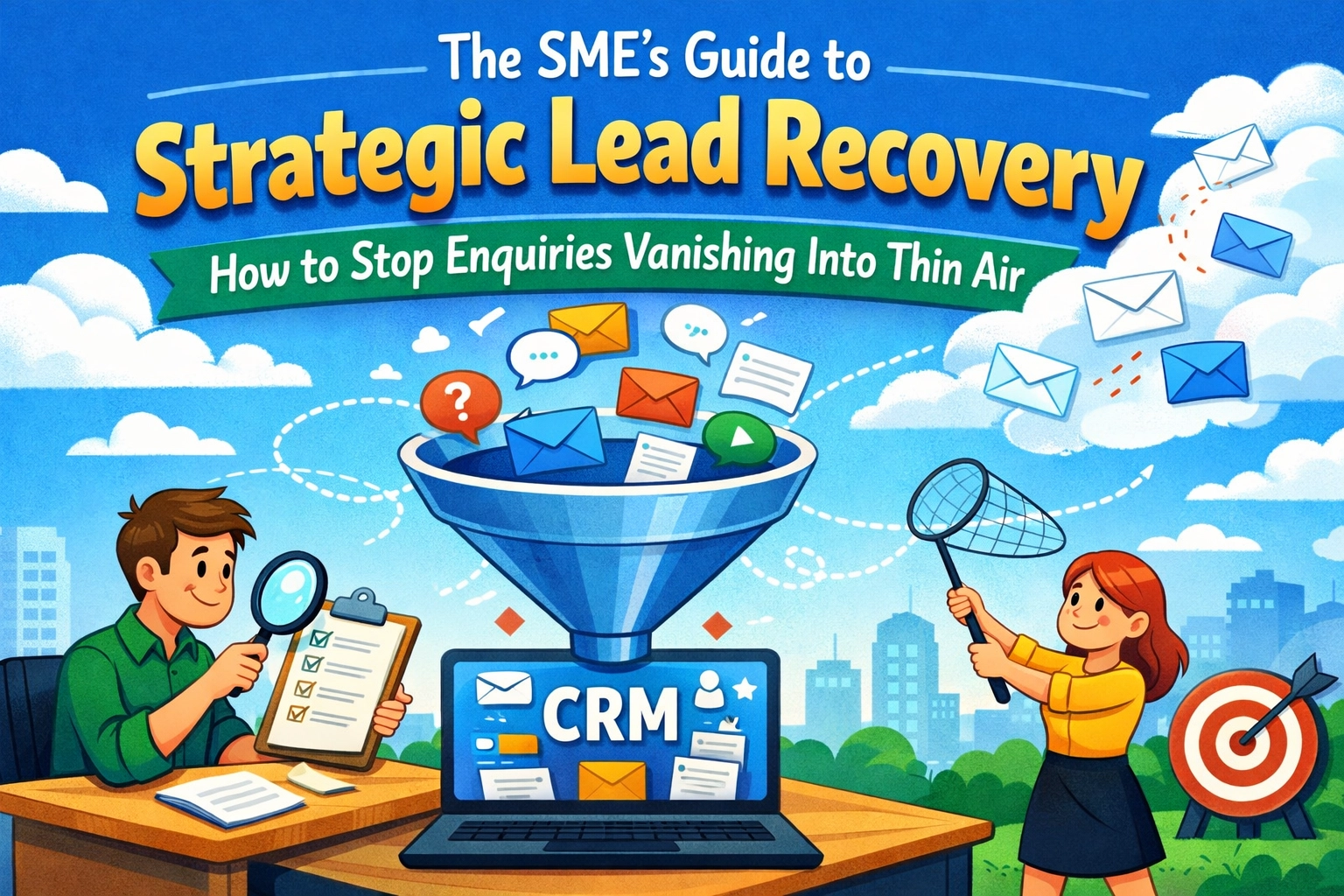
At Every Enquiry, we’re all about helping SMEs stop the rot. In this guide, we’re going to look at strategic lead recovery. This isn't just about answering the phone; it’s about a structured system that ensures every single person who expresses interest in your business is tracked, handled, and nurtured.
The Problem: Why Your Enquiries Are Vanishing
If you feel like your marketing isn't working, take a look at your enquiry handling first. Research often shows that up to 50% of sales go to the vendor that responds first. If you are responding in hours or days rather than minutes, you are effectively throwing your marketing budget into a skip.
We often see businesses fall into these traps:
- The Voicemail Abyss: You think a voicemail greeting is enough. It isn’t. Most people will hang up and call the next person on Google.
- The "I'll Do It Later" Email: An enquiry comes through your website form. You see it on your phone while driving. You tell yourself you’ll reply when you get home. By then, the prospect has already received three automated replies and one call from other firms.
- The Social Media Silence: You get a DM on Instagram or Facebook. It sits there for two days because you don't check those apps for work.
This is what we call "The Hidden Cost of Missed Enquiries." If you want to dive deeper into how much this is actually costing you, check out our article on is your website losing you money?.

Phase 1: Visibility – If You Can’t See It, You Can’t Recover It
The first step in any strategic lead recovery plan is visibility. Most SMEs have no idea how many leads they are actually losing because they don't have a central place where they live.
Marcus Sheridan’s "They Ask, You Answer" philosophy teaches us that we must be obsessed with the customer's journey. Part of that is knowing exactly where they are entering your world. Are they calling? Messaging on WhatsApp? Filling out a form on your services page?
To gain visibility, you need to:
- Audit your touchpoints: List every way a customer can contact you. Phone, email, web form, Google My Business, Facebook, Instagram, LinkedIn.
- Centralise the data: Use a simple CRM (Customer Relationship Management) tool. It doesn't have to be expensive or complicated. Even a shared spreadsheet is better than nothing, though we recommend something like HubSpot or Pipedrive.
- Track the 'Miss': Don't just track the wins. Track the calls you missed. Track the emails that didn't get a reply within 4 hours.
When you have visibility, you stop guessing. You can see that you're getting 40 calls a month but only talking to 15 people. That’s a 25-lead gap that needs filling.
Phase 2: Response – The 5-Minute Rule
Once you can see the leads, you need to respond. And you need to do it fast.
The "Speed to Lead" is the most critical metric in modern business. If you respond to a lead within 5 minutes, you are 100 times more likely to connect with them than if you wait 30 minutes.
Think about your own behaviour. If you’re looking for a plumber because your boiler has exploded, you aren’t going to wait two days for a quote. You’re going to call the first person who looks professional. If they don't answer, you call the second.
Human vs. Automated Response
While automated "We've received your enquiry" emails are better than nothing, they don't stop the customer from looking elsewhere. They know it's a bot. What they want is a human being to say, "Yes, we can help, and here is what happens next."
This is where a response framework comes into play. For many SMEs, being available 24/7 is impossible. You have a life, after all. This is why services like a digital receptionist or a managed enquiry handling service are game-changers. They provide that human touch instantly, even when you’re elbow-deep in a project.

Phase 3: Conversion – Recovering the "Not Now" Leads
Not every lead is ready to buy today. In fact, many people are just "window shopping" or doing their research. This is where most SMEs drop the ball. They think if a lead doesn't book a job on the first call, it’s a "bad lead."
Strategic lead recovery is about nurturing those "not now" leads until they become "ready now" leads.
The Art of the Follow-Up
Most sales require between 5 and 12 points of contact. Yet, the average small business owner gives up after one or two tries.
To improve your conversion rates, you need a structured follow-up system:
- The Immediate Gratification: A call or personalized message within 5 minutes.
- The Education Piece: Send them a link to a blog post or a video that answers their biggest questions. (This is a core "They Ask, You Answer" principle).
- The 24-Hour Check-in: A quick message to see if they had any more questions about the quote or information you sent.
- The Long-Tail Nurture: If they don't buy, add them to a monthly newsletter that provides value, not just sales pitches.
If you’re struggling with this, you might want to read our post on 10 reasons your lead conversion isn’t working.
Comparison: Traditional vs. Strategic Lead Recovery
| Feature | Traditional SME Approach | Strategic Lead Recovery (Every Enquiry) |
|---|---|---|
| Response Time | "When I have a minute" (usually hours/days) | Under 5 minutes, every time |
| Method | Voicemail and sporadic emails | Human-first, multi-channel response |
| Tracking | Memory or scribbled notes | Centralised digital tracking |
| Follow-up | One-and-done | Structured 5-12 point nurture system |
| Customer Perception | Disorganised or "too busy" | Professional, reliable, and attentive |
| ROI on Ad Spend | Low (lots of wasted leads) | High (maximum lead capture) |
Addressing the "Elephant in the Room": The Cost of Handling Leads
One of the main questions we get asked is, "How much does this cost?" People are often afraid that professional lead handling is only for big corporations with massive budgets.
But here’s the thing: you are already paying for lead handling: you’re just paying for it in lost revenue. If one missed enquiry is worth £1,000 in profit, and you miss four a month, your current "system" is costing you £4,000 a month.
When you look at our pricing, you’ll see that the investment in professional handling is a fraction of the cost of the leads you’re currently losing. Transparency is one of our core values. We don’t hide our prices because we know that for a serious SME, the value is obvious.
Lead Recovery for Trades and Professional Firms
Whether you are a solicitor, an architect, or a landscaper, the principles remain the same. However, the way you recover leads might differ slightly.
For a trade business, a missed call is usually a missed job. Lead recovery here is about speed. For a professional firm (like a law firm), lead recovery is often about qualification. You need to know if the lead is the right fit for your business before you spend hours on a consultation.
We’ve worked with various sectors to build bespoke systems that handle this. It’s not just about picking up the phone; it’s about asking the right questions to ensure the lead is actually worth your time. This is part of our broader enquiry handling philosophy.

Using Content to Recover Leads
Another powerful tool in your recovery arsenal is content. If someone enquires but doesn't book, it’s usually because they have an unanswered question or a fear.
- Are they worried about the price?
- Are they worried about how long the job will take?
- Are they worried you aren't the right "fit"?
By using your blog and social media to answer these questions directly, you lower the barrier to entry. For example, social media management isn't just about posting pretty pictures; it’s about addressing customer concerns and staying "top of mind" so when they are ready to buy, you are the only choice.
The Role of a Digital Receptionist in the UK
In the UK, we value politeness and efficiency. A "digital receptionist" isn't a robot. It’s a professional service that acts as an extension of your team. When a customer calls, they hear a friendly, professional voice that knows your business.
This person can:
- Qualify the lead based on your criteria.
- Book a meeting directly into your calendar.
- Send an immediate follow-up email with your brochure.
This level of service sets you apart from the "one-man-band" competition and immediately builds trust. Trust is the currency of conversion. You can read more about why this is so effective in our post on the power of prompt response.
Your Action Plan: How to Stop the Vanishing Act
If you want to start recovering leads today, follow these three steps:
- The "Ghost Call" Test: Ask a friend to call your business at 2:00 PM on a Tuesday and 6:00 PM on a Thursday. See what happens. Do they get a human? Does someone call back within 10 minutes? If not, you have a problem.
- Fix Your Forms: Ensure your website forms aren't just sending emails into a "no-reply" black hole. Set up an auto-responder that tells the customer exactly when they will hear from you, and then beat that deadline.
- Invest in Handling: Stop trying to do it all yourself. You are the expert in your trade or profession. Let experts handle the initial enquiry. It frees you up to do the work that actually generates income.
Final Thoughts
Strategic lead recovery is the bridge between marketing and sales. You can have the best marketing in the world, but if your bridge is broken, no one is crossing over to become a paying customer.
Don't let your enquiries vanish into thin air. Be visible, be responsive, and be obsessed with conversion. Your bank balance will thank you for it.
If you’re ready to stop losing leads and start growing your business properly, get in touch with us at Every Enquiry. We’d love to show you how we can help you build a system that never sleeps.
Frequently Asked Questions (FAQ)
1. What is the difference between lead generation and lead recovery?
Lead generation is the process of getting people to find your business and express interest (e.g., via ads or SEO). Lead recovery is the strategic process of ensuring that once they express interest, they aren't lost due to slow response times or lack of follow-up.
2. Why isn’t a voicemail enough for my small business?
In a competitive market, customers value their time. If they hit a voicemail, they feel their enquiry hasn't been "received" by a person. Most will simply hang up and call the next business on their list who might actually answer.
3. How quickly do I really need to respond to a lead?
Ideally, within 5 minutes. Research shows that the odds of qualifying a lead drop by 10 times after just the first hour. The faster you are, the higher your conversion rate will be.
4. Can lead recovery be automated?
Parts of it can, like initial confirmation emails. However, the most successful lead recovery involves a human element: someone who can answer specific questions and build an immediate rapport with the prospect.
5. Is a digital receptionist service expensive for a trade business?
Not when compared to the cost of lost business. If one missed call costs you a £500 job, and a handling service costs a fraction of that per month, the service pays for itself almost immediately. You can view our pricing here.
6. What are the "Big 5" topics I should cover in my content to help conversion?
According to the "They Ask, You Answer" principles, you should openly discuss: Price/Cost, Problems/Drawbacks, Comparisons, Reviews, and "Best of" lists. Addressing these honestly helps recover leads who might be hesitant to buy.
7. How do I know if I’m losing leads right now?
Check your website analytics against your actual sales. If 100 people are visiting your "Contact" page but you only have 2 enquiries in your inbox, your form or your response process is likely broken. Check out our website optimization category for more tips.