You know the feeling. You spend good money on marketing. The phone rings, or an enquiry form lands in your inbox. You have a great initial chat, send over a quote, and then… nothing. Total silence.
They’ve ghosted you.
For most SME service businesses in the UK, whether you’re a firm of architects, a landscaping company, or a consultancy, the natural reaction is to assume they weren’t interested. You move on to the next fresh lead because you’re busy. You haven't got time to chase people who don't reply.
But here is the hard truth: Ghosted leads are not dead leads. They are often just busy people who have been distracted by life.
According to research by the Harvard Business Review, the speed and consistency of your follow-up are the biggest predictors of conversion. Yet, most small businesses give up after just one or two attempts.
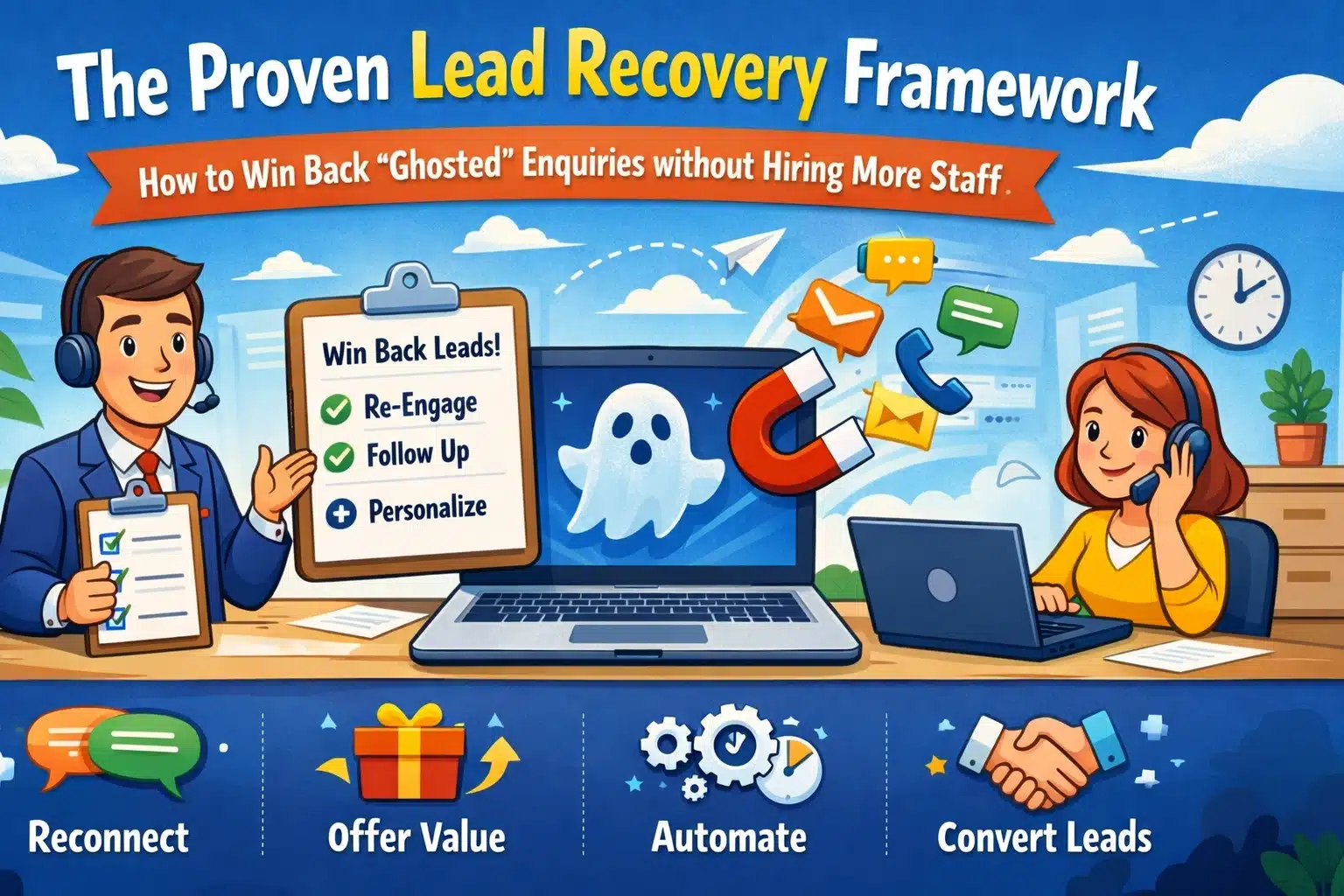
In this guide, I’m going to share the Every Enquiry Lead Recovery Framework. This is a system designed to win back those silent prospects without you having to hire a single extra member of staff. We’re going to focus on three core pillars: Visibility, Response, and Conversion.
Why Do Leads Ghost in the First Place?
Before we fix the problem, we have to be honest about why it happens. Using the "They Ask, You Answer" philosophy, we need to look at the uncomfortable reality of the customer's journey.
Most businesses think the lead ghosted because of price. While price is a factor, it’s rarely the only one. Usually, it's one of three things:
- Life happened: Their kid got sick, their boiler broke, or a massive project landed on their desk at work. Your quote is buried under 50 other emails.
- Friction: Your follow-up process was too difficult. Maybe you asked them to fill out another form or call a number that’s always engaged.
- Lack of Trust: You didn't answer their burning questions during the first call, so they’ve gone back to Google to find someone who will.
If you want to stop losing money, you need to understand that is your website losing you money? The hidden cost isn't just the marketing spend; it's the lifetime value of the customer you let walk away.
Pillar 1: Visibility – You Can’t Recover What You Can’t See
The first step in our framework is Visibility. Most SMEs struggle because their leads are scattered across post-it notes, outlook folders, and WhatsApp messages.
To recover a lead, you must first have a clear view of your "leaky bucket." You need to know exactly how many people enquired, how many were quoted, and exactly where they stopped responding.
The Lead Audit
Take a look at your last 30 days of enquiries. Ask yourself:
- How many total enquiries did we get?
- How many received a response within 5 minutes? (Check out our guide on how to improve response times).
- How many people haven't replied to our last message?
If you don't have these numbers, you don't have a business process; you have a hobby. Visibility allows you to spot the "ghosting point." For many trades and professional firms, the ghosting point is immediately after the price is sent. By identifying this, you can change how you deliver that price to keep the conversation going.

Pillar 2: Response – The Systematic Re-engagement Sequence
This is the meat of the framework. If you want to win back ghosted leads without hiring more staff, you need a system that works on autopilot (or at least follows a strict script).
We don't do "just checking in" emails. They are lazy, they add no value, and they are easy to ignore. Instead, we use a Value-First Sequence.
The 30-Day Recovery Timeline
| Day | Action | Goal |
|---|---|---|
| Day 1 | Immediate Phone Call + Text | Catch them while the problem is "hot." |
| Day 3 | The "Helpful Resource" Email | Send a blog post or video answering a common question. |
| Day 7 | The "Social Proof" Message | Share a quick story or photo of a recent similar project. |
| Day 14 | The Multi-Channel Nudge | Try a different platform (e.g., LinkedIn or a quick voice note). |
| Day 21 | The "Specific Question" | Ask one simple, closed question about their project. |
| Day 30 | The "Permission to Close" | The "Break-up" email to clear your pipeline. |
Why This Works
This sequence moves the needle because it focuses on the power of prompt response. By Day 7, most of your competitors have given up. By staying visible and helpful, you become the "safe" choice when the prospect finally has a spare ten minutes to deal with their enquiry.
The "Value-First" Approach
Instead of asking "Are you ready to buy?", try sending something like:
"Hi [Name], I remember you mentioned you were worried about the drainage in your garden. I just finished a similar job in [Local Town] and wrote a quick tip sheet on how to handle that. Thought you might find it useful!"
This positions you as an expert, not a salesperson. This is the core of our services at Every Enquiry – helping you communicate like a human, not a corporate robot.
Pillar 3: Conversion – Turning "No" into "Not Yet"
Conversion isn't just about getting a signature on a contract. It’s about managing the relationship so that even if they don't buy today, they buy from you tomorrow.
When a lead finally replies after being "ghosted," they often say: "Sorry, we’ve decided to put this on hold" or "We went with someone else."
Most business owners stop there. A "They Ask, You Answer" practitioner sees this as an opportunity.
- If they put it on hold: Ask why. Is it budget? Is it timing? Offer to check back in three months.
- If they went with someone else: Ask what swung it for them. Was it price? Speed? Use this data to improve your visibility and response process for the next one.
Comparison: Manual Chasing vs. Lead Recovery Framework
| Feature | The "Hope and Pray" Method (Manual) | The Lead Recovery Framework (Systematic) |
|---|---|---|
| Consistency | Hits and misses. Depends on how busy you are. | 100% consistent. Follows a set schedule. |
| Message Quality | "Just checking in" / "Did you get my quote?" | Value-driven, helpful, and educational. |
| Staff Requirement | Requires a dedicated admin or salesperson. | Can be handled by existing staff or simple automation. |
| Lead Value | Only converts "ready to buy now" leads. | Recovers 15-30% of "lost" leads over time. |
| Customer Perception | Can feel pushy or desperate. | Feels professional, organised, and helpful. |
How to Implement This Without Hiring
You might be thinking, "Martyn, this sounds great, but I’m already working 60 hours a week. Who is going to send these emails?"
You don't need a new Digital Receptionist or a full-time sales manager. You need leverage.
- Templates: Create five email templates and three text message templates based on the timeline above. Save them in your drafts or CRM.
- Time Blocking: Dedicate just 20 minutes every Tuesday and Thursday morning specifically to "Lead Recovery." Look at your list of ghosted leads and send the next message in the sequence.
- Automation: Use simple tools to trigger these messages. If you want to see how we handle the heavy lifting for you, take a look at our pricing.
The goal is to move from being reactive to being proactive. When you have a structured follow-up system, you stop leaking money.

Addressing the "Stalker" Fear
A common concern I hear from SME owners is: "I don't want to annoy people. If I message them six times, won't I look like a stalker?"
It’s a fair question. But here’s the reality: You are only a stalker if you aren't providing value.
If you call someone every day asking for money, you’re annoying. If you email them once a week with a helpful tip, a case study, or an answer to a question they probably have, you’re being a professional.
According to Salesforce, it takes an average of 6 to 8 touchpoints to generate a viable sales lead. Most SMEs stop at two. By simply being persistent in a friendly way, you are outperforming 90% of your competition.
The Role of Social Media in Lead Recovery
Don't forget that your leads are likely seeing you elsewhere. If they’ve ghosted your email, they might still be scrolling past your Facebook or Instagram posts.
This is where social media management comes in. If your social media shows you are active, helping customers, and finishing projects, it reinforces the value-first messages you’re sending in your recovery sequence. It’s all part of the same ecosystem.
Putting the Framework into Action
To start winning back those "lost" enquiries, follow these three steps this week:
- Identify the Ghosts: Go back through your enquiries from the last 14 days. Make a list of everyone who hasn't replied to your last message.
- The "Break-the-Ice" Message: Send a simple, non-salesy text or email to each of them. Something like: "Hi [Name], I was just thinking about your [Project] and wondered if you'd managed to make a decision on the best way forward? No pressure at all, just wanted to see if you had any final questions I could answer."
- Measure the Results: Keep track of how many people reply. You'll be surprised how many "Oh, sorry! I've been so busy, thanks for the reminder" messages you get.

Conclusion: Stop Leaving Money on the Table
Lead recovery isn't about being the loudest person in the room. It’s about being the most consistent. In the world of SME service businesses, the winner isn't always the one with the lowest price; it's the one who makes the customer feel the most looked after.
By focusing on Visibility (tracking your leads), Response (a value-driven sequence), and Conversion (playing the long game), you can significantly increase your revenue without spending an extra penny on ads or hiring new staff.
If you’re struggling to keep up with enquiries or you feel like your lead conversion is broken, we’re here to help. You can explore our blog section for more tips or contact us to discuss a bespoke strategy for your firm.
Frequently Asked Questions
How many times should I follow up before giving up?
We recommend 5 to 7 touchpoints over a 30-day period. After that, send a final "break-up" email and move them to a long-term nurture list (like a monthly newsletter).
Won't this take up too much of my time?
Not if you use templates. The actual time spent sending a pre-written follow-up is about 30 seconds. If you have 10 ghosted leads a week, that's only 5 minutes of work for a potential multi-thousand-pound return.
What if they've already gone with a competitor?
That’s great information to have! Ask them why. If it was price, you know where you stand. If it was because the competitor answered the phone faster, you know you need to work on your response times.
Is it better to call or email for lead recovery?
A mix of both is best. Some people hate the phone; others never check their email. Using multiple channels (phone, text, email) increases your chances of catching them where they are most comfortable.
Does this work for B2B as well as B2C?
Absolutely. In fact, it often works better in B2B because the decision-making process is longer and involves more people. Being the most helpful and persistent person in their inbox builds massive professional credibility.
How do I track all of this?
You can start with a simple Excel spreadsheet or a Trello board. As you grow, you might want to move to a dedicated CRM (Customer Relationship Management) tool. The tool matters less than the discipline of using it.
Can Every Enquiry do this for me?
Yes, we specialise in helping SMEs manage their conversion and enquiry handling. We can help you set up the systems or handle parts of the process for you so you can focus on the work you love.