Let’s be honest for a second. Most small and medium-sized enterprises (SMEs) in the UK don’t actually have a lead generation problem. If you’re reading this, you’ve probably spent a fair bit of money on Google Ads, SEO, or social media management. You’re getting clicks. You’re getting form fills. You might even have the phone ringing a few times a day.
The problem isn't getting people to the door; it’s what happens when they knock.
At Every Enquiry, we see it all the time. A business spends thousands on marketing, only to let enquiries sit in an unmonitored inbox for three days, or worse, go to a voicemail that hasn't been checked since 2022. This isn’t just a minor administrative hiccup, it is the single biggest "leak" in your business's bucket.
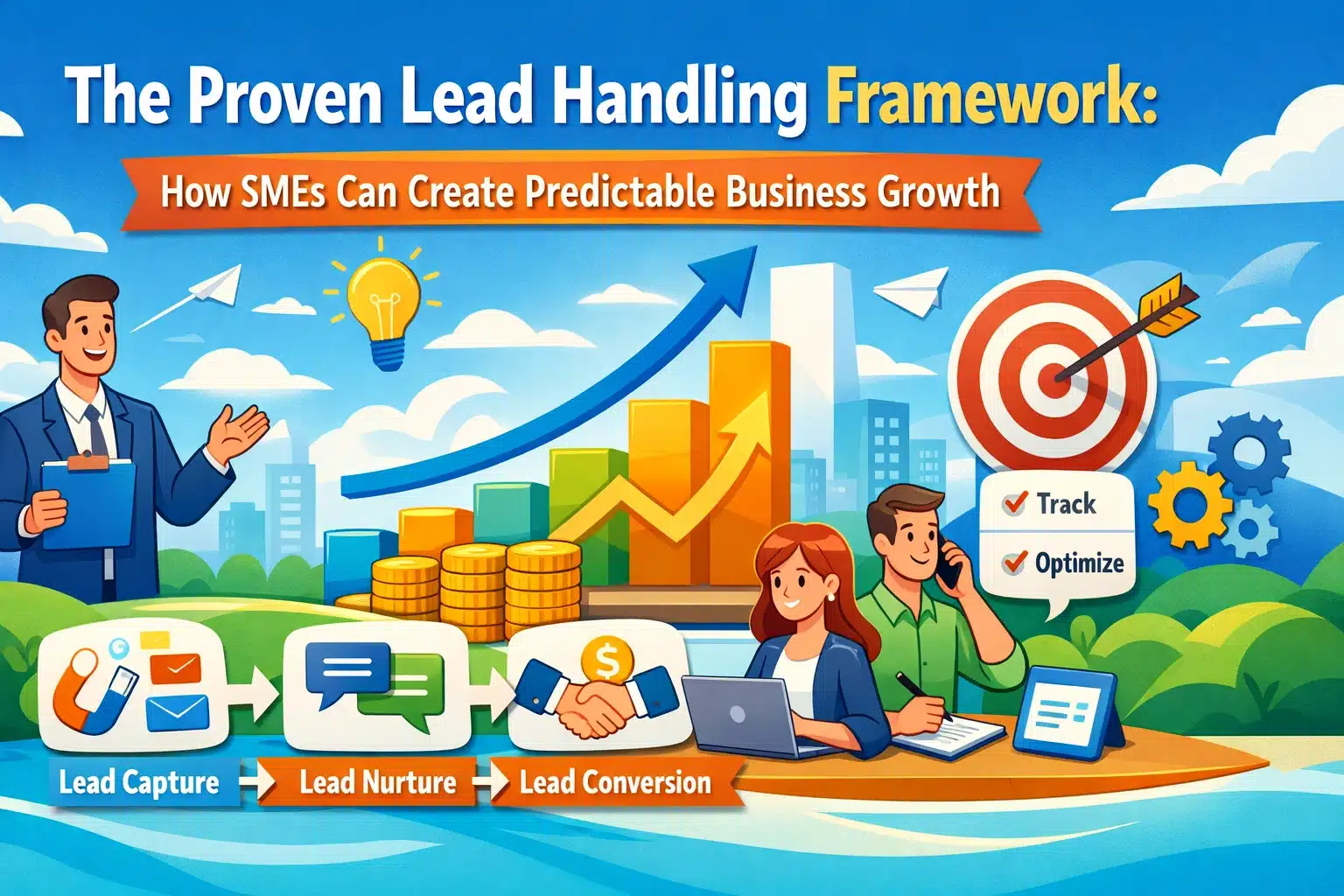
If you want predictable growth, you need a framework. You need a system that ensures every single enquiry is seen, answered, and converted. This is the exact framework we use at Every Enquiry to help service businesses stop wasting money and start closing deals.
The Framework Overview: Visibility -> Response -> Conversion
We break down lead handling into three distinct pillars. If one of these is missing, the whole system collapses.
- Visibility: Knowing exactly where your leads are coming from and what happens to them the moment they arrive.
- Response: The speed and quality of that first interaction.
- Conversion: The process of turning that "interested" person into a paying client through persistent, educational follow-up.
Let’s dive deep into each stage.
Pillar 1: Visibility – If You Can’t See It, You Can’t Fix It
Most SMEs fly blind. They know they spent £2,000 on Facebook Ads last month and they know they got "some" calls, but they can't tell you which calls came from the ads and which came from a recommendation at the local pub.
Without Visibility, your marketing is basically gambling. You are throwing money at a wall and hoping some of it sticks.
The Cost of the "Missed Call"
Did you know that 67% of customers hang up if they don’t get through to a person on the first try? In the service sector, think plumbers, solicitors, or consultants, that’s a direct loss of revenue. If your average client value is £1,000, missing five calls a week is costing you £260,000 a year in potential revenue.

To get visibility, you need to implement:
- Call Tracking: Unique numbers for different marketing channels so you know exactly which ad triggered the call.
- Form Tracking: Seeing which page on your website lead to the enquiry.
- Centralised CRM: No more sticky notes or spreadsheets. Every enquiry must land in a single source of truth.
Understanding is your website losing you money starts with looking at the data. If you don't know your enquiry-to-booking ratio, you don't have a business; you have a hobby.
Pillar 2: Response – The Need for Speed
This is where the battle is won or lost. According to research published by the Harvard Business Review, businesses that attempt to contact potential customers within an hour of receiving a query are nearly seven times as likely to have a meaningful conversation with a key decision-maker than those who wait even sixty minutes.
If you wait 24 hours? You might as well not bother. Your prospect has already called three of your competitors, and the one who answered the phone first is the one who got the job.
Why "Digital Receptionists" Aren't Enough
Many SMEs think they’ve solved this by hiring a basic call answering service. But there’s a massive difference between a "message taker" and Enquiry Management.
A message taker says: "Thanks for calling, someone will get back to you."
An enquiry manager says: "Thanks for calling, I can see you're looking for [Service]. Based on your location, I can get a specialist to call you at 2:00 PM today. Shall I book that in?"
One is a gatekeeper; the other is a deal-maker. You can learn more about how to improve response times and why it’s the secret sauce to beating larger competitors who are bogged down in bureaucracy.
Automation vs. Human Touch
We are big fans of automation, but it must be used correctly. An automated "Thank you for your enquiry" email is the bare minimum. It buys you five minutes of grace. However, for high-value service businesses, the power of prompt response usually requires a human connection.

Pillar 3: Conversion – Turning Interest into Income
Conversion isn't a one-time event; it's a process. In Marcus Sheridan’s famous book They Ask, You Answer, he emphasizes that the modern buyer does about 70-80% of their research before they ever talk to you.
If they have reached out, they are ready to buy, but they are also fearful. They are afraid of being ripped off, afraid of making the wrong choice, and afraid of hidden costs.
Lead Scoring and Qualification
Not all leads are created equal. An SME needs a way to filter the "tyre-kickers" from the "serious buyers."
| Feature | The "Old Way" (Ad-hoc) | The "Every Enquiry Way" (Framework) |
|---|---|---|
| Response Time | 4 – 24 hours (or never) | Under 5 minutes (Instant) |
| Tracking | "I think it came from Google" | Full UTM and Call Tracking data |
| Follow-up | One call, then give up | Structured 5-touchpoint sequence |
| Qualification | Talk to everyone who calls | Lead scoring based on budget/need |
| Data Entry | Scribbled on a pad | Automated CRM entry |
| Content | Generic sales pitches | Educational "They Ask, You Answer" content |
To truly improve lead conversion, you need to assign values to your leads. If someone downloads a pricing guide, they are a higher priority than someone who just read a blog post about "industry trends."
Sales and Marketing Alignment (The SLA)
One of the biggest friction points in an SME is the divide between marketing (who gets the leads) and sales (who closes them). Marketing says the leads are "rubbish." Sales says they are too busy to call people back.
You need a Service Level Agreement (SLA). This is a simple document that states:
- Marketing's Job: To provide X number of qualified leads with a valid phone number and specific intent.
- Sales' Job: To contact every lead within 10 minutes and attempt at least 5 follow-ups over 7 days.
According to HubSpot, companies with strong sales and marketing alignment see 20% annual growth rates. Without it, you’re just burning cash.
Applying "They Ask, You Answer" to Your Framework
If you want predictable growth, you have to stop selling and start teaching. This is the core of the They Ask, You Answer philosophy.
When an enquiry comes in, don't just send a quote. Send a "Buyer’s Guide." Send a video explaining what happens during the first consultation. Address the "Big 5" topics that every customer wants to know but most businesses are too scared to talk about:
- Pricing and Costs: Be transparent. Even if your pricing is "bespoke," explain the factors that drive price up or down.
- Problems: Be honest about what could go wrong or who your service is not for.
- Versus/Comparisons: Compare your solution to the alternatives.
- Reviews: Show the good, the bad, and the ugly.
- Best-in-class: Talk about who else is doing a good job in the industry.
By incorporating this into your lead handling framework, you move from being a "vendor" to being a "trusted advisor." This makes the conversion stage significantly easier.

The Practical Steps to Predictable Growth
So, how do you actually implement this? You don't need a massive IT department. You just need a commitment to the system.
Step 1: Audit Your Current Leakage
Call your own business from a friend's phone. Fill out your own website form. See how long it takes to get a response. Most business owners are horrified by the results. This is your starting point. You can view our pricing to see how we help businesses plug these gaps affordably.
Step 2: Implement Instant Alerts
Your team shouldn't have to "check" for leads. The leads should find them. Set up SMS alerts for form fills. Use a system that rings your sales team the moment a lead is generated.
Step 3: Script Your Enquiry Handling
Don't wing it. Have a script that focuses on qualification and education. The goal of the first call isn't always to sell; it’s to move the prospect to the next stage of the journey. Check out our services for more on how we structure these interactions.
Step 4: Measure and Iterate
Look at your data once a week.
- How many leads did we get?
- What was the average response time?
- What percentage converted to a meeting?
- Where did the "lost" leads go?

Why SMEs Fail at This (And How to Not Be One of Them)
The most common reason SMEs fail to create predictable growth is The Whirlwind. The Whirlwind is the day-to-day chaos of running a business. You’re on a job site, you’re dealing with an employee issue, or you’re stuck in an accounting nightmare.
When the Whirlwind hits, lead handling is the first thing to be ignored. You think, "I'll call that guy back tonight." But tonight you're exhausted, so you do it tomorrow. By tomorrow, he's already booked someone else.
Predictable growth requires a system that runs outside of your personal Whirlwind. Whether that’s through dedicated staff or a partner like Every Enquiry, the system must be sacred.
If you are serious about scaling, you have to stop treating enquiries as "interruptions" to your work. Enquiries are the work.
Final Thoughts: The ROI of Better Handling
Let’s look at the maths one last time.
If you get 100 leads a month and convert 10% (10 clients), and your marketing spend is £2,000, your cost per acquisition (CPA) is £200.
If you implement this framework, improve your visibility, slash your response time, and use educational content, and you move that conversion rate to 20% (20 clients), your CPA drops to £100.
You have doubled your business without spending a single extra penny on advertising.
That is the power of a proven lead handling framework. It’s not flashy, it’s not the "newest social media hack," but it is the most reliable way to build a sustainable, profitable SME.
Ready to see how your current system stacks up? Explore our blog section for more deep dives into specific tactics, or contact us to discuss a tailored framework for your business.
Frequently Asked Questions
1. How fast is "fast enough" for a lead response?
In the modern market, anything over 5 minutes is starting to lose heat. Ideally, you want to be responding within 60 seconds of a form fill. This creates a "wow" factor that sets the tone for the entire relationship.
2. We are a small team; how can we respond instantly while doing our actual jobs?
This is the classic SME dilemma. The answer is a mix of smart automation (instant SMS/email) and potentially outsourcing the initial enquiry handling to a specialist partner who can qualify the lead before passing it to you.
3. Does lead scoring really work for small businesses?
Absolutely. Even a simple "Gold, Silver, Bronze" system works. It allows you to prioritise your limited time on the leads most likely to close, rather than treating a "general enquiry" with the same urgency as a "ready to buy now" request.
4. What is the most common mistake in lead follow-up?
Giving up too soon. Most sales people stop after two attempts. Research shows that it often takes 5 to 8 touchpoints to actually connect with a lead. A framework ensures those follow-ups happen automatically.
5. Should I put my prices on my website?
According to the "They Ask, You Answer" principle, yes. If you don't, people will go to a competitor who does. Even if you can only give a "starting from" price or a "price range," it builds immediate trust.
6. What's the difference between a CRM and an Enquiry Management system?
A CRM (Customer Relationship Management) is the software where the data lives. Enquiry Management is the process and the people who ensure that data is handled correctly, responded to quickly, and converted into a sale. You need both.