You're spending money on advertising. Your website gets traffic. People find you on Google. Enquiries come through your contact form.
Then they disappear.
If you run a service business: plumbing, accounting, legal, electrical, consulting, whatever: you've felt this frustration. Someone fills out your form at 9pm on a Tuesday. You respond at 11am on Wednesday. They've already gone with someone else.
Here's the uncomfortable truth: most service businesses don't have a lead problem. They have a system problem. You're attracting prospects. You're just losing them before they become customers.
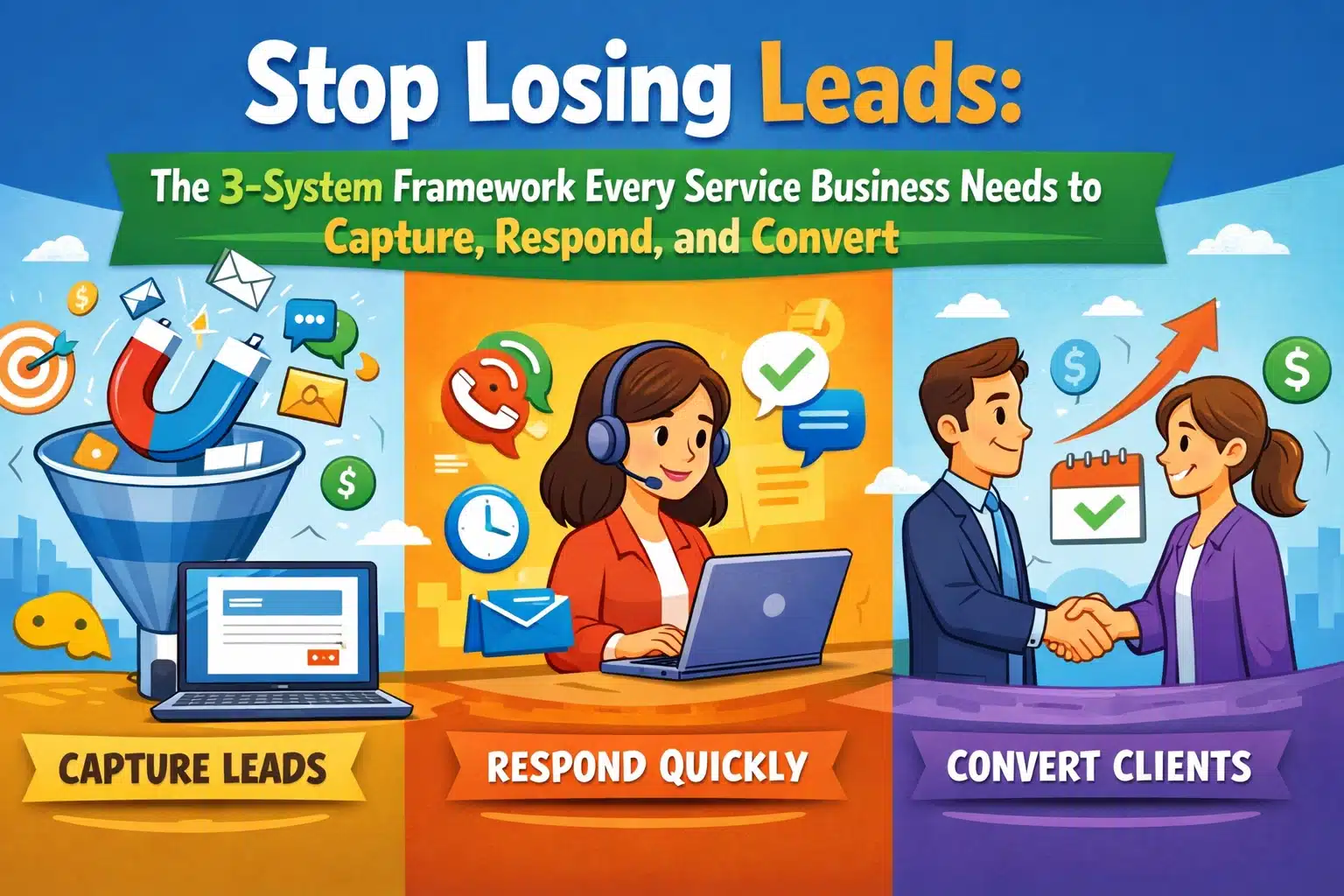
After working with hundreds of SME service businesses, we've identified three systems that separate the businesses that grow predictably from those that constantly chase their tails. These aren't complicated. They don't require expensive software. But they do require intention.
Let's break down exactly what's leaking your leads: and how to fix it.
Why Service Businesses Leak Leads (And Don't Even Know It)
Most business owners think they have a marketing problem when they actually have an operational problem.
You've got leads coming in from multiple places: your website form, Facebook messages, email, phone calls, even WhatsApp. They're scattered. There's no single place where every enquiry lands. Your team handles them inconsistently. Some get responses within the hour. Others sit for three days.
Research from Harvard Business Review shows that responding to a lead within five minutes makes you 100 times more likely to connect with them compared to waiting 30 minutes. Yet most service businesses take hours: sometimes days: to respond.
Why? Because they lack systems.
The businesses that grow reliably aren't smarter than you. They're not spending more on marketing. They've simply built three interconnected systems that ensure every lead gets captured, responded to quickly, and moved through a conversion process. Once these systems exist, growth becomes predictable rather than random.

System 1: Capture: Make It Impossible to Lose an Enquiry
Your first system exists to ensure that every single enquiry: regardless of where it comes from: gets recorded in one central location.
Right now, you probably have enquiries scattered across:
- Your website contact form
- Email inbox (multiple accounts, probably)
- Facebook Messenger
- Instagram DMs
- Phone calls (some logged, many not)
- Text messages
When enquiries live in seven different places, they get missed. Simple as that.
The capture system solves this. It funnels every enquiry: from every channel: into a single location. This could be a CRM system, a spreadsheet (if you're just starting), or a specialised enquiry handling system.
What Makes a Good Capture System
A functional capture system needs three things:
1. Multiple entry points connected to one hub. Your website form, social media messages, and phone calls should all flow into the same place. If you're manually copying and pasting enquiries from Facebook into a spreadsheet, your system is broken.
2. Essential information captured upfront. You need name, contact details, and the basic nature of their enquiry. But don't get greedy. According to Unbounce, every additional form field reduces conversions by around 11%. Ask for what you need to respond intelligently. Nothing more.
3. Progressive profiling for returning visitors. If someone's already given you their email address, don't ask for it again. Build their profile gradually across multiple interactions. This reduces friction while still collecting comprehensive information over time.
Practical Capture Tools
For service businesses, effective capture methods include:
- Website forms that integrate directly with your CRM or enquiry management system
- Live chat or AI chatbots that engage visitors and collect details even outside business hours
- Social media integrations that automatically log messages from Facebook, Instagram, and LinkedIn
- Call tracking that records inbound phone enquiries with caller details
- Text message integrations that capture SMS enquiries alongside other channels
The key isn't which tools you use. It's that they all feed into one central system where nothing gets lost.
System 2: Respond: Speed Wins Every Time
Once you've captured the lead, you have a narrow window to respond before they move on.
The Lead Response Management Study found that the odds of qualifying a lead drop by 400% if you wait more than five minutes to respond. Your prospects aren't sitting around waiting for you. They've contacted three other businesses. The first one to respond: professionally and helpfully: usually wins.
Yet most service businesses treat enquiry response as something they'll "get to when they have time."
That's why you need a response system.
The Two-Channel Rule
When someone enquires, respond through at least two channels. If they filled out your website form, send an automated email immediately and follow up with a phone call within the hour. If they called and left a voicemail, call them back and send a text message confirming you've tried to reach them.
Why two channels? Because people check different channels at different times. Your email might sit unread while they see your text immediately. Or vice versa.
Automate the First Response
You can't always respond personally within five minutes. You're in a meeting. You're with a customer. You're at lunch. That's fine.
Automate the first acknowledgment.
Set up an automated email or text that goes out immediately when someone submits a form: "Thanks for your enquiry. We've received your message and will get back to you within the next hour with a detailed response."
This does two things. First, it confirms you received their enquiry (they're not wondering if the form worked). Second, it sets expectations about when they'll hear from you properly.
The automated response buys you time while still feeling responsive. Then you follow up personally within the timeframe you promised. Our guide to prompt response covers this in more detail.

What Your Response Should Include
Your personal follow-up should:
- Reference their specific enquiry (not generic)
- Provide initial helpful information (answer the obvious question)
- Suggest a next step (book a call, visit your location, receive a quote)
- Make it easy to respond (direct question, clear call-to-action)
Notice what's missing? Lengthy company history, awards you've won, generic selling points. Nobody cares yet. Answer their question. Be helpful. Move the conversation forward.
System 3: Convert: Not Every Lead Is Ready Today
Here's where most service businesses completely drop the ball.
They respond quickly. The prospect says they're "just looking" or "comparing options" or "will get back to you." Then nothing. The enquiry gets marked as "not interested" and forgotten.
Massive mistake.
According to MarketingSherpa, 80% of leads that aren't ready to buy now will eventually purchase within 24 months: but 90% of those purchases happen with a company other than the one they first enquired with.
Why? Because only one company stayed in touch.
Your conversion system ensures you're still there when they're ready to buy.
Lead Scoring: Focus on What Matters
Not all leads deserve equal attention right now. Someone who's said "I need this installed next week" is more urgent than someone who said "just getting rough prices for a project in six months."
Lead scoring helps you prioritise.
Assign points based on:
- Urgency signals (timeline, budget ready, decision-maker involved)
- Engagement level (opened your emails, visited your website multiple times)
- Fit (right location, right service need, right budget range)
Hot leads get immediate personal attention. Warm leads get nurtured through automated sequences. Cold leads get occasional check-ins.
Nurture Sequences That Don't Annoy
For leads that aren't ready now, build a nurture sequence: a series of helpful emails that keep you top-of-mind without being pushy.
Good nurture content:
- Answers common questions ("How long does a typical kitchen renovation take?")
- Addresses concerns ("What to look for when choosing a contractor")
- Provides value without asking for anything ("5 ways to prepare your home before we arrive")
Send one email every 7-14 days. Mix educational content with soft reminders that you're available when they're ready.
Critical point: Every email should come from a real person (your email address, not noreply@company.com) and invite replies. These shouldn't feel automated even when they are.
Comparison: Three Approaches to Lead Management
Here's how different approaches stack up:
| Approach | Capture Rate | Response Time | Conversion Rate | Effort Required | Cost |
|---|---|---|---|---|---|
| Manual (email/spreadsheet) | 60-70% | 2-24 hours | 5-10% | Very High | Low |
| Basic CRM | 80-85% | 30-120 minutes | 12-18% | Medium | Medium |
| Integrated Enquiry System | 95-99% | Under 5 minutes | 25-35% | Low | Medium-High |
| Full Marketing Automation | 95-99% | Under 5 minutes | 30-40% | Low (after setup) | High |
Most SME service businesses operate somewhere between manual and basic CRM. The jump to an integrated enquiry system delivers the biggest improvement in results for the least increase in complexity.

How to Implement This Framework (Without Overwhelming Yourself)
Don't try to build all three systems at once. You'll fail.
Start with capture. Spend the next two weeks getting every enquiry channel flowing into one place. Even if that place is just a shared spreadsheet, it's better than scattered emails and lost Facebook messages.
Once capture is solid, tackle response. Set up your automated acknowledgment. Create a template for your personal follow-up. Train your team (or yourself) to respond within one hour during business hours.
Finally, build your conversion system. Start with manual follow-ups: put reminders in your calendar to check in with leads who weren't ready yet. Once that becomes routine, automate it.
The specific tools matter less than the systems themselves. You can build this with free tools (Google Sheets, MailChimp free tier, Calendly). Or you can use purpose-built platforms that connect everything. The visibility, response, and conversion stages work the same way regardless of your tech stack.
The Real Cost of Not Having These Systems
Let's put numbers on this.
Say you get 50 enquiries per month. Without proper systems:
- You lose 15 enquiries in the capture phase (they never get recorded)
- You respond too slowly to another 10 (they go with a competitor)
- Of the remaining 25, you follow up with 5 and forget about 20
You've effectively wasted 45 out of 50 leads.
If your average customer is worth £2,000 and you'd close 20% of properly handled leads, that's 9 lost customers per month. £18,000 per month. £216,000 per year.
That's the cost of not having systems.
Now run the same numbers with proper capture, response, and conversion systems:
- You capture 49 of 50 enquiries (98%)
- You respond quickly enough to keep 46 engaged
- You properly nurture all 46, closing 20%
That's 9 new customers from the same 50 enquiries: without spending an extra penny on marketing.
Your Next Steps
Start simple. Pick one system to fix this month:
If your biggest leak is capture: Audit where enquiries come from. Choose one central location for them all to land. Set up integrations so they flow there automatically.
If your biggest leak is response: Create an automated acknowledgment email. Set a timer on your phone for 30 minutes after an enquiry comes in. Make the response your priority.
If your biggest leak is conversion: Pull up every enquiry from the last three months that didn't buy immediately. Send each one a personal "just checking in" message. See what happens.
These systems aren't complicated. They're just intentional. And they're the difference between feast-or-famine unpredictability and steady, reliable growth.
Frequently Asked Questions
How much does it cost to set up these three systems?
You can start with free tools: Google Forms feeding into Google Sheets, Gmail with templates and scheduled sends, and calendar reminders for follow-ups. This costs nothing but your time. As you grow, purpose-built enquiry management systems typically range from £50-300/month depending on your enquiry volume. The return on investment is usually immediate since you're capturing and converting leads you currently lose.
What if I only get 5-10 enquiries per month?
These systems matter even more when enquiry volume is low. Losing 2 out of 10 enquiries is a 20% revenue leak. The systems scale down perfectly: you could run all three systems with nothing more than a spreadsheet, email templates, and calendar reminders. The principles stay the same regardless of volume.
How fast is "fast enough" for response time?
Research consistently shows five minutes as the target for initial acknowledgment. For service businesses, an automated acknowledgment within 30 seconds followed by personal follow-up within 60 minutes is realistic and effective. The key is setting expectations in that first automated message and then meeting them.
Do I need expensive CRM software?
No. You need systems, not specific software. Many service businesses run effective capture-respond-convert systems with basic tools like Google Workspace, MailChimp, and Calendly. Purpose-built platforms make things easier as you scale, but start with what you have. Fix the system gaps before spending money on fancy tools.
What if leads say they're "just looking" or not ready yet?
Perfect. That's exactly who your conversion system is designed for. Add them to a nurture sequence with helpful, educational content sent every 7-14 days. Most service business sales happen 3-6 months after the initial enquiry. Stay in touch without being pushy, and you'll be top-of-mind when they're ready.
How do I know which system to fix first?
Track your enquiry journey for one week. Count how many enquiries you receive from all channels. Count how many you actually recorded. Count how many you responded to within one hour. Count how many you followed up with after they didn't immediately buy. The biggest number drop between these stages shows your biggest leak. Fix that first.
Can these systems work for trades businesses like plumbers and electricians?
Absolutely. Service trades might have the most to gain. Your customers need fast responses (often for urgent problems), and they typically get multiple quotes. Being the first to respond professionally often means winning the job. The capture system handles calls and web forms, the response system acknowledges enquiries immediately even when you're on a job, and the conversion system keeps you in touch for bigger planned projects that aren't urgent.