Let’s be honest for a second. You’re spending a small fortune on marketing. Whether it’s Google Ads, Facebook sponsored posts, or just the time you spend networking, you’re working hard to get people to notice your business. But what happens when those people, those "leads", don’t buy straight away?
Most SME owners I talk to admit the same thing: if a lead doesn’t close within the first few days, it’s basically dead to them. It sits in an inbox, gathers digital dust on a spreadsheet, or is simply forgotten. This is what we call "leakage," and it’s costing your business more than you think.
Lead recovery isn’t about chasing people who aren’t interested. It’s about creating a system that catches the people who were interested but got distracted, busy, or just needed a little more info.
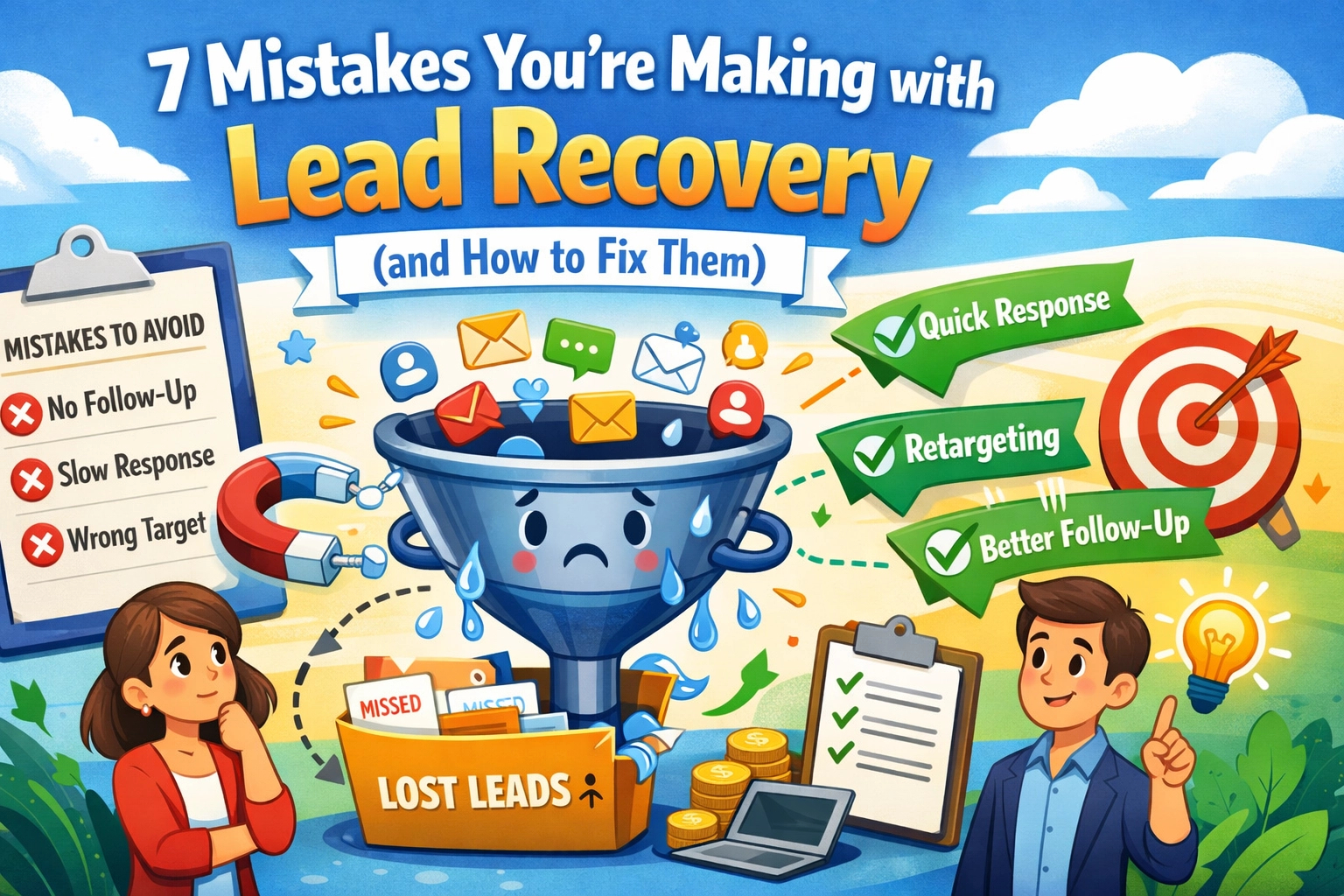
At Every Enquiry, we focus on three core pillars: Visibility, Response, and Conversion. If you’re making mistakes in any of these areas, you’re leaving money on the table. Let’s dive into the seven biggest mistakes SMEs make with lead recovery and, more importantly, how you can fix them today.
1. The "One and Done" Follow-Up Habit
This is the most common mistake in the book. A prospect fills out a form on your visibility landing page. You call them once. They don’t answer. You leave a voicemail. You might even send a polite email. Then… nothing. You move on to the next "fresh" lead.
According to research by HubSpot, it often takes between 5 and 12 contacts before a lead actually converts. If you’re stopping at one or two, you’re quitting right before the finish line.
How to fix it:
You need a structured follow-up sequence. It’s not about being a nuisance; it’s about being helpful. If they haven’t replied, they might just be stuck in a meeting or dealing with a toddler’s tantrum.
- Day 1: Immediate call and email.
- Day 2: SMS follow-up.
- Day 4: A helpful resource (like a blog post answering a common question).
- Day 7: The "Are you still looking for help with [Service]?" check-in.

2. Speed to Lead: Being "Too Late to the Party"
If a potential customer reaches out to three different tradespeople or professional firms, the one who replies first has a massive advantage. In fact, firms that contact prospects within an hour are seven times more likely to have a meaningful conversation than those who wait even 60 minutes.
If you’re waiting until the end of the day to check your enquiries, you’ve already lost. By then, they’ve already booked an appointment with your competitor who has a better response system in place.
How to fix it:
Don’t rely on your personal memory or a cluttered inbox. Implement a notification system that alerts you, or your team, the second an enquiry hits. Better yet, use a digital receptionist UK service or automated SMS "instant-reply" tools. Even a simple text saying, "Hi, I’ve seen your enquiry and I’m looking at it now, I'll call you in 10 minutes," can secure the lead.
3. Treating All Leads the Same (Lack of Segmentation)
A lead who downloads a "Price Guide" is not the same as a lead who clicks "Book an Emergency Repair Now." If you treat them both the same, you’ll annoy the person who wants a quick fix and overwhelm the person who is just browsing.
Many SMEs fail at lead recovery because their messaging is too generic. "Thanks for your interest, let us know if you want to buy" doesn't cut it anymore.
How to fix it:
Segment your leads based on their intent.
- Low Intent: Someone looking for information. Recover these by sending educational content (The "They Ask, You Answer" approach).
- High Intent: Someone asking for a quote. Recover these with direct, personal communication and clear calls to action.
Check out our conversion strategies to see how different lead types require different handling.
4. The Spreadsheet Nightmare (Poor Visibility)
How many leads did you get last month? How many of those are still "open"? If you have to spend twenty minutes digging through your emails or a messy Excel sheet to answer that, you have a visibility problem.
When leads aren’t visible, they can’t be recovered. They simply disappear into the void. This lack of data makes it impossible to know which of your marketing efforts are actually working.
How to fix it:
You need a "Source of Truth." This doesn't have to be a complicated, expensive CRM that takes six months to learn. It just needs to be a system where every enquiry is logged, dated, and assigned a status. When you can see, at a glance, that 15 people haven't been spoken to in a week, lead recovery becomes a simple task rather than a detective job.

5. Avoiding the "Elephant in the Room": Pricing
Marcus Sheridan, author of They Ask, You Answer, talks extensively about why businesses fail to address the things customers actually care about, most notably, price.
Often, a lead goes cold because they are worried about the cost and you haven't addressed it transparently. If they think you're "too expensive" because you haven't explained the value or provided a ballpark figure, they won't come back.
How to fix it:
Be honest. If a lead has gone cold, try a recovery email that addresses pricing or common fears directly. "One reason people hesitate to move forward with [Service] is the cost. Here is exactly how we calculate our fees and why we might not be the cheapest, but we are the best value." This builds massive trust. You can find more on this in our blog section.
6. No Multi-Channel Outreach
We all have a preferred way of communicating. Some people love a phone call. Others (especially the younger generation) would rather have a root canal than speak to a stranger on the phone. If you are only trying to recover leads via one channel, say, email, you’re ignoring the 50% of people who prefer WhatsApp or SMS.
How to fix it:
Vary your approach. If you’ve emailed twice with no luck, send a text. If they haven’t answered the phone, try a LinkedIn message (if it’s B2B). People are much more likely to engage when you meet them where they are comfortable.
7. Giving Up Too Early (The Long Game)
Most SMEs think lead recovery is something you do for two weeks. In reality, lead recovery can happen six months or even a year later. Maybe they didn't have the budget then, but they do now. Maybe they went with a competitor who did a rubbish job, and now they need it fixed.
If you don't have a "long-term nurture" system, you're missing out on the "low-hanging fruit" of people who already know your name.
How to fix it:
Establish a monthly or quarterly check-in. A simple, non-salesy email: "Hi [Name], I was just looking through my notes and remembered we spoke about [Project] last year. Just wanted to see how that went and if there’s anything you need help with this spring?" You’d be amazed at how many people reply with, "Oh, I’m so glad you emailed, I’ve been meaning to call you!"
Comparing the Approaches: Manual vs. Structured Lead Recovery
To help you see the difference a system makes, let's look at how the typical SME handles leads versus how we recommend doing it at Every Enquiry.
| Feature | The "Manual" Way (The Mistake) | The Every Enquiry Way (The Fix) |
|---|---|---|
| Response Time | "When I get a minute" (usually hours/days) | Under 5 minutes (Automated or dedicated) |
| Follow-up Frequency | 1 or 2 attempts | 5–12 attempts across multiple channels |
| Visibility | Buried in an Inbox/Post-it notes | Centralised Dashboard |
| Messaging | Sales-heavy / Generic | Educational / Problem-solving (TAYA) |
| Long-term Nurture | Non-existent | Automated quarterly check-ins |
| Success Rate | Low (Leads "go cold" quickly) | High (Recovering "lost" revenue) |
How to Start Fixing Your Lead Recovery Today
You don't need to change everything overnight. Start by looking at your last 30 days of enquiries.
- Audit: How many did you actually speak to?
- Re-engage: Send a simple text or email to the ones you didn't close. Ask a question, don't just "check in."
- Systemise: Look at our pricing to see how an external partner can help handle the heavy lifting of enquiry management for you.
Lead recovery is essentially "found money." You've already paid to get the lead; now you just need the discipline and the system to make sure they actually pay you.

Visibility, Response, and Conversion: The Triple Threat
At Every Enquiry, we believe you can’t have one without the others.
- If you have great visibility but a slow response, your leads will rot.
- If you have a fast response but no conversion strategy (like the "They Ask, You Answer" content), you won't build trust.
- If you have great conversion rates but no visibility into where your leads come from, you won't know where to spend your next marketing pound.
Don't let your hard-earned leads slip through the cracks. It’s time to move away from the "One and Done" mindset and start building a business that values every single enquiry.
If you're ready to stop losing leads and start recovering your marketing spend, take a look at our services or contact us for a chat. We’re here to help SME service businesses in the UK turn every enquiry into a result.
Frequently Asked Questions (FAQ)
What exactly is "Lead Recovery"?
Lead recovery is the process of re-engaging potential customers who expressed interest in your services but didn't book or buy immediately. This involves structured follow-ups, educational content, and multi-channel outreach to bring them back into the sales funnel.
Why is speed so important in lead handling?
In the digital age, customers expect instant gratification. If you don't respond within minutes, they will likely move on to the next business on their search list. A fast response signals professionalism and reliability.
How many times should I follow up before giving up?
Industry standard suggests between 5 and 12 points of contact. However, these shouldn't all be "Are you ready to buy?" messages. They should include helpful information, answers to common questions, and check-ins.
Do I need expensive software for lead recovery?
Not necessarily. While a CRM helps, the most important thing is having a process. Even a simple, well-managed spreadsheet combined with a dedicated enquiry handling service can work wonders for an SME.
What if the lead says they went with a competitor?
Don't delete them! Wish them well and ask them to keep you in mind for future projects. Many people have "buyer's remorse" with competitors, and you want to be the first person they think of if things go wrong.
Is SMS better than email for recovery?
It depends on your audience, but generally, SMS has a much higher open rate (around 98%) compared to email. A mix of both is usually the most effective strategy for UK service businesses.
How does "They Ask, You Answer" help with recovery?
By answering the difficult questions: like pricing, problems, and comparisons: on your website, you address the fears that stop people from buying. If a lead goes cold, sending them an honest article that answers their specific concern is a powerful way to recover them.