Let’s be honest for a second. You are spending a small fortune on marketing. Whether it’s Google Ads, SEO, or local leaflets, you’re putting money out there to get the phone to ring and the inbox to ping. But what happens when a lead doesn’t buy right away? Or worse, what happens when you miss the call entirely?
In the world of SME service businesses, whether you're a plumber in Reading or a solicitor in Manchester, a lead that doesn't convert immediately isn't a "dead" lead. It’s a "resting" lead. The problem is, most businesses treat these leads like they’ve expired. They move on to the next shiny new enquiry, leaving thousands of pounds on the table.
Lead recovery is the art of going back to the people who showed interest but haven’t yet signed a contract. If you’re not doing this properly, you’re basically throwing cash into a bin and setting it on fire.
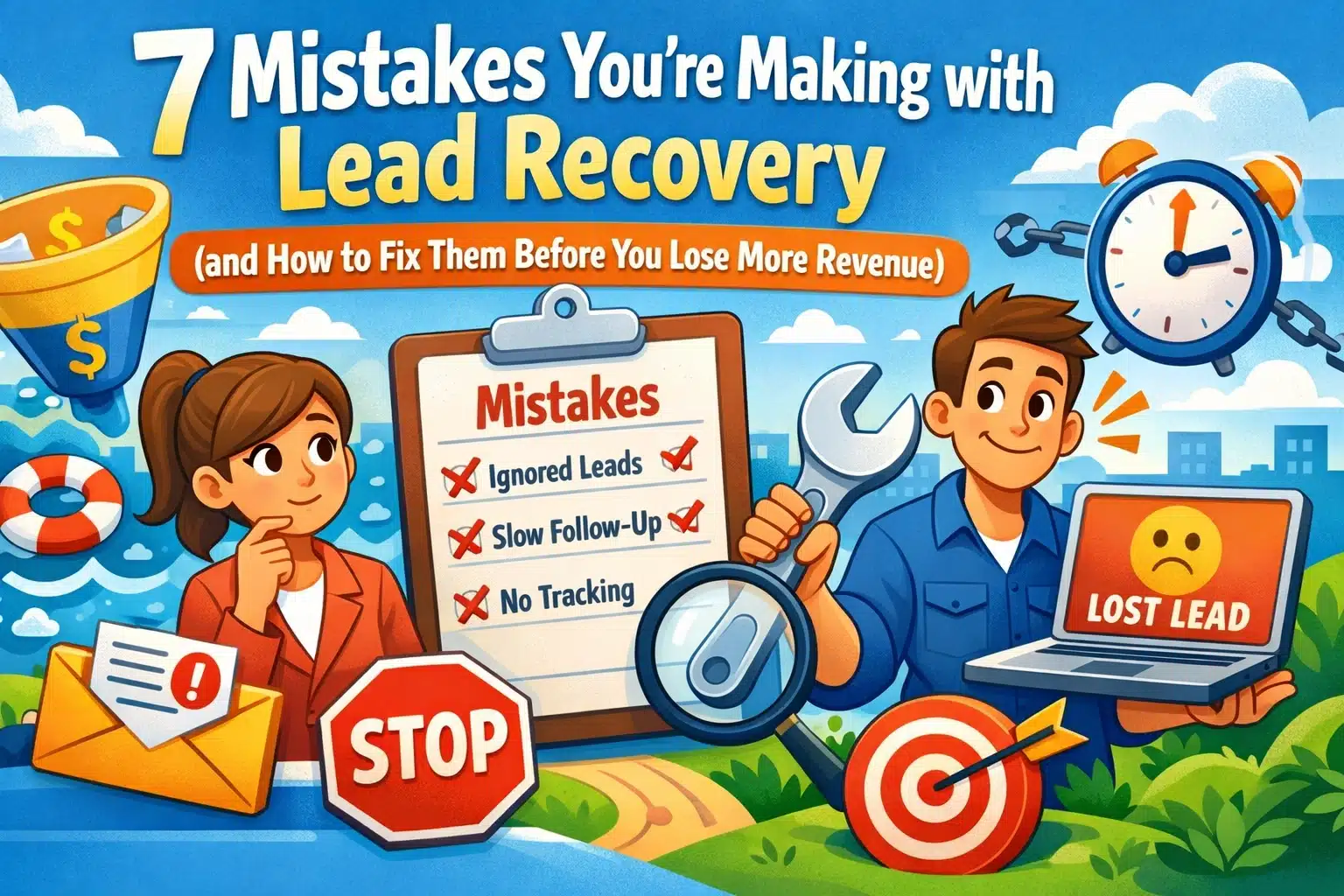
At Every Enquiry, we see the same patterns over and over again. Here are the seven biggest mistakes we see SMEs making with lead recovery, and how you can fix them to stop the revenue bleed.
1. You Have Zero Visibility on "Near Misses"
The first mistake happens before the recovery even begins. Most business owners can tell me how many sales they made last month. Very few can tell me how many people called, spoke to someone, and then… vanished.
If you don't have total visibility over your enquiry pipeline, you can’t recover anything. You’re essentially trying to find a black cat in a coal cellar at midnight.
Many firms rely on "gut feeling" or a messy notebook on the dashboard of a van. This isn’t a system; it’s a recipe for lost revenue. To fix this, you need a centralised way to track every single person who touches your business. Did they fill out a form? Did they call? Did they message you on Facebook? If it isn't tracked, it doesn't exist.

2. You’re Waiting Too Long to Re-Engage
We talk a lot about improving response times, but speed is just as important in recovery as it is in the initial enquiry.
According to research by Harvard Business Review, businesses that try to contact potential customers within an hour are nearly seven times as likely to have a meaningful conversation as those who wait even 60 minutes. Now, apply that to recovery. If someone asked for a quote three days ago and you haven't followed up to see if they have questions, they’ve likely already moved on to your competitor who did bother to call.
Recovery shouldn't happen two weeks later when you're "having a slow day." It should be a structured part of your daily enquiry handling process.
3. The "One-and-Done" Follow-Up Failure
This is the biggest killer of SME revenue. You call a lead once. They don't answer. You leave a voicemail. You think, "Well, I've done my bit," and you never call them again.
Statistically, most sales require between five and twelve contact attempts. Yet, most people stop after one or two. You aren't being "annoying" by following up; you're being helpful. Your potential customer is busy. Their kids are screaming, their boiler is leaking, or they’re stuck in a meeting. They likely want to talk to you, but they’ve simply forgotten.
A solid lead recovery system involves a multi-touch approach:
- A phone call (within minutes).
- A follow-up text.
- An email with helpful information.
- Another call the next day.
If you stop at one, you’re essentially giving your competitors free money. You’ve done the hard work of finding the lead; now finish the job.
4. Hiding Your Pricing and Scaring People Away
In Marcus Sheridan’s They Ask, You Answer, he emphasizes that "Cost and Price" is one of the "Big 5" topics people search for. If your recovery emails or calls are vague about what things cost, you’re creating friction.
People are often afraid to follow up because they don't want to talk about money. Or worse, the lead didn't convert because they were worried they couldn't afford you. A great recovery strategy involves being transparent. Send them a pricing guide or a video explaining how you calculate your quotes.
When you address the money issue head-on, you build trust. Trust is the fastest way to recover a lead that has gone cold. If you're wondering why your conversion rate is low, check out these 10 reasons your lead conversion isn't working.

5. Using Your Brain as a CRM (Spoiler: It’s Not Working)
I meet so many tradespeople and firm directors who say, "I remember everyone I need to call back."
No, you don't. You might remember the big £10,000 jobs, but you’re forgetting the five £500 jobs that would have paid for your fuel and overheads this month.
Lead recovery requires a structured follow-up system. Whether it’s a simple CRM (Customer Relationship Management) tool or a managed service like Every Enquiry, you need a system that prompts you: "Call John back today, he was waiting on his partner’s approval."
Without a system, leads fall through the cracks. And once they’re in the cracks, they’re gone forever. This is often the hidden cost of missed enquiries.
6. Treating All Leads the Same
Not all leads are created equal. A "lost" lead who spent 20 minutes on the phone with you is much more valuable than someone who just downloaded a free guide.
A common mistake is sending the same generic "Just checking in" email to everyone. This is lazy. Lead recovery should be segmented.
- The "Price Shopper": Needs information on value and why you’re worth the extra cost.
- The "No-Show": Needs a friendly nudge to reschedule without feeling guilty.
- The "Cold Lead": Needs to be reminded of the problem they had and how you can solve it.
By tailoring your approach, your conversion rates will skyrocket.
7. Ignoring the Power of Social Proof in Recovery
When you reach out to someone who hasn't replied, don't just ask for the sale. Give them a reason to choose you.
"Hi Sarah, I noticed we haven't booked in that survey yet. Just thought I'd share this project we finished yesterday for a neighbour of yours. They were worried about the same damp issue you have, here’s what they said about the result."
Include a link to your social media or a testimonial page. People buy when they feel safe. If they went cold, it’s often because they weren't 100% sure you were the right fit. Use your recovery process to prove that you are.
Comparison: Manual Lead Recovery vs. Managed Systems
How does your current "do it yourself" approach stack up against a professional, structured system?
| Feature | The "Do It Myself" Method | The Every Enquiry Way |
|---|---|---|
| Visibility | Scrawled notes or memory. | Real-time dashboard of every lead. |
| Response Speed | "When I get a minute." | Immediate, structured follow-up. |
| Follow-up Consistency | Usually stops after 1 attempt. | Automated and manual multi-touch process. |
| Data Quality | Messy and incomplete. | Clean, actionable data for every enquiry. |
| Revenue Impact | High percentage of lost opportunities. | Maximised conversion and recovered revenue. |
| Stress Level | High (always feeling behind). | Low (the system does the heavy lifting). |
The Every Enquiry Framework: Visibility -> Response -> Conversion
We don't just "do marketing." We fix the plumbing of your business. If your lead recovery is broken, it’s usually a failure in one of these three areas:
Visibility
If you don't know why your website is losing you money, you can’t fix it. We provide the tools to see exactly where your leads are coming from and, more importantly, where they are going. This is the foundation of recovery.
Response
Speed is a competitive advantage. Our response services ensure that no call goes unanswered and no email sits in an inbox for three days. We catch the lead while it’s hot, so you don't have to "recover" it later from a competitor.
Conversion
This is the final hurdle. By managing the follow-up process and providing the right information at the right time, we move people from "just looking" to "where do I pay?" Conversion is about removing the friction that makes people say "no."

How to Start Fixing Your Lead Recovery Today
You don't need a million-pound budget to fix this. You just need to change your mindset.
- Audit your last 30 days: Go through your call logs and emails. How many people reached out but didn't book? Call them. Today.
- Set a "Follow-up Friday": If you're too busy during the week, dedicate a morning to re-engaging cold leads.
- Ask "The Big Questions": Are you being honest about your prices? Are you addressing the fears your customers have? Read our blog on the power of prompt response for more tips.
- Get Help: If you’re a Director who is currently acting as the receptionist, salesperson, and technician, you are the bottleneck. Consider a digital receptionist or an outsourced lead management service.
Recovery is the difference between a business that survives and a business that thrives. It’s about honouring the money you’ve already spent on marketing by making sure it actually results in a sale.
Don't let another lead slip through the cracks. The revenue you need to hit your targets this year is probably already sitting in your inbox, waiting for a follow-up.
Frequently Asked Questions (FAQ)
1. Isn't following up multiple times a bit "pushy"?
Not if you do it correctly. Being pushy is trying to force someone to buy something they don't need. Following up is simply being professional and making sure their questions are answered. Most customers actually appreciate the persistence because it shows you value their business and you’re organised.
2. We’re a small team; how can we possibly call everyone back five times?
You don't necessarily have to do it all manually. You can use automated email sequences or hire a service like Every Enquiry to handle the enquiry management for you. The key is to have a system that works even when you're on a job site or in a meeting.
3. How long should I wait before I consider a lead "dead"?
There is no hard and fast rule, but many businesses stop too early. A lead might not be ready to buy today, but they might be ready in six months. Moving "dead" leads into a long-term nurture list (like a monthly email update) keeps you top-of-mind for when they are ready.
4. What is the most common reason leads don't convert initially?
In our experience, it’s usually one of three things: price confusion, lack of trust, or a delayed response. If you take too long to reply, they’ve already found someone else. If your quote is confusing, they’ll go with the simpler option.
5. Does lead recovery work for service-based businesses like solicitors or accountants?
Absolutely. In fact, it’s often more important for professional services where the decision-making process is longer. A potential client might be "shopping around" for weeks. Regular, helpful follow-ups can be the deciding factor in choosing your firm over another.
6. How much revenue am I actually losing by not doing this?
Calculate your average lead value. Now, look at how many enquiries you didn't close last month. Even if you only recovered 10% of those "lost" leads, what would that do to your bottom line? For most SMEs, it’s thousands of pounds every single month. Check out our pricing to see how affordable a managed system can be compared to that loss.