Let’s be honest for a second. You’re likely spending a decent chunk of your hard-earned budget on marketing. Whether it’s Google Ads, SEO, or social media management, you’re doing the hard work to get people to notice you. But here’s the kicker: getting them to notice you is only half the battle.
If your phone rings and no one picks up, or if an email enquiry sits in an inbox for three days before anyone looks at it, you aren't just losing a lead, you’re literally throwing money down the drain.
At Every Enquiry, we talk to SME owners every day who are frustrated. They feel like their marketing "isn't working," but when we look under the bonnet, the problem isn't the traffic. It’s the lead handling. It’s the "leak" in the bucket.
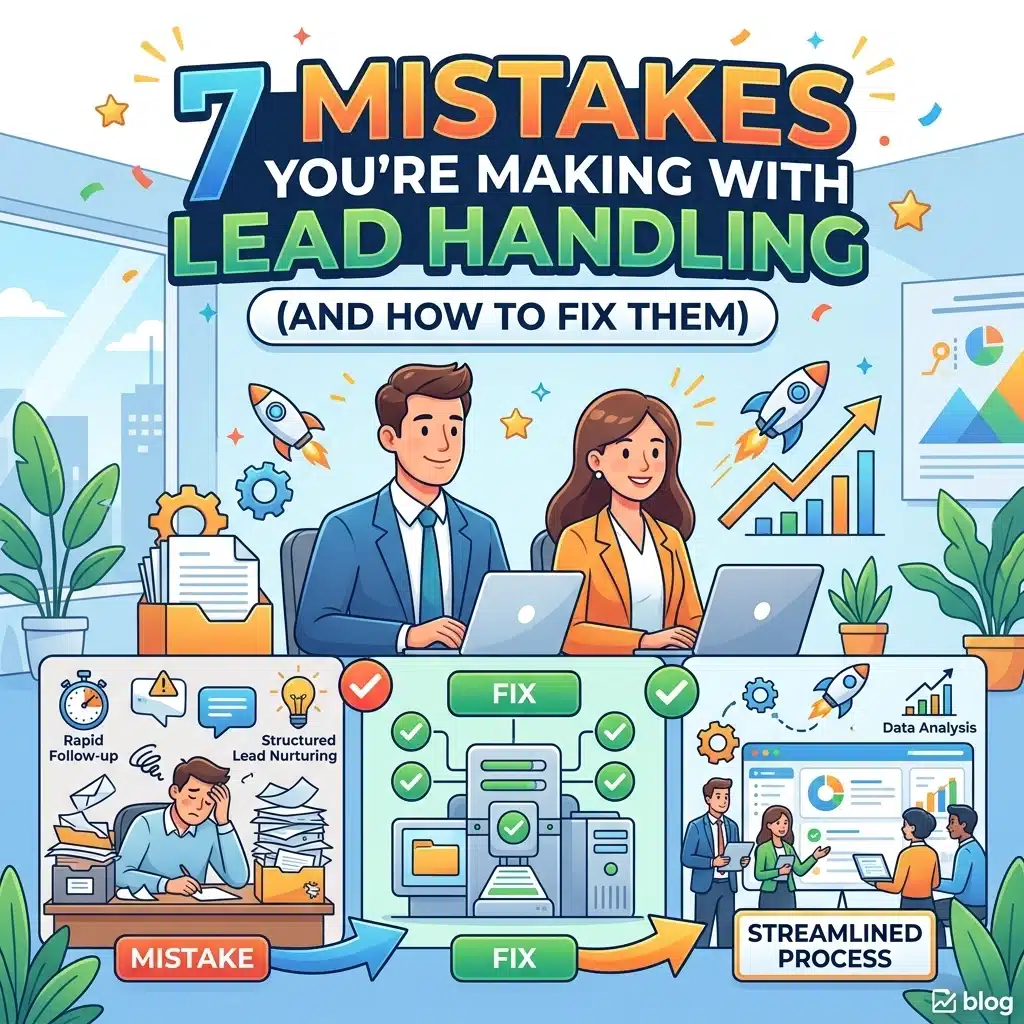
I’m Martyn Lenthall, Director at Every Enquiry, and I’ve seen these same mistakes play out across hundreds of service businesses. Today, I want to walk you through the seven most common mistakes you’re making with your lead handling and, more importantly, how to fix them using our Visibility -> Response -> Conversion framework.
The Foundation: Visibility, Response, and Conversion
Before we dive into the mistakes, we need to understand the journey. Most businesses think lead handling is just "answering the phone." It isn’t. It’s a three-stage process:
- Visibility: Knowing exactly where your leads are coming from and what they want.
- Response: How fast and how well you acknowledge that enquiry.
- Conversion: The systematic follow-up that turns a "just looking" into a "where do I sign?"
If any of these stages are broken, your growth becomes unpredictable. Let’s look at the mistakes that are likely holding you back.
1. The "I’ll Get To It Later" Mentality (Delayed Response)
This is the single biggest killer of lead conversion in the UK today. We live in an era of instant gratification. If I want a plumber, a lawyer, or a landscaper, I’m not going to wait 24 hours for you to call me back. I’m going to call the next person on the Google search results list.
Research from the Harvard Business Review shows that businesses that attempt to contact potential customers within an hour are nearly seven times as likely to have a meaningful conversation with a key decision-maker as those who wait even sixty minutes.
The Fix: You need to aim for what we call the "2-minute rule." If you can respond to an enquiry within two minutes, your chances of conversion skyrocket. At Every Enquiry, we focus heavily on improving response times because we know speed is your best sales tool. If you can’t be by the phone 24/7, you need an automated system or a digital receptionist to bridge the gap.

2. The "One and Done" Follow-up
Most small businesses give up too early. They call once, maybe leave a voicemail, and then move on to the next lead. They assume that if the person didn’t answer or call back immediately, they weren't interested.
This is a massive mistake. People are busy. They have kids, meetings, and lives. A single follow-up is rarely enough to catch someone at the right moment.
The Fix: You need a structured follow-up sequence. We recommend at least 5 to 7 touchpoints over a two-week period. This might include a mix of phone calls, emails, and SMS messages. It sounds like a lot, but it’s about being persistent without being a pest. You are providing a service; remind them why they contacted you in the first place. Check out our thoughts on why lead conversion isn't working for more on this persistence.
3. Treating Every Lead Identically (Lack of Segmentation)
Not all leads are created equal. Someone who downloads a "Top 10 Tips" PDF from your site is at a very different stage of the buying journey than someone who fills out a "Request a Quote" form.
If you treat them both the same, by hitting them with a hard sales call, you’ll scare off the person who was just looking for information. Conversely, if you just send a generic "thanks for your interest" email to someone ready to buy, you’ll lose them to a competitor who was more proactive.
The Fix: Segment your leads based on their intent.
- Top of Funnel (Educational): Send them helpful content and nurture them.
- Bottom of Funnel (Ready to Buy): Get them on the phone immediately.
This is part of the "They Ask, You Answer" philosophy. If they are asking for a price, give them a price (or at least a range). If they are asking for information, give them information. Don't force them into a sales pitch they aren't ready for.
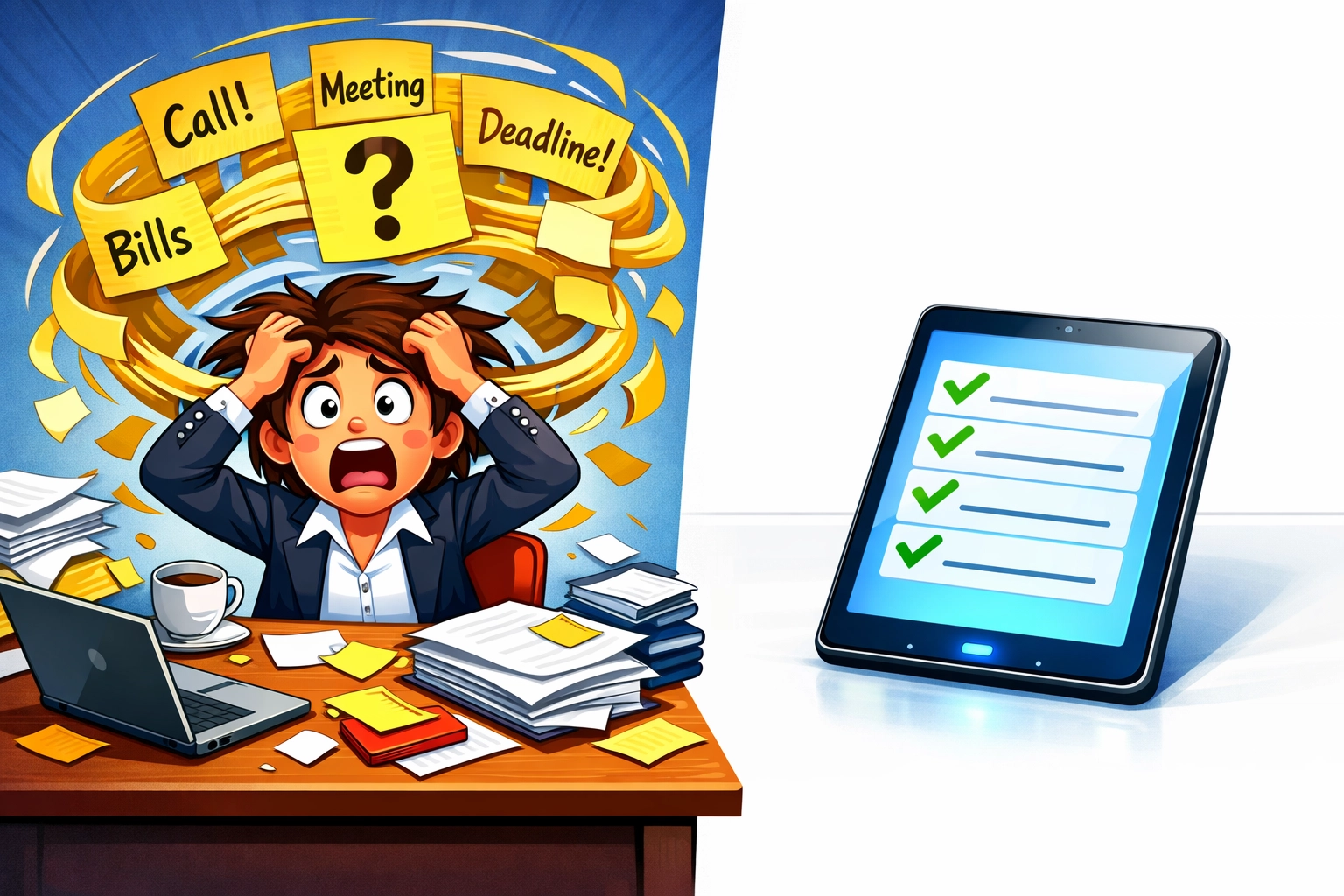
4. Relying on the "Sticky Note" System (Manual Processes)
I’ve walked into offices where the primary "Lead Management System" is a collection of Post-it notes stuck to a computer monitor. Or perhaps it's a messy Excel spreadsheet that hasn't been updated since 2023.
Manual processes are prone to human error. Notes get lost. Emails get buried. People forget to call back. If your growth depends on your memory, you’ve reached your ceiling.
The Fix: You need a CRM (Customer Relationship Management) system. It doesn't have to be expensive or complicated, but it does need to be the "single source of truth" for your business. Every enquiry should automatically feed into this system. We’ve written extensively about why spreadsheets are killing your growth. Moving to an automated system ensures no lead ever falls through the cracks.
5. The "Dark Hole" of Lead Source (Lack of Visibility)
Do you know which of your marketing channels actually makes you money? Most SMEs can tell you how many enquiries they got last month, but they can’t tell you if those enquiries came from Facebook, Google, or a recommendation.
Without visibility, you’re flying blind. You might be spending £1,000 a month on social media ads that produce 50 leads but zero sales, while your Google Ads produce 5 leads that all turn into high-value clients.
The Fix: Use tracking. Use unique phone numbers for different ads and UTM parameters for your links. When a lead comes in, your system should tell you exactly where they found you. This allows you to stop wasting money on what doesn't work and double down on what does.
6. The "Missing Link" Between Marketing and Sales
In many service businesses, the person doing the marketing (or the agency) and the person answering the phone are completely disconnected. The marketing promises one thing, but the person on the phone has no idea what that is.
This creates a "disconnect" for the customer. They feel like they are starting from scratch every time they talk to someone new.
The Fix: Align your messaging. Your social media management should reflect the same tone and promises that your sales team delivers on the phone. Transparency is key. If your website says "Get a quote in 30 minutes," your team better be prepared to deliver a quote in 30 minutes.
7. Ignoring the "Cost of a Missed Call"
Most business owners look at a missed call as a minor annoyance. "Oh, they'll call back," they think.
They won't.
According to Forbes, 80% of callers will not call back if their call isn't answered the first time. They simply move to the next person on the list. If your average customer value is £1,000, and you miss five calls a week, that’s £5,000 a week, or a quarter of a million pounds a year, in potential revenue that just vanished.
The Fix: Do the maths. We actually have a guide on how much missed calls are really costing your business. Once you see the numbers, you’ll realise that hiring a digital receptionist or investing in a better enquiry system isn't an "expense", it’s a massive saving.
Comparison: Manual vs. Automated Lead Handling
To help you visualise why these mistakes happen, let's look at the difference between a traditional manual approach and a modern automated approach.
| Feature | Manual Handling (The "Old" Way) | Automated Handling (The Every Enquiry Way) |
|---|---|---|
| Response Time | 4 – 24 hours (Average) | < 2 minutes (Automated/Instant) |
| Tracking | "I think they saw us on Facebook" | Precise data on every lead source |
| Follow-up | Once or twice (if remembered) | Automated 5-7 touchpoint sequence |
| Data Integrity | Spreadsheets and sticky notes | Centralised CRM with real-time updates |
| Scalability | Limited by staff hours | Unlimited; handles 1 or 1,000 leads |
| Customer Experience | Inconsistent and often frustrating | Professional, prompt, and reliable |
How to Start Fixing Your Lead Handling Today
You don't need to fix all seven mistakes overnight. In fact, trying to do so is a recipe for burnout. Instead, follow this simple Visibility -> Response -> Conversion framework:
Step 1: Visibility (Week 1)
Start by auditing where your enquiries are coming from. If a lead calls you, ask them! If they email you, look at the referral link. Get a clear picture of your lead sources. Stop the "guesswork" immediately.
Step 2: Response (Week 2)
Focus on the 2-minute rule. Set up an automated "Thank You" email or SMS that goes out the second someone fills in a form. This buys you time and lets the customer know you’ve received their enquiry. It stops them from jumping back onto Google to find your competitor.

Step 3: Conversion (Week 3)
Build a simple follow-up plan. If you haven't heard back from a lead after 24 hours, send a follow-up email. After 48 hours, give them a call. Use your conversion tools to track these interactions.
The Honest Truth About Cost
A lot of business owners ask us, "Martyn, this sounds great, but what’s it going to cost me?"
It’s a fair question. Honest marketing requires honest answers. Implementing a full enquiry management system is an investment. You might spend a few hundred pounds a month on software and support.
But you have to ask yourself: What is the cost of doing nothing?
If you are currently losing just two leads a month because of slow response times, and those leads are worth £500 each, you are losing £12,000 a year. Investing £2,000 or £3,000 a year to fix that isn't a cost, it’s a profit-generating machine. You can find our full pricing breakdown here.
Final Thoughts
Lead handling isn't a "nice to have." In a world where every service business is just a click away from their competitor, your ability to handle enquiries with speed, professionalism, and persistence is your greatest competitive advantage.
Stop letting your hard-earned marketing budget leak out of the bottom of your bucket. Fix the mistakes, implement a system, and watch your business grow in a way that is finally predictable.
If you’re ready to stop guessing and start growing, have a look at our services or reach out to us on our contact page. We’re here to help you turn every enquiry into an opportunity.
Frequently Asked Questions (FAQ)
1. I'm a one-person business. How can I possibly respond in two minutes?
We get it, you’re busy on-site or in meetings. This is where automation is your best friend. You can set up an "auto-responder" via SMS or email that says: "Hi [Name], thanks for the enquiry! I'm currently on-site with a client but I've received your message and will call you at [Time]. In the meantime, you can check out our pricing here: [Link]." This acknowledges the lead and stops them from calling the next person.
2. Is a CRM really necessary for a small business?
Yes. Even if you only get five leads a week, a CRM ensures you have a record of every conversation. It allows you to set reminders to follow up, which is where most of the money is made. Using a spreadsheet might work for a month, but it won’t help you grow.
3. Does "They Ask, You Answer" mean I have to put my prices on my website?
Ideally, yes. We recommend giving a price range or a "starting from" price. One of the biggest reasons leads don't convert is because they are afraid they can't afford you. By being transparent about cost, you filter out the "tyre kickers" and attract the right clients who are ready to pay for your value.
4. What is the difference between a digital receptionist and Every Enquiry?
A digital receptionist usually just takes a message. They are great for answering the phone, but they don't necessarily manage the lead. Every Enquiry looks at the whole journey: from the moment they find you (Visibility) to the moment they book (Conversion). We focus on the system, not just the phone call.
5. How long does it take to see results from fixing these mistakes?
You can see results almost instantly. The moment you start responding to leads within minutes rather than hours, your booking rate will increase. Most of our clients see a significant ROI within the first 30 to 60 days of implementing a structured handling system.
6. Why is my lead conversion still low even if I respond quickly?
It might be a "trust" issue or a "segmentation" issue. Are you answering their questions? Are you following up more than once? If you respond quickly but then never call them again, you’re missing out on the 70% of people who need a second or third touchpoint to commit.
7. Is lead handling only for high-ticket service businesses?
Not at all. Whether you’re a dog groomer or a corporate lawyer, the principles are the same. If someone reaches out to you, they have a problem they want solved. The business that makes it easiest for them to solve that problem: by being responsive and helpful( will win the job every time.)