Let’s be honest for a second. You’re spending a small fortune on marketing. You’ve got the Google Ads running, your SEO is finally starting to kick in, and your social media looks half-decent. But if you’re like most SME service firms in the UK, there’s a massive hole in your bucket.
You’re losing leads. Not because your service is bad, but because you’re simply too slow to answer the door.
In the world of digital marketing, "speed to lead" isn't just a buzzword; it’s the difference between a thriving business and one that’s just spinning its wheels. According to research published in the Harvard Business Review, firms that try to contact potential customers within an hour of receiving a query are nearly seven times as likely to have a meaningful conversation as those who wait even 60 minutes.
If you wait 24 hours? You might as well have set that lead’s contact details on fire.
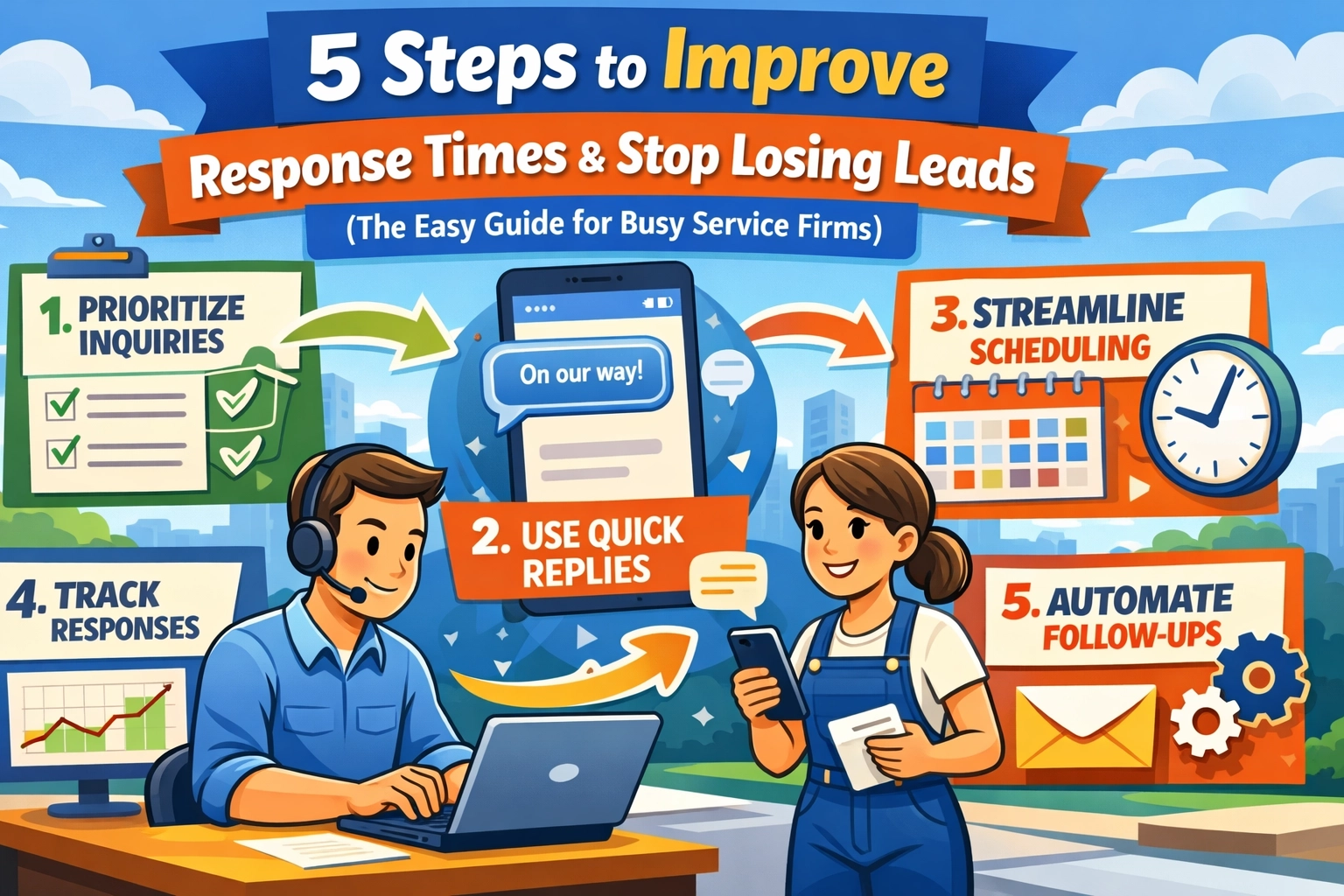
At Every Enquiry, we see this every day. Business owners are working flat out, but their enquiry handling is an afterthought. In this guide, I’m going to break down the five steps you need to take to fix your response times, stop the bleed, and actually convert the traffic you’re paying so much to get.
Why Fast Response Times are Non-Negotiable in 2026
Before we dive into the "how," we need to address the "why." Customers today have the patience of a caffeinated toddler. If they fill out a form on your website and don’t hear back quickly, they don’t sit around waiting. They click the next link in the Google search results and call your competitor.
By the time you get around to calling them back the next morning, they’ve already booked an appointment with someone else. You’ve lost the lead, you’ve wasted your marketing budget, and you’ve handed a win to the guy down the road.
This follows the "They Ask, You Answer" philosophy: customers are asking for help right now. If you aren't there to answer, you aren't part of the conversation.

Step 1: Visibility – Can’t Fix What You Can’t See
The first pillar of our methodology is visibility. Most business owners think they’re "pretty good" at responding to leads. But when we look at the data, the reality is often quite different.
You need to know exactly where your leads are coming from and how long it takes for someone in your business to acknowledge them. Are they coming from a contact form? A Facebook message? A missed call?
Actionable Tasks:
- Audit your touchpoints: List every way a customer can contact you.
- Timestamp everything: You need a system that records exactly when a lead arrives and when the first human (or automated) response happens.
- Identify the "Dead Zones": Do leads that come in after 5:00 PM get ignored until 10:00 AM the next day? That’s a 17-hour gap where your lead is shopping elsewhere.
Without visibility, you’re just guessing. You need to see the "leaks" in your system before you can plug them.
Step 2: Centralise All Communications
One of the biggest reasons for slow response times in small firms is "platform fatigue." Your admin person is checking the company info@ email, you’re checking your LinkedIn DMs, and the office manager is trying to keep up with WhatsApp messages on a work mobile.
Leads fall through the cracks because they are scattered across five different apps.
To fix this, you need to bring everything into one shared workspace. Whether you use a CRM, a dedicated customer service tool, or an enquiry management system, the goal is the same: one screen, all leads.
The Comparison: How Do You Handle Leads Now?
| Method | Response Speed | Consistency | Cost |
|---|---|---|---|
| Manual (Email/Phone) | Slow & Inconsistent | Low | Low (initially) |
| Digital Receptionist | Fast (Acknowledge only) | High | Medium |
| Automated Lead System | Instant | Very High | Medium |
| Outsourced Agency | Medium | High | High |
As you can see, relying on manual processes is a recipe for disaster. If you want to scale, you need a system that prioritises response over manual effort.
Step 3: Set Clear SLAs and Priority Rules
What is an acceptable response time for your business? If you haven't defined it, your team won't meet it. Service Level Agreements (SLAs) aren't just for big corporations; they are vital for SMEs too.
In the UK service sector, think solicitors, accountants, or high-end contractors, customers expect different speeds for different channels:
- Live Chat: Under 2 minutes.
- Contact Forms: Under 30 minutes.
- Email: Under 4 hours.
If you don’t have these rules in place, a lead that comes in at 11:00 AM might not be looked at until after lunch, and by then, the "buying heat" has cooled off.
How to set priority:
Not all leads are created equal. A "Request a Quote" form is more urgent than a "General Enquiry." Your system should automatically flag high-intent leads so they jump to the front of the queue. This ensures your team spends their energy on the leads most likely to lead to conversion.

Step 4: Automate the First Contact (The "Digital Nudge")
This is where most businesses get stuck. They worry that automation feels "cold" or "robotic." But here’s the truth: a fast, automated response is infinitely better than a slow, "personal" response that arrives three days too late.
Automation doesn't have to be a chat-bot that goes in circles. It can be as simple as:
- The Instant SMS: "Hi [Name], thanks for your enquiry about [Service]. We’ve received it and someone will call you from this number in the next 15 minutes. Is there anything specific we should know?"
- The Intent-Based Email: Sending a brochure or a pricing guide immediately after they fill out a form.
By automating the first touch, you buy yourself time. You’ve acknowledged the customer, given them something of value (education), and essentially told them to "stop shopping" because you’re on the case. This is a core tenet of the "They Ask, You Answer" philosophy, provide the information they want immediately.
For more on how to set this up, check out our services page where we detail how we build these systems for firms like yours.
Step 5: Empower Your Team with Knowledge
The final step in improving response times is removing the "I’ll have to check and get back to you" bottleneck.
Nothing kills a lead faster than a fast response that contains no information. If your front-of-house staff or admin team aren't empowered to answer basic questions about pricing or availability, the response time doesn't actually matter because the resolution time is still slow.
The "Knowledge Base" Approach
Create a library of "Canned Responses" or "Snippets" for your most common questions.
- "How much do you charge?"
- "When is your next availability?"
- "Do you cover [Location]?"
If your team can pull a pre-written, high-quality answer and customise it in seconds, your response times will plummet while your quality remains high. This also ensures that your brand tone stays friendly and professional across the board.

The Cost of Doing Nothing
I want to talk about money for a minute. Let’s say you spend £1,000 a month on marketing and you generate 20 leads. That’s £50 per lead.
If your slow response time means you lose 5 of those leads every month, you are throwing £250 into the bin. Over a year, that’s £3,000.
But it’s worse than that. Those 5 lost leads could have been worth £1,000 each in revenue. Now we’re talking about £60,000 in lost revenue per year because you didn't answer the phone or the email fast enough.
Does that put it into perspective? Improving response times isn't just about being "polite", it’s a direct lever for your bottom line.
How to Get Started Today
You don't need to overhaul your entire business by Monday. Start with these three quick wins:
- Test your own website: Go to your contact form right now. Fill it out as if you were a customer. See how long it takes for your business to get back to you. (Prepare to be surprised/horrified).
- Set up an Auto-Responder: Even a simple "We've got your message" email is better than silence.
- One Central Inbox: Pick one person to be the "Gatekeeper" for all digital enquiries for the next week.
If you find that you’re simply too busy to manage this, that’s where Every Enquiry comes in. We specialise in helping SME service firms bridge the gap between getting a lead and making a sale. You can view our post-sitemap for more deep dives into specific industries.

Frequently Asked Questions
1. Won't automation make my small business feel impersonal?
Actually, the opposite is true. Most customers feel ignored by small businesses because of slow responses. A fast, helpful automated message that promises a human call-back feels more "personal" than three days of radio silence. It shows you value their time.
2. We are too small to have a dedicated "Lead Manager." What do we do?
You don't need a dedicated person if you have the right system. By centralising your enquiries and using automated nudges, your existing staff can handle leads in the "gaps" of their day without feeling overwhelmed.
3. How fast is "fast enough"?
In 2026, the gold standard is under 5 minutes. If you can respond while the customer is still on your website, your conversion rates will skyrocket. According to Forbes, the first company to respond to a lead gets the business 78% of the time.
4. What if the lead comes in at 2 AM?
You aren't expected to be awake, but your system should be. An automated response that acknowledges the enquiry, provides a piece of helpful content (like a guide or FAQ), and sets an expectation for a morning call-back is perfect.
5. Is it expensive to fix this?
The cost of the software is usually less than the cost of one single lost lead. When you factor in the wasted marketing spend, not fixing your response times is actually the most expensive option. You can see our pricing for more details on how we help.
6. Should I use a chatbot?
Only if it's a good one. A bad chatbot that can't answer questions is frustrating. We prefer "Digital Receptionists" or simple automated workflows that capture data and alert a human immediately.
Conclusion: Stop the Leak
Your marketing is doing its job, it’s finding people who need your help. Now it’s time for your business to do its job. By following these five steps, Visibility, Centralisation, SLAs, Automation, and Empowerment, you can transform your enquiry handling from a source of stress into a predictable growth engine.
Remember, the goal isn't just to be "fast." The goal is to be the most helpful, responsive, and professional option the customer finds. In a sea of slow-moving competitors, speed is your greatest competitive advantage.
Ready to see how we can help you turn more enquiries into sales? Contact us today, and yes, we promise to get back to you quickly!