Let’s be honest for a second. Most SME owners are running on a treadmill. You spend a fortune on SEO, Google Ads, or Facebook marketing to get the phone to ring. Then, when it finally does, the lead falls through the cracks because you were in a meeting, on a job, or, heaven forbid, trying to have a Sunday roast with your family.
It’s frustrating. It feels like you’re throwing money into a black hole. But the problem usually isn’t your marketing. The problem is your lead handling.
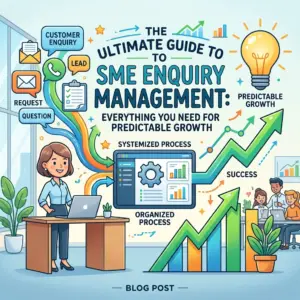
If you want predictable growth, you need a system that ensures every single enquiry is caught, qualified, and converted. You can’t rely on "getting back to them when I have a spare five minutes." In 2026, those spare five minutes don't exist, and by the time you find them, your prospect has already hired your competitor.
At Every Enquiry, we focus on a simple three-pillar framework: Visibility, Response, and Conversion. If you master these, you stop guessing and start growing.
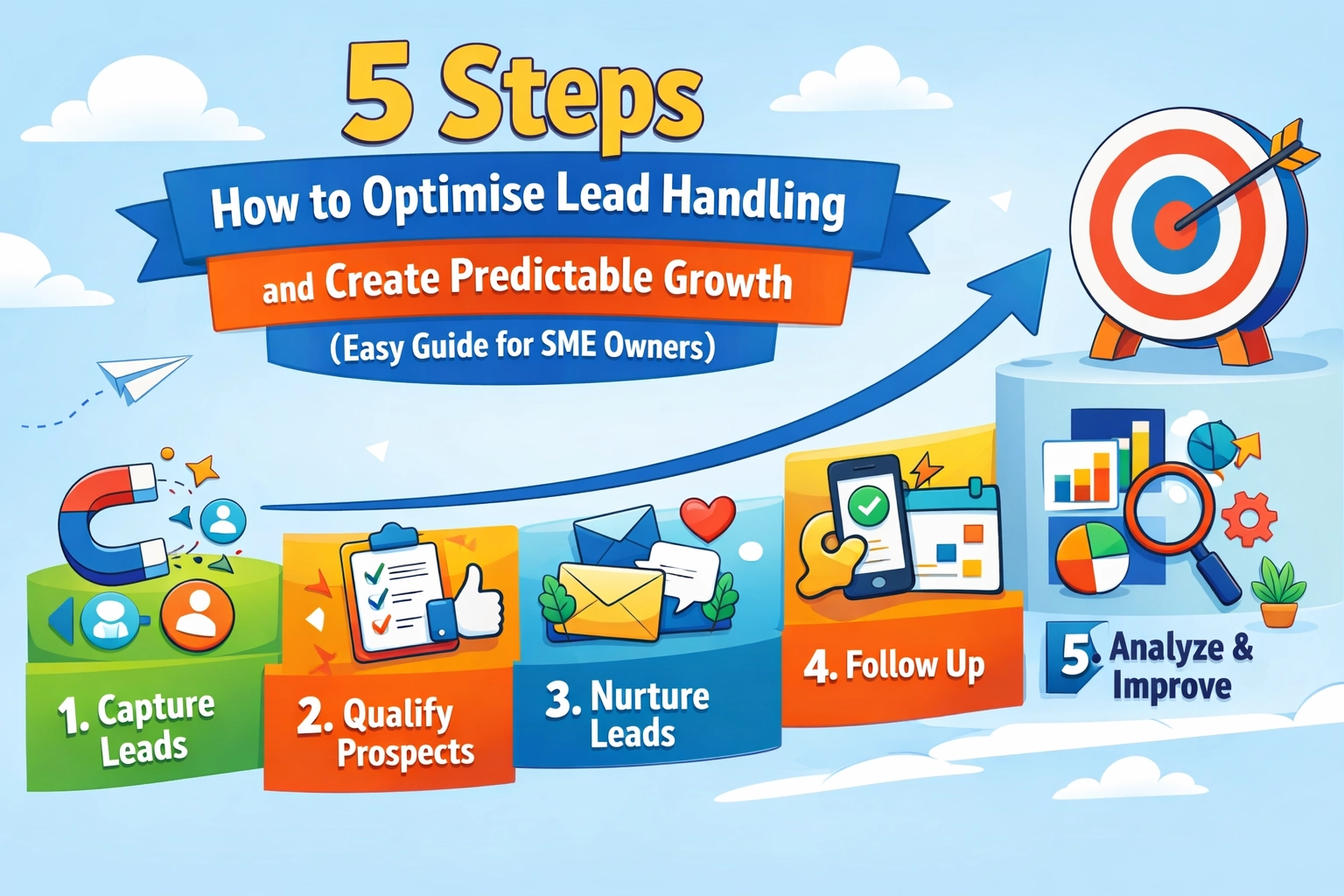
Here is your five-step guide to fixing your lead handling and actually seeing a return on your marketing spend.
Step 1: Get Total Visibility on Where Your Leads Are Actually Coming From
You can't manage what you can't see. Most small business owners tell me, "Oh, most of my work is word of mouth." While that’s great, it’s not predictable. You can’t "turn up" word of mouth.
To create predictable growth, you need to know exactly which marketing channel is producing the best leads. Is it the expensive Google Ad? Is it your social media updates? Or is it a specific landing page on your site?
Stop Guessing, Start Tracking
According to Forbes, businesses that use data-driven marketing are six times more likely to be profitable year-over-year. For an SME, this doesn't mean you need a team of data scientists. It means you need basic visibility into your enquiry sources.
- Call Tracking: Use unique numbers for different ads so you know which one made the phone ring.
- Form Tracking: Ensure every contact form submission is logged in a central place, not just buried in an inbox.
- Source Tagging: Use UTM parameters on your links so Google Analytics can tell you which blog post or social share led to a sale.
When you have visibility, you stop wasting money on "spray and pray" marketing. You can see the hidden cost of missed enquiries and fix the leaks in your bucket.

Step 2: The Need for Speed (Improving Response Times)
Here is a cold, hard truth: If you don't respond to a lead within five minutes, your chances of converting them drop by 80%.
A famous study published by the Harvard Business Review found that companies trying to contact potential customers within an hour of receiving a query were nearly seven times as likely to have a meaningful conversation as those who waited even sixty minutes.
Why Speed is Your Greatest Competitive Advantage
In the world of SME service businesses, plumbers, lawyers, accountants, landscapers, the first person to answer the phone usually gets the job. Customers aren't looking for a deep emotional connection with your brand yet; they’re looking for someone to solve their problem now.
If they leave a voicemail, they’ve already moved on to the next person on the Google search results. This is why improving response times is the single fastest way to increase your revenue without spending an extra penny on ads.
How to fix it:
- Ditch the Voicemail: Nobody likes leaving them, and nobody likes returning them.
- Use a Digital Receptionist or Managed Service: Ensure a human (or a very smart system) acknowledges the enquiry instantly.
- Automated SMS: If you can’t pick up, an automated text saying "Hi, I'm with a client, I'll call you back in 10 minutes" is better than silence.
The goal is to move the lead from "interested" to "engaged" as fast as humanly possible. Our response services are designed specifically to bridge this gap.
Step 3: Use "They Ask, You Answer" to Qualify Leads
One of the biggest complaints I hear from business owners is, "I get plenty of leads, but they’re all tyre-kickers."
If you’re spending your time talking to people who can’t afford you or don't need what you actually do, your lead handling is broken. This is where Marcus Sheridan’s "They Ask, You Answer" (TAYA) principles come in.
The philosophy is simple: If a customer has a question, you answer it on your website. Even the uncomfortable questions. Especially the uncomfortable questions.
Address Pricing and Problems Head-On
Most SMEs hide their pricing because they're afraid of scaring people off. But guess what? If they can't afford you, you want to scare them off before they take up thirty minutes of your time on a phone call.
To optimise your lead handling, your website should handle the heavy lifting of qualification:
- Cost and Price: Give ranges or "starting from" figures.
- Problems: Be honest about what you don't do.
- Comparisons: Compare your service to others so the lead can decide if you're the right fit.
When a qualified lead finally reaches out, they already know you’re in their budget and you do what they need. This makes the conversion process much smoother.

Step 4: Systemise Your Follow-Up (Don't Be a "One-Hit Wonder")
Most leads don't buy on the first contact. In fact, HubSpot research shows that 80% of sales require five follow-up calls, yet 44% of sales reps give up after only one follow-up.
In a small business, "follow-up" is usually the first thing to be forgotten when you get busy. You call once, they don't answer, and you move on. That is literal money being left on the table.
Create a Lead Routing and Assignment System
You need a system that dictates exactly what happens when a lead comes in.
- Minute 0: Lead arrives.
- Minute 2: Instant SMS/Email acknowledgement.
- Minute 5: First phone call attempt.
- Day 1: Second phone call + personalised email.
- Day 3: Third phone call or "helpful resource" email.
If you are an SME owner, you shouldn't be doing this manually. You should be using a CRM (Customer Relationship Management) tool to automate the reminders. If you don’t have time to manage the software, that’s where an enquiry management partner comes in. They handle the "chase" so you only talk to the people who are ready to book.
Check out our 10 reasons why your conversion might be failing for more on this.
Step 5: Test, Monitor, and Refine for Predictable Growth
The "predictable" part of predictable growth comes from knowing your numbers. If you know that for every 100 website visitors, you get 10 enquiries, and for every 10 enquiries, you get 3 customers, you have a business you can scale.
However, these numbers change. Your competitors might lower their prices, your ads might get stale, or your response time might slip because your staff are on holiday.
The Comparison Table: Handling Methods
To decide how to refine your process, you need to understand the different ways you can handle leads.
| Feature | The "Do It Yourself" Method | The Traditional Call Centre | Every Enquiry (Managed) |
|---|---|---|---|
| Response Time | Inconsistent (Whenever you're free) | Fast, but often scripted/robotic | Ultra-fast and brand-aligned |
| Lead Qualification | High (You know your stuff) | Low (They just take a message) | High (Following your specific criteria) |
| Cost | "Free" (But costs you hours of time) | Cheap per minute, but low conversion | Fixed/Performance based value |
| Predictability | Very Low | Moderate | High |
| Follow-up | Rare | Usually none | Systematic & Persistent |
By monitoring your results, you can see where the bottleneck is. Is it the volume of leads (Visibility)? Is it how fast you get to them (Response)? Or is it the "close" (Conversion)? Once you identify the bottleneck, you fix it and move to the next one. This is how you create a "growth engine" rather than just a "job."

Why "Digital Receptionists" Aren't Enough
Many SMEs think that hiring a simple phone-answering service is the solution. While it's better than nothing, it often misses the point of enquiry handling.
A message-taker just tells you that someone called. You still have the burden of calling them back, playing phone tag, and qualifying them. A true lead handling system manages the enquiry. It moves them down the funnel. It schedules the appointment. It filters out the people who just want a "rough quote" over the phone without giving any details.
We believe in the power of prompt response, but that response has to be high-quality. It has to reflect your brand tone and your expertise.

Conclusion: Stop the Leaks, Start the Growth
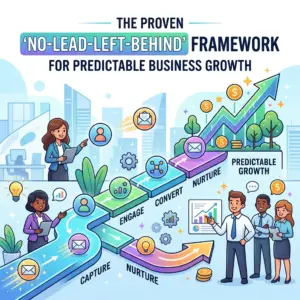
Predictable growth isn't about some secret marketing hack or a viral TikTok video. It’s about boring, consistent excellence in how you handle the people who are already trying to give you money.
- See the leads (Visibility).
- Answer the leads (Response).
- Filter the leads (Qualification).
- Chase the leads (Systematic Follow-up).
- Measure the leads (Data).
If you’re ready to stop losing leads to your competitors and want to see what a professional enquiry management system can do for your business, we’re here to help. We don't just "answer phones"; we help you build a predictable growth machine.
Feel free to check out our terms and conditions and privacy policy if you’re a stickler for the details, or jump straight to our contact page to start a conversation about your specific business needs.
Frequently Asked Questions (FAQ)
1. How quickly do I really need to respond to a new enquiry?
Ideally, within 5 minutes. After 30 minutes, the lead is significantly "colder." If you wait 24 hours, you have likely lost the lead to a competitor who answered faster.
2. Is lead scoring too complex for a small business?
Not at all. You don't need complex software. Just decide what makes a "good" lead (e.g., they have a specific budget, they are in your service area, they need the work done within a month). Rank them 1-3. Focus your personal time on the "3s" and let automation or a service handle the rest.
3. Why shouldn't I just use a voicemail?
Voicemail is where leads go to die. In a world of instant gratification, customers will simply hang up and call the next business on the list. Even an automated "we've received your enquiry" text is better than a voicemail greeting.
4. What is the difference between a call answering service and Every Enquiry?
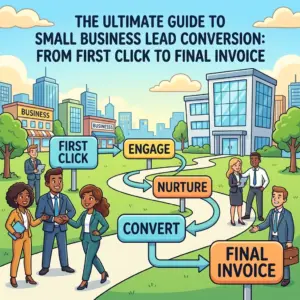
A call answering service usually just takes a name and number. We focus on the entire journey: from the first click on your website to the final conversion. We provide visibility into your marketing and actively help move leads through your sales process.
5. Can I automate lead handling without losing the "personal touch"?
Yes. The best automation handles the repetitive tasks (acknowledging the receipt, setting reminders) so that when you do speak to the customer, you have the time and energy to be truly personal and helpful.
6. How much does it cost to fix my lead handling?
It usually costs less than the marketing budget you are currently wasting on missed calls. You can view our pricing structures here to see what fits your business stage.