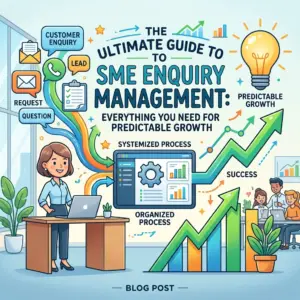
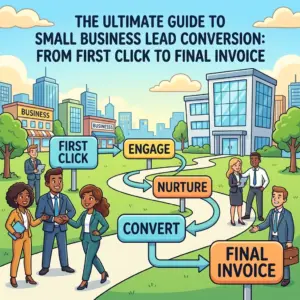
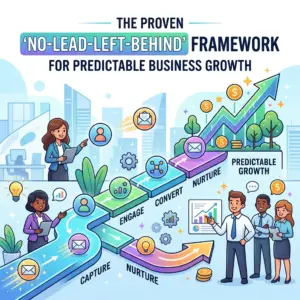
Let’s be honest for a second. You’re likely spending a fair bit of money on marketing. Whether it’s Google Ads, local SEO, or a bit of social media magic, you’re trying to get the phone to ring and the inbox to fill up. But here is the painful truth: most of those leads, roughly 79%, according to marketing data, never actually turn into a sale.
They just… vanish.
You might call it "ghosting," or maybe you think the leads were "rubbish." But at Every Enquiry, we’ve realised that the problem usually isn’t the quality of the person asking; it’s the framework you’re using to handle them. For most UK small businesses, the bucket isn't empty; it's just leaking.
In this guide, I’m going to show you how to plug those leaks. We’re going to walk through our proven framework of Visibility, Response, and Conversion. We’re also going to look at how you can recover those "lost" enquiries that are currently sitting in your "I'll get to that later" pile.
Part 1: Visibility – Why They Find You but Don't Buy
Before we can talk about converting a lead, we have to talk about why they reached out in the first place. This is where most SMEs get it wrong. They think Visibility is just about being on page one of Google.
It isn't.
True visibility is about answering the questions your customers are actually asking. This is the core of the "They Ask, You Answer" methodology pioneered by Marcus Sheridan. If a potential customer visits your site and can’t find the answer to "How much does this cost?" or "What are the common problems with this service?", they might send an enquiry just to find out, but they aren't "bought in" yet.
The Honest Truth About Price
Most business owners are terrified of putting prices on their website. They think, "If I tell them the price, I’ll scare them off," or "My competitors will see it."
Here is the reality: your customers already know things cost money. When you hide your pricing, you create friction. You’re forcing them to enquire just to see if they can afford you. This leads to high enquiry volumes but low conversion rates because you’re spending all day talking to "tyre-kickers."
To improve conversion, your visibility must be educational. Address the costs, the comparisons, and even the reasons why someone might not want to hire you. When a lead comes through after reading that content, they aren't just an enquiry; they’re a prospect who is already 70% of the way to a "yes."
Part 2: Response – The Silent Killer of Conversion
You’ve got the visibility. The phone rings. The email lands. Now what?
This is where the wheels fall off for most small businesses. In the UK, we have a bit of a polite habit of saying, "I’ll get back to you by the end of the day." In the digital world, that is ancient history.
According to a landmark study in the Harvard Business Review, firms that tried to contact potential customers within an hour of receiving a query were nearly seven times as likely to have a meaningful conversation as those who even waited an hour later. If you wait 24 hours? You might as well delete the email.
The "Response" Gap
Most SME owners are busy. You’re on-site, you’re in meetings, or you’re actually doing the work. You can’t always answer the phone. This is why we focus heavily on the Response phase of our framework.
If you miss a call, that lead is already googling your competitor. To recover these lost opportunities, you need a system, a digital receptionist or an automated "fast-response" trigger.
- Acknowledge immediately: An automated text saying, "Hi, I'm with a client right now but I’ve seen your message: can I call you at 2:00 PM?" is worth more than a returned call three days later.
- Humanise the delay: If you can’t answer, explain why. "We’re currently on a roof making sure a family stays dry, but your enquiry is important to us."
When you close the response gap, your conversion rate naturally climbs because you’re catching the customer at the peak of their interest.

Part 3: The Conversion Framework – 5 Steps to the "Yes"
Once you’re talking to them, you need a structured way to move them from "just looking" to "ready to pay." Following a system ensures that no one falls through the cracks.
1. Engage with Prospective Customers
Don’t just launch into a sales pitch. Ask them how their day is going. If they’ve enquired about a boiler repair, acknowledge that having no hot water is a nightmare. Make them feel like a human, not a ticket number. This builds the rapport necessary for a high-value sale.
2. Repeat the Emotional Promise
Why did they click your ad? Was it "Fixed in 24 hours" or "No Hidden Costs"? Remind them of that promise early in the conversation. "I know you're looking for a quick fix so you can get back to work: we can certainly help with that."
3. Determine the Real Need
Often, what a customer says they want isn't what they need. Ask strategic questions. If you’re a web designer, don’t just ask "What pages do you want?" Ask "What is the one thing you want a visitor to do when they land on your site?" By digging deeper, you position yourself as an expert, not just a service provider.
4. Address Objections (Before They Happen)
This is a classic "They Ask, You Answer" tactic. If you know people usually worry about the mess a trade leaves behind, say: "Just so you know, we use floor protectors and we clear everything away before we leave." You’ve answered the question they were too afraid to ask.
5. Offer the Product as a Solution
Don't "sell" the service. Present it as the answer to their specific problem. "Based on what you've told me about your heating bills, this system will pay for itself in three years. Does that sound like it meets your needs?"

Part 4: How to Recover "Lost" Enquiries
What about the leads that didn't buy? The ones who said, "I'll think about it," and then disappeared into the void?
Most businesses give up. They think the lead is dead. In reality, that lead just wasn't ready right then. Recovering these enquiries is where the real profit is made. It’s much cheaper to re-engage an old lead than to buy a new one.
The Power of the CRM
You cannot manage follow-ups in your head or on a sticky note. You need a CRM (Customer Relationship Management) system. This is the backbone of Conversion.
A good CRM allows you to:
- Track every interaction: You should know exactly when you last spoke and what was said.
- Automate the "Long Game": If a lead doesn't convert, put them into a nurturing sequence. Send them a helpful article once a month. Remind them you exist without being pushy.
- Segment your leads: Treat a lead who ghosted after a quote differently than someone who just downloaded a guide.
The "9-Word Email"
If you have a list of "lost" enquiries from six months ago, try this. Send a plain-text email with the subject line: "Checking in." The body of the email should just be: "Are you still looking for help with [Service Name]?"
It’s simple, non-threatening, and incredibly effective at surfacing leads who just got busy and forgot to reply.
Comparison: DIY Lead Handling vs. The Every Enquiry System
| Feature | The DIY Approach (Common) | The Every Enquiry System |
|---|---|---|
| Response Time | "When I get a minute" (Often hours/days) | Under 5 minutes (Automated or Managed) |
| Visibility | Generic "We do X" messaging | Educational "They Ask, You Answer" content |
| Follow-up | One call, then forgotten | Structured 5-touchpoint sequence |
| Lead Tracking | Inbox or Notepad | Centralised CRM with full history |
| Pricing | Hidden until the quote | Transparent and explained upfront |
| Lost Lead Recovery | None (Leads are "lost") | Automated re-engagement campaigns |
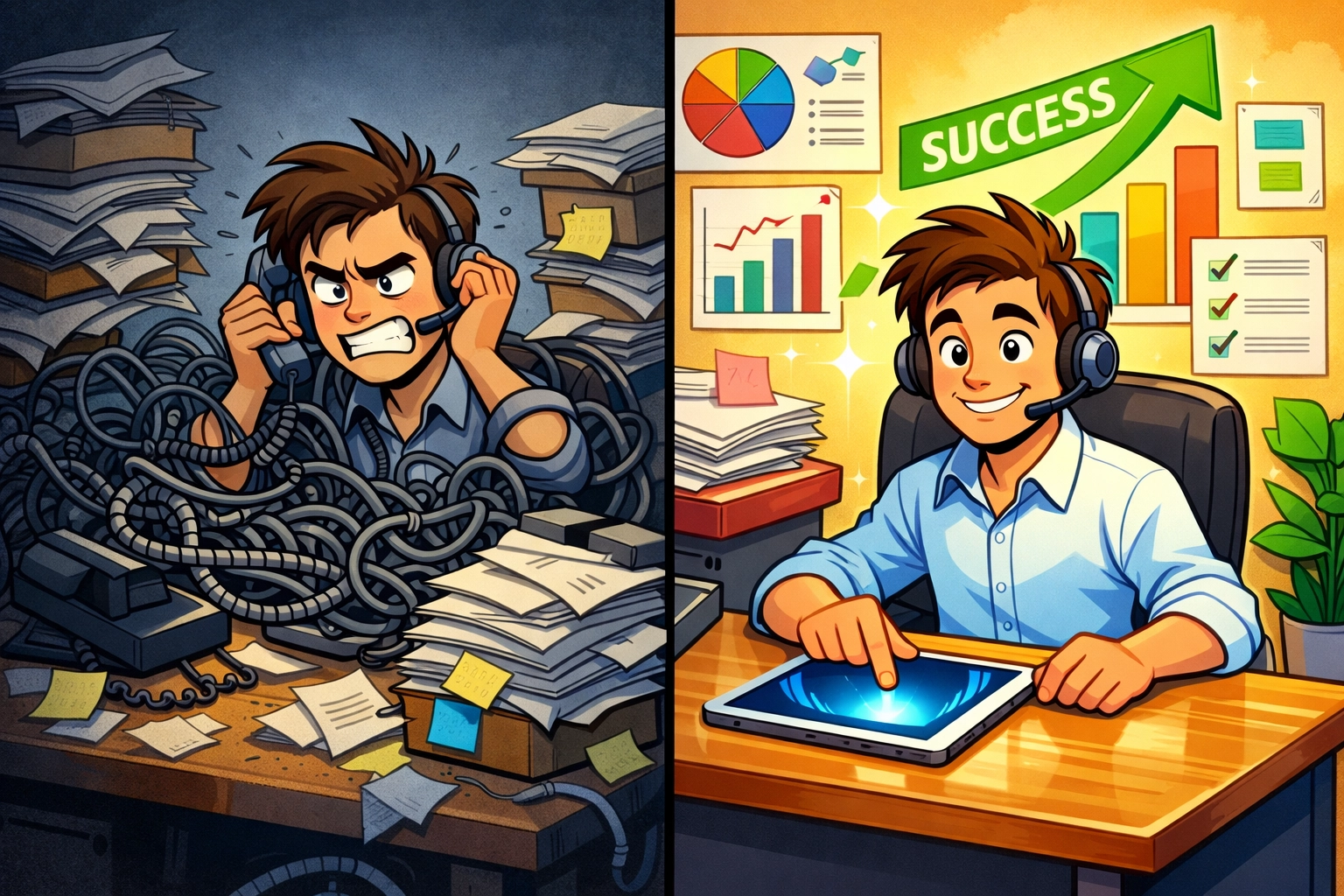
Implementing "They Ask, You Answer" for Better Conversion
At Every Enquiry, we believe that transparency is the ultimate competitive advantage. If you want to stop losing leads, you have to stop being a salesperson and start being a teacher.
When you focus on Website Optimization that prioritises the customer’s fears and questions, you create a filter. You’ll find that you get fewer "bad" leads and more "qualified" ones.
Think about the five most common questions you get asked on a sales call. Go to your website right now. Are those answers easy to find? If not, you’re losing leads before they even contact you. By addressing the "elephant in the room" (like price or common industry scams), you build a level of trust that no flashy "Contact Us" button can ever replicate.
The Cost of Doing Nothing
Let’s look at the numbers. If you generate 20 leads a month and convert 2 of them (10%), you’re doing okay. But if you implement a structured Enquiry Handling system and move that conversion to 20% (4 sales), you have doubled your revenue without spending an extra penny on advertising.
The framework isn't about working harder; it's about making sure that the hard work you’ve already done (the marketing and visibility) doesn't go to waste.
Whether you’re a plumber in Birmingham or an accountant in London, the principles are the same. Be visible for the right reasons, respond faster than anyone else, and follow a conversion process that respects the customer’s journey.
If you’re struggling to see where your leads are going, check out our pricing to see how we can help you build this framework into your business. Or, if you're ready to stop the leaks today, get in contact with us.
Frequently Asked Questions (FAQ)
1. I’m a one-person band. How can I possibly respond in 5 minutes?
We get it. You’re on the tools or with a client. This is where automation is your best friend. You don't necessarily have to pick up the phone, but you do need an automated "acknowledgement" system. A simple SMS sent immediately after a web form is filled out can buy you hours of time because the customer feels heard.
2. Should I really put my prices on my website?
Yes. If you don't, people will assume you are too expensive or that you’re hiding something. You don't have to give a final quote, but giving a "starting from" price or a "typical cost" range helps qualify your leads. It saves you time and builds massive trust.
3. What is the most common reason leads are lost?
Purely operational failure. It’s usually a combination of slow response times and a lack of a follow-up system. Most small businesses call a lead once, don't get through, and never try again. Most sales happen between the 5th and 12th contact.
4. Is a CRM complicated to set up?
It can be, but it doesn't have to be. For most SMEs, you need a simple tool that tracks names, numbers, and where they are in your "funnel." At Every Enquiry, we help streamline this so it’s a tool that helps you work, rather than another chore to manage.
5. How long does it take to see results from a new conversion framework?
Usually, you’ll see a difference in your "Response" metrics within 30 days. Significant conversion gains: especially from recovering old leads: typically start to show within 60 to 90 days as your automated nurturing sequences begin to mature.
6. Do I need to change my whole website?
Not necessarily. Often, it’s about adding the right content (the "They Ask, You Answer" pieces) and ensuring your call-to-actions are clear and lead into a structured response system. You can see more about how we handle this in our Services section.