Let’s be honest for a second. You’re likely spending a fair bit of money, and even more time, trying to get the phone to ring or the contact form to ping. You’ve got your SEO sorted, your social media is ticking along, and the enquiries are finally starting to land.
But then what?
For many UK small business owners and tradespeople, this is where the wheels fall off. A lead comes in while you’re on a job, in a meeting, or (god forbid) trying to have a Sunday roast with the family. You tell yourself you’ll call them back later. "Later" becomes tomorrow. Tomorrow becomes "I’ll do it over the weekend." By the time you actually pick up the phone, that potential customer has already booked with your competitor because they answered on the second ring.
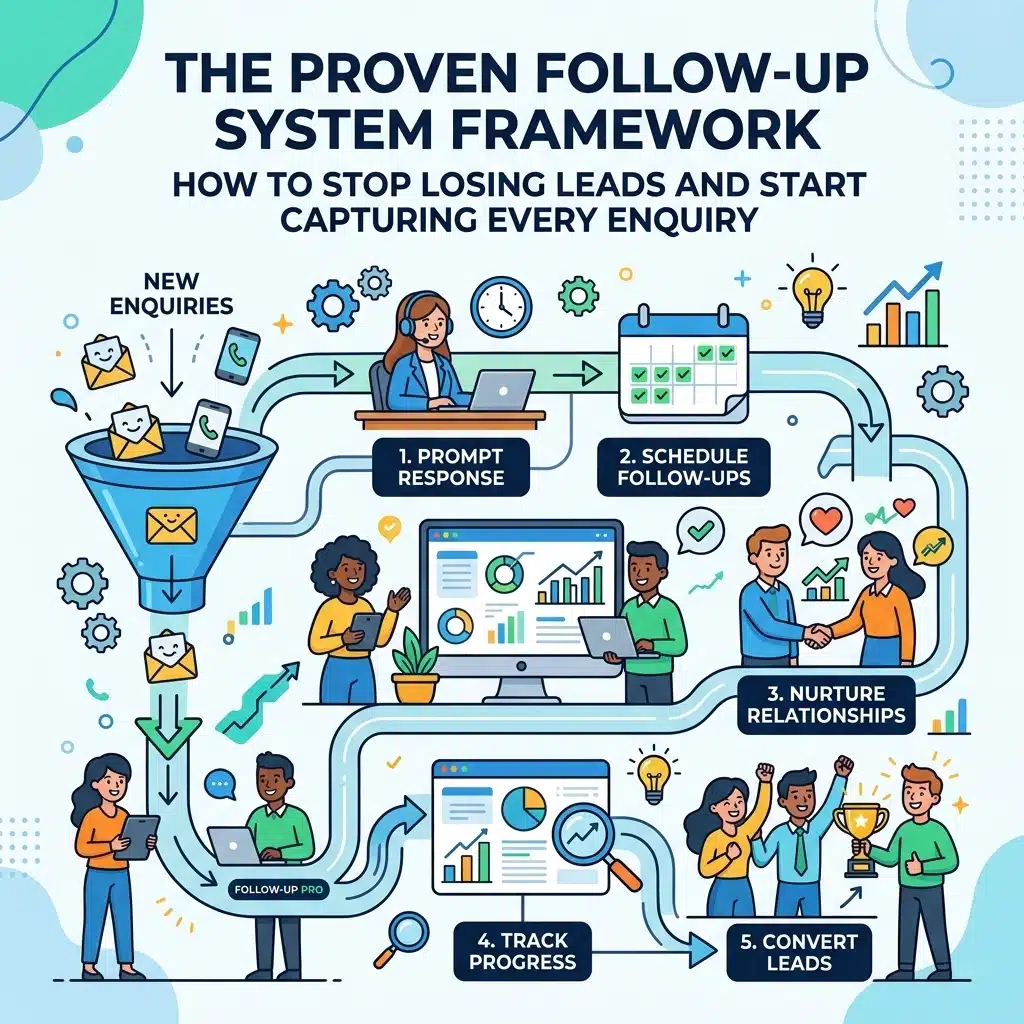
It’s a gut-punch, isn't it? Losing a lead isn't just a missed job; it’s literal money falling out of your pocket. In this guide, I’m going to walk you through a proven follow-up system framework. We’re moving away from the "hope and pray" method and moving toward a structured approach based on Visibility, Response, and Conversion.
This isn't about being a pushy salesperson. It’s about being the most helpful, responsive business in your industry. As Marcus Sheridan says in They Ask, You Answer, "Inbound marketing is about being the best teacher in the world." Your follow-up system is simply a continuation of that teaching process.
The Problem: Why 92% of Sales Teams Give Up Too Early
Research shows that 80% of sales require at least five to twelve touchpoints before a deal is closed. Yet, shockingly, 44% of sales reps give up after just one follow-up. If you’re an SME owner, you probably don’t even think of yourself as a "sales rep," but that’s exactly what you are the moment an enquiry hits your inbox.
If you aren't following up at least five times, you are effectively leaving 80% of your potential revenue on the table for someone else to grab. Most businesses stop because they don't want to "pester" people. But let’s flip that: if a customer has an urgent problem (a leaking pipe, a legal issue, or a need for a new website), they aren't annoyed by your follow-up. They are relieved that someone is actually taking their problem seriously.

Phase 1: Visibility – Seeing the Whole Picture
You can't fix what you can't see. Most SMEs lose leads simply because they don't have a central place where every enquiry lives. If your leads are scattered across WhatsApp, your personal email, Facebook Messenger, and scraps of paper in the van, you’ve already lost the battle.
1. Centralise Everything
The first step in our framework is visibility. You need a "Single Source of Truth." For some, this is a sophisticated CRM like HubSpot or Pipedrive. For others, it’s a simple, shared Google Sheet. It doesn't matter what the tech is; what matters is that every single person who contacts you ends up on that list.
2. Trace the Source
If you don't know where your leads are coming from, you don't know where to invest your energy. Is it social media management that’s driving the high-quality calls, or is it your local SEO? By tracking the source, you can see which channels convert and which ones are just "tyre kickers."
3. The "Cost of Silence" Audit
Ask yourself: how many enquiries did we get last month? How many did we actually talk to? And how many did we close? If you got 50 enquiries but only closed 5, and the average job is £1,000, you’ve potentially missed out on £45,000. When you look at the numbers that way, "being too busy to call back" sounds a lot less like a badge of honour and more like a business disaster.
Phase 2: Response – The Need for Speed (and Strategy)
Once you can see your leads, you have to respond. But not just any response will do. We need a multi-channel cadence that demonstrates persistence without being a nuisance.
The 5-Minute Rule
Data suggests that responding to a lead within five minutes makes you 21 times more likely to qualify them than if you wait 30 minutes. In the age of instant gratification, five minutes is the new "gold standard." If you can’t do this yourself because you’re on the tools or in meetings, you might need a digital receptionist or a dedicated enquiry handling service.
The Proven 10-Day Cadence
Don't just call once and hope for the best. Use this data-driven framework:
| Day | Channel | Action | Purpose |
|---|---|---|---|
| Day 1 | Phone & Email | Immediate call + "Next Steps" email | Strike while the iron is hot. |
| Day 2 | Social Media | Connect on LinkedIn or FB | Put a face to the name. |
| Day 4 | Phone | Second call attempt (leave voicemail) | Voice creates a personal connection. |
| Day 6 | Case study or "Proof Point" | Show them you’ve solved this for others. | |
| Day 8 | Text/WhatsApp | Friendly check-in | Low-friction communication. |
| Day 10 | The "Breakup" Email | Create closure or urgency. |
Why Multi-Channel?
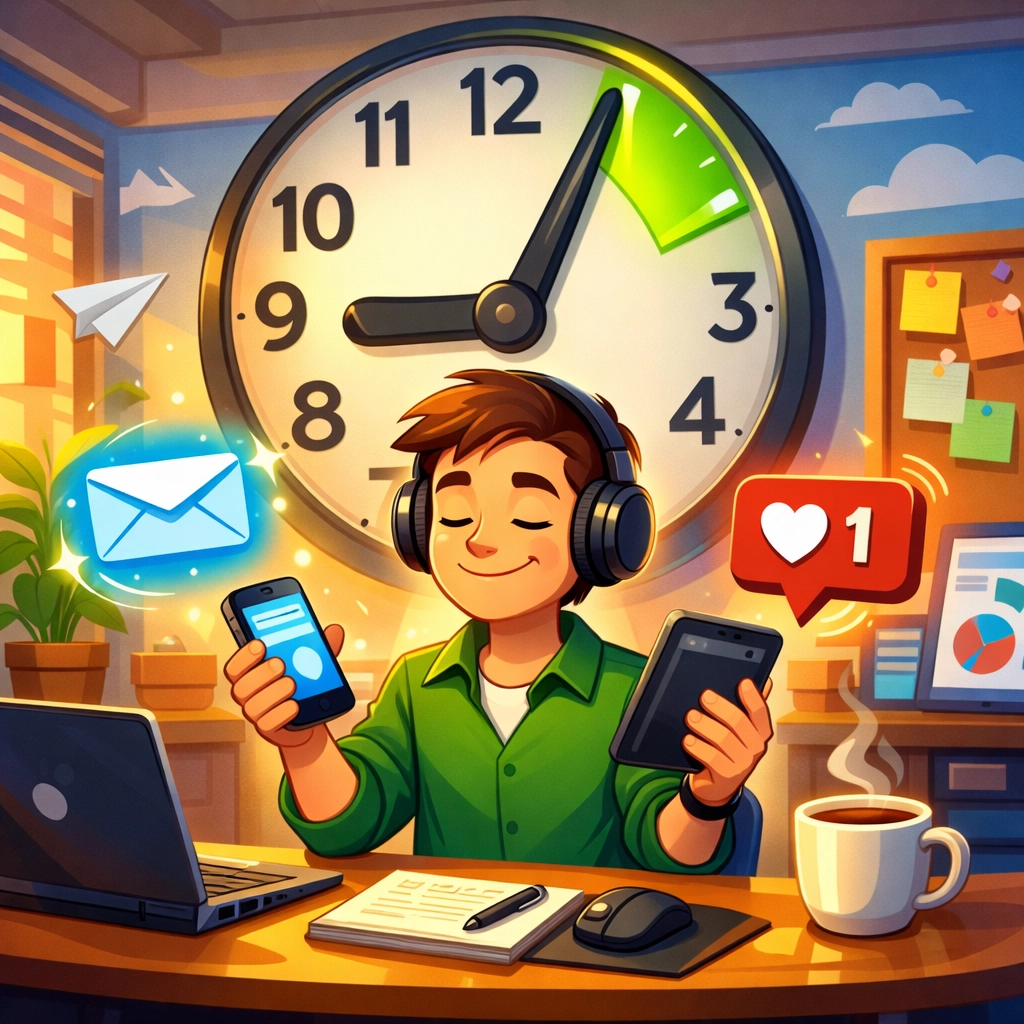
Different people communicate in different ways. Some of your customers will never answer an unknown number but will reply to a WhatsApp in seconds. Others hate email but love a quick chat on the phone. By spreading your follow-up across different channels, you’re meeting the customer where they are comfortable, not where you are.
Phase 3: Conversion – Turning Conversations into Cash
Conversion is the final frontier. This is where you address the "They Ask, You Answer" questions. Why should they pick you? What is the price? What happens if it goes wrong?
1. Education Over Pitching
Stop trying to "close" the lead. Instead, try to improve your lead conversion by educating them. If someone asks for a quote, don't just send a number. Send a video explaining how you calculated the number, what materials you’re using, and why the cheaper quote they got elsewhere is actually a risk.
2. Social Proof is Non-Negotiable
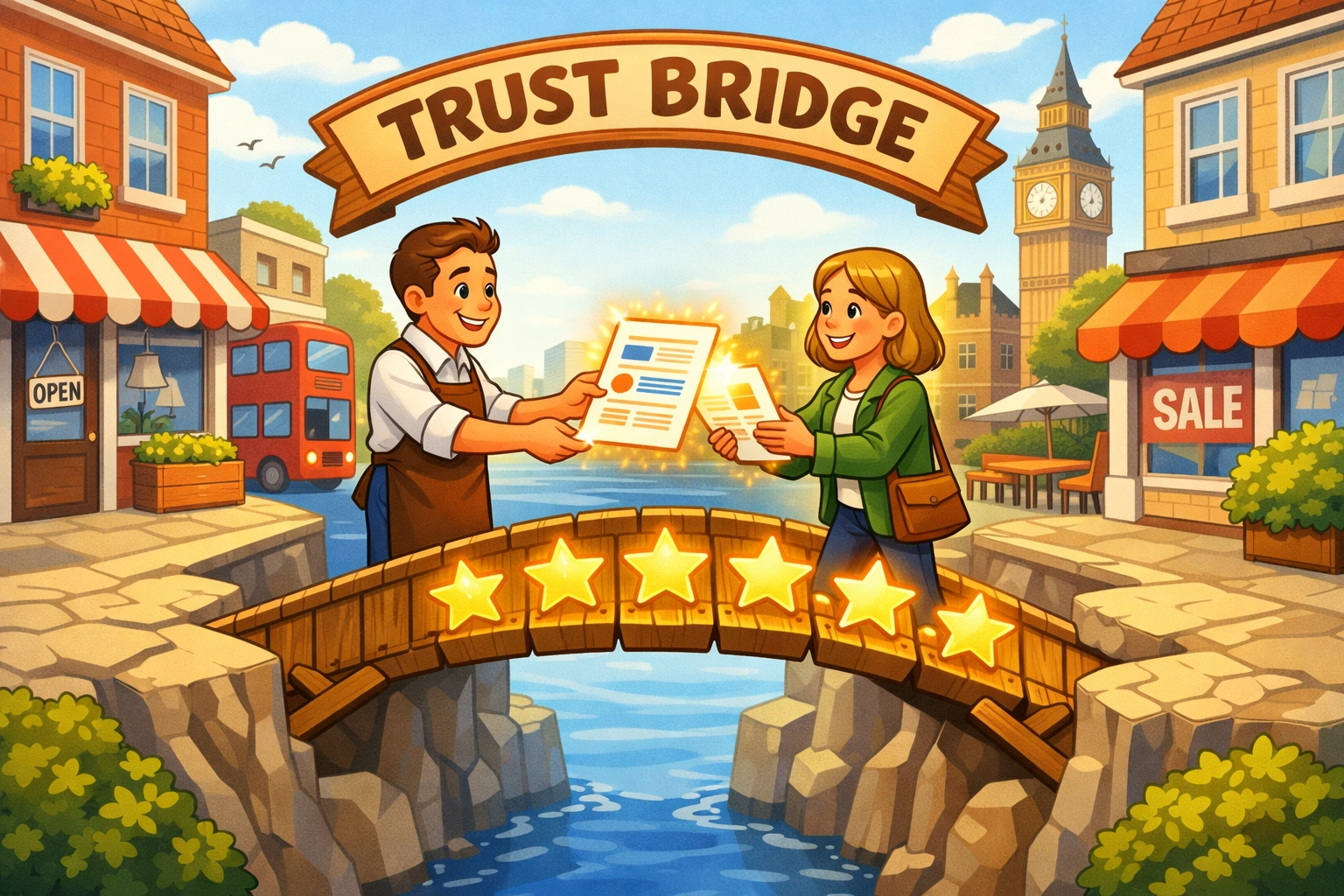
During your follow-up sequence, you must include social proof. Link to your reviews, send a link to a gallery of your recent work, or share a testimonial from a client in a similar situation. Humans are social creatures; we want to know that other people have trusted you and survived the experience.
3. The Breakup Email
This is the most powerful email in the entire framework. On Day 10, if you’ve had no response, you send this:
"Hi [Name], I haven't heard back from you regarding [Project], so I'm going to assume your priorities have shifted or you've gone in another direction. I’ll close your file for now, but if you ever need help in the future, feel free to reach out. Cheers, [Your Name]."
It’s amazing how many people will reply to this within minutes saying, "Oh no, I'm so sorry, I’ve just been busy! Can we talk tomorrow?" It removes the guilt from them and forces a decision.
Comparing Your Options: DIY vs. Structured Framework
If you’re still on the fence about whether you need a system, take a look at this comparison:
| Feature | The "Mental Note" Method (DIY) | The Every Enquiry Framework |
|---|---|---|
| Response Time | Whenever you get a minute (usually 4-24 hours). | Under 5 minutes (automated or managed). |
| Tracking | Memory or messy inbox. | Centralised CRM/Dashboard. |
| Number of Touches | 1 or 2 (if you remember). | 5 to 12 touchpoints. |
| Consistency | Highly variable based on your mood/workload. | 100% consistent every single time. |
| Customer Perception | Disorganised or "too busy." | Professional, reliable, and helpful. |
| Conversion Rate | Low (losing leads to faster competitors). | High (capturing the 80% others miss). |
Building Your Infrastructure: The Tools You Need
You don’t need to spend thousands on software to make this work. However, you do need some basic services to keep the engine running.
- A Simple CRM: HubSpot has a free tier that is perfect for SMEs. It logs your emails and reminds you when to call.
- Automation Tools: Use tools like Zapier to connect your website forms to your CRM so nothing gets missed.
- Communication Apps: WhatsApp Business is a lifesaver for trades. It allows you to set "Away" messages and organise chats with labels.
- Grammar & Tone: Use Grammarly to ensure your follow-up emails look professional. Nothing kills a high-ticket lead faster than a "professional" email full of typos.
Why SMEs Struggle with This (and How to Fix It)
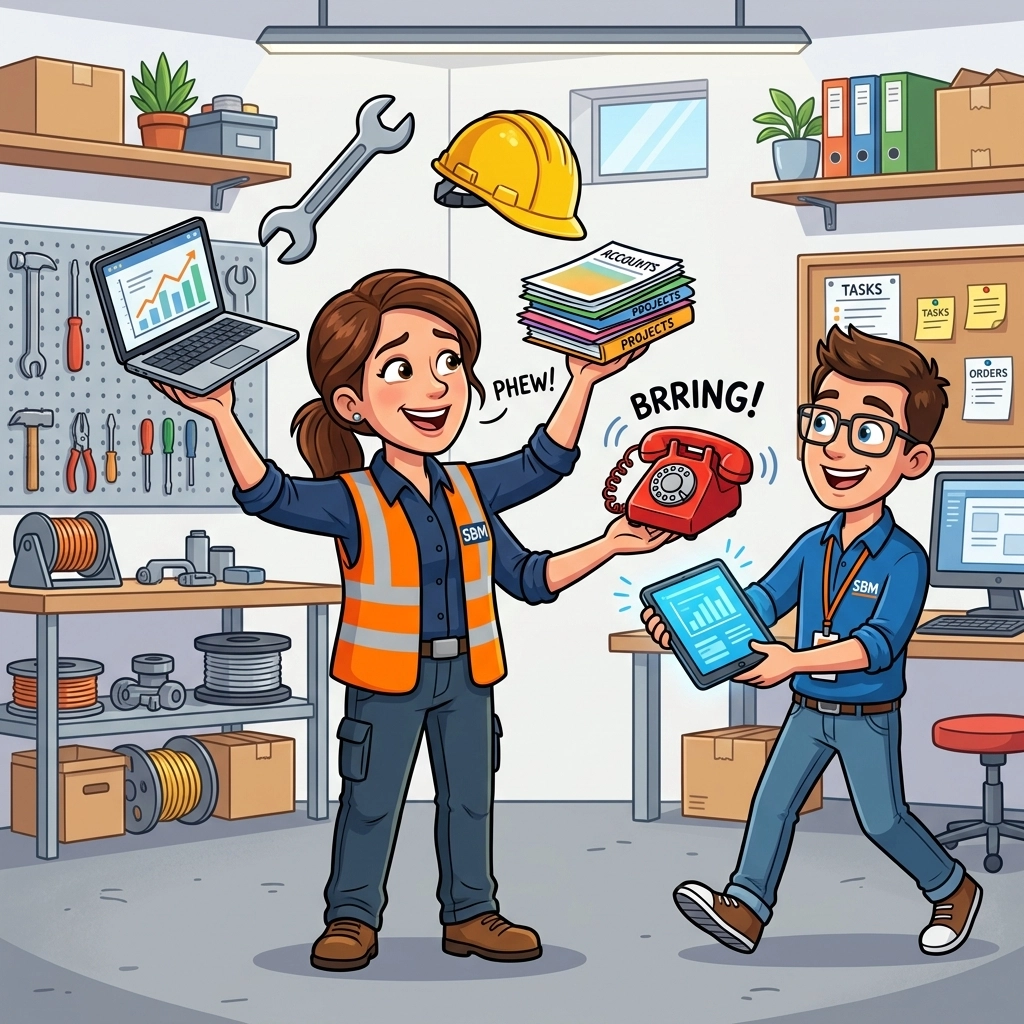
Most SME owners aren't lazy; they are overstretched. You’re the CEO, the technician, the accountant, and the janitor. Adding "Lead Management Expert" to that list feels like the straw that breaks the camel's back.
This is why many businesses choose to outsource the enquiry handling part of their business. Whether it’s a virtual assistant or a specialised service like Every Enquiry, having someone whose only job is to ensure that every lead is greeted, logged, and moved through the framework is often the highest-ROI investment you can make.
Think about it: if you pay a service a few hundred pounds a month, but they help you close just one extra £2,000 job that you would have otherwise missed, the service has paid for itself several times over. Is your website losing you money right now? If you aren't tracking your missed calls, the answer is almost certainly yes.
Final Thoughts: The Fortune is in the Follow-Up
The market is tougher than it used to be. Customers are more demanding, and competitors are more aggressive. You can't afford to be sloppy with your leads.
By implementing this framework, Visibility, Response, and Conversion, you are telling your customers that you value their time and their business. You are moving from a "reactive" business that waits for things to happen to a "proactive" business that makes things happen.
Stop letting those enquiries vanish into the ether. Set up your tracking, nail your response time, and don't be afraid to follow up until you get a "yes" or a "no."
Ready to stop losing leads? Check out our pricing to see how we can handle the heavy lifting for you, or contact us today for a chat about your specific needs.
Frequently Asked Questions (FAQ)
1. Won't I annoy people by following up so many times?
Not if you are being helpful. If you just call to say "Are you buying yet?", that's annoying. If you call to say "I've sent over that case study we talked about," or "I wanted to make sure you saw the safety info I sent," you are providing value. People are busy; they usually appreciate the reminder.
2. I'm a one-man band; how can I respond in 5 minutes?
It's nearly impossible to do it yourself if you're actually working. This is where automation or a digital receptionist comes in. You can set up an auto-responder that says, "Thanks for your enquiry! I’m currently on a job, but I’ve received your message and will call you at [Time]. In the meantime, check out our latest projects here." It buys you time while acknowledging the lead.
3. Which CRM is best for a small trade business?
For most UK trades, something simple like Tradify or ServiceM8 is great because it handles quotes and invoices too. If you want something more marketing-focused, HubSpot is the industry leader and very user-friendly.
4. What if they tell me they’ve gone with a cheaper quote?
Don't just walk away. This is a "They Ask, You Answer" moment. Ask them what was included in that quote. Explain the difference in quality or service. Sometimes, customers choose the cheapest option because they don't understand the risks. Educate them, and you might just win them back.
5. How do I track leads from social media?
Use a link in your bio that leads to a specific landing page on your website. Use "Lead Forms" on Facebook and Instagram, and ensure those forms are integrated with your CRM so they don't just sit in your social media notifications where you'll forget them.
6. Is it worth following up on "bad" leads?
Yes, to an extent. Sometimes a "bad" lead is just someone who isn't ready yet. If they really aren't a fit (e.g., they are outside your service area), tell them quickly and politely. You can even refer them to someone else. This builds your reputation as a helpful professional, even if you don't get the job.