You've just spent £500 on Google Ads. Three qualified leads come through. You respond to the first one within 20 minutes. The second one gets a reply two hours later. The third? You get back to them the next morning.
Guess which one books a meeting?
If you said the first one, you're right. The other two have already spoken to your competitors.
This isn't a hypothetical scenario. It happens every single day to service businesses across the UK. The data from Harvard Business Review shows that firms who respond to leads within five minutes are 100 times more likely to connect than those who wait 30 minutes. Yet the average response time for most businesses is still over 12 hours.
That's not a marketing problem. That's a revenue problem.
In this post, I'll walk you through a five-step framework to dramatically improve your response times, stop losing leads to competitors, and turn your enquiry handling from a weakness into a competitive advantage.
Why Response Time Matters More Than You Think
Let's be honest about what's actually happening when someone fills out your contact form or rings your office.
They're not just researching. They're ready to buy. They've already looked at multiple websites, compared prices, read reviews, and narrowed their options down to three or four providers. Your business is one of them.
Now they're in decision mode. The first person who responds professionally and helpfully will likely get the business.
But here's where most service businesses fall down. You're busy. You're in a meeting, on a job site, or dealing with an existing client. The lead sits in your inbox. By the time you respond, they've already booked with someone else.
The cost isn't just one lost sale. According to research from Velocify, calling a lead within five minutes makes them 21 times more likely to qualify than waiting 30 minutes. After an hour, your odds drop by 60%. After 24 hours? You might as well not bother.
Let's fix this.
Step 1: Centralise All Your Enquiries in One Place
The first problem most businesses have is that enquiries come in everywhere.
Phone calls go to voicemail. Web forms land in Gmail. Facebook messages sit unread. Someone texts your mobile. Your partner fields calls on their phone. It's chaos.
You can't improve response times when you don't even know where all your enquiries are coming from.
Here's what you need to do:
Set up one central system where every enquiry lands, regardless of the source. This could be a CRM, dedicated enquiry management software, or even a well-organised shared inbox.
The key is visibility. Every enquiry should be logged, timestamped, and assigned to someone. No more "I thought you were dealing with that" conversations.
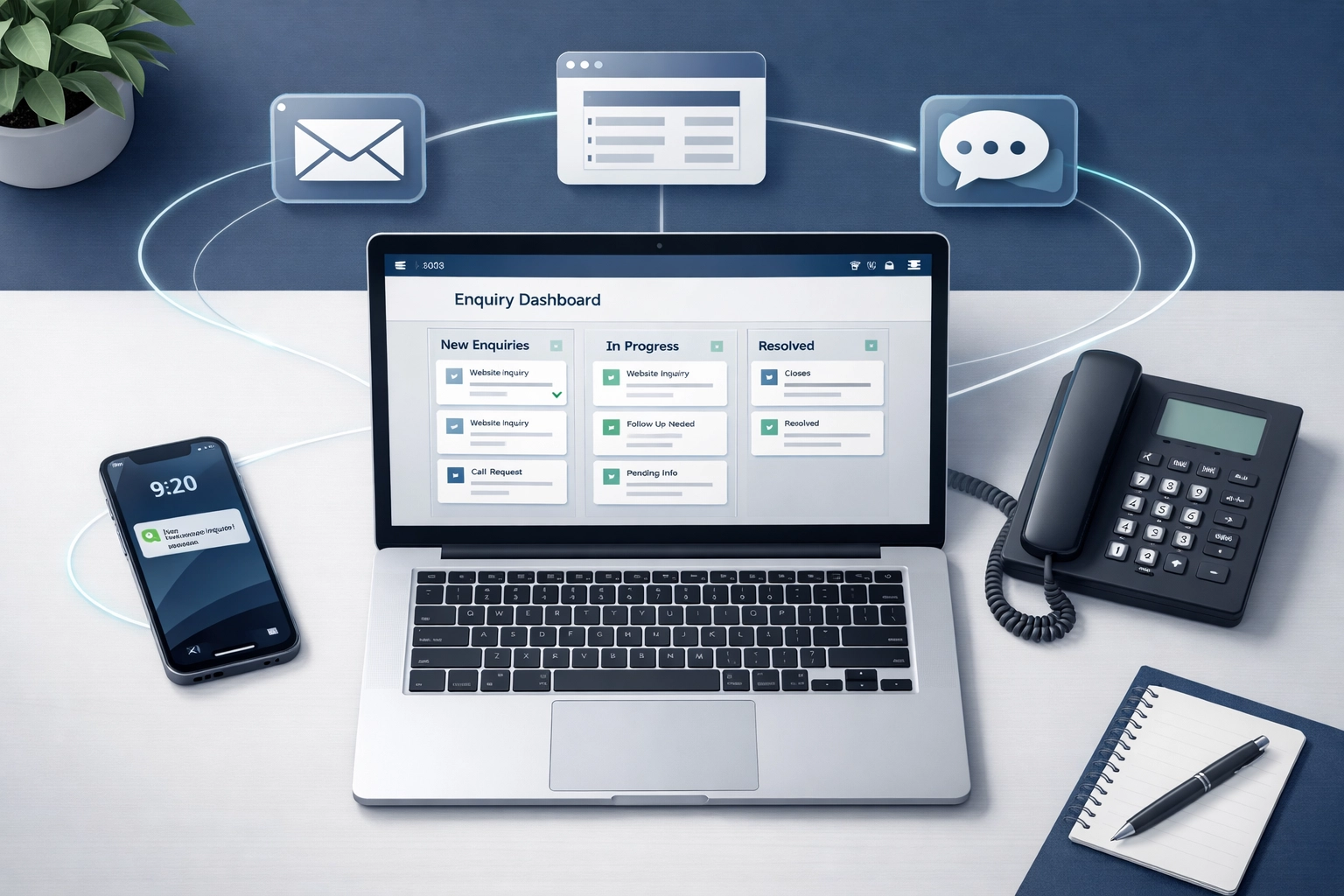
When you centralise enquiries, three things happen immediately:
- Nothing gets missed
- You can see patterns (peak enquiry times, common questions, conversion rates)
- You can measure and improve response times
Companies using dedicated customer service platforms resolve enquiries up to 35% faster than those using standard email, according to research from SuperOffice. That's not because the software is magic. It's because you can actually see what needs attention.
For service businesses, this doesn't mean investing in enterprise software. A simple system that captures phone enquiries, web forms, and email in one place will transform your response times overnight.
Step 2: Prioritise and Triage Your Leads
Not all enquiries are created equal.
Someone asking about your prices needs a response, but someone saying "I need this done by next week" needs a response right now.
The problem is that when everything looks the same in your inbox, you treat everything with equal urgency. Or worse, you respond in chronological order whilst high-value leads slip away.
Create a simple priority system:
- Hot leads: Demo requests, "ready to go" language, tight deadlines, large projects, referred clients
- Warm leads: General enquiries, price requests, information gathering
- Cold leads: Newsletter signups, generic questions, low-value requests
Tag or label enquiries as they come in so you can quickly identify which ones need immediate attention. Most CRM systems and email platforms let you do this with filters or automation rules.
For phone enquiries, train your team (or your virtual receptionist) to ask qualifying questions:
- What's your timeline?
- Have you worked with anyone else on this?
- What made you reach out today?
These simple questions help you identify which leads are ready to buy and which ones are just browsing. Then you can respond accordingly.
This doesn't mean ignoring lower-priority leads. It means responding to your best opportunities first, whilst you still have a chance to win them.
Step 3: Automate the First Response
Here's the truth: most people don't expect you to solve their problem in the first response. They just want to know you've received their enquiry and when they'll hear from you properly.
This is where automation saves you.
Set up immediate auto-responses for every channel:
- Web forms: "Thanks for your enquiry. We typically respond within 2 hours during business hours. If urgent, call us on…"
- Emails: Auto-reply confirming receipt and expected response time
- After-hours enquiries: "We've received your message outside business hours. We'll respond first thing tomorrow morning."
This simple step manages expectations and keeps your business top-of-mind whilst you prepare a proper response.
But don't stop there. Use automation to route enquiries to the right person immediately. If someone submits a web form about electrical work, it should land directly with your electrician, not sit in a general inbox waiting to be forwarded.
Research from Drift shows that 82% of buyers expect an immediate response to sales or marketing questions. An auto-response buys you time and shows professionalism, even if you can't give a detailed answer straight away.
Step 4: Build Response Time Into Your Daily Routine
The biggest reason businesses respond slowly isn't lack of systems. It's lack of discipline.
You get busy. Hours pass. By the time you check your enquiries, you're too late.
Make lead response a scheduled activity:
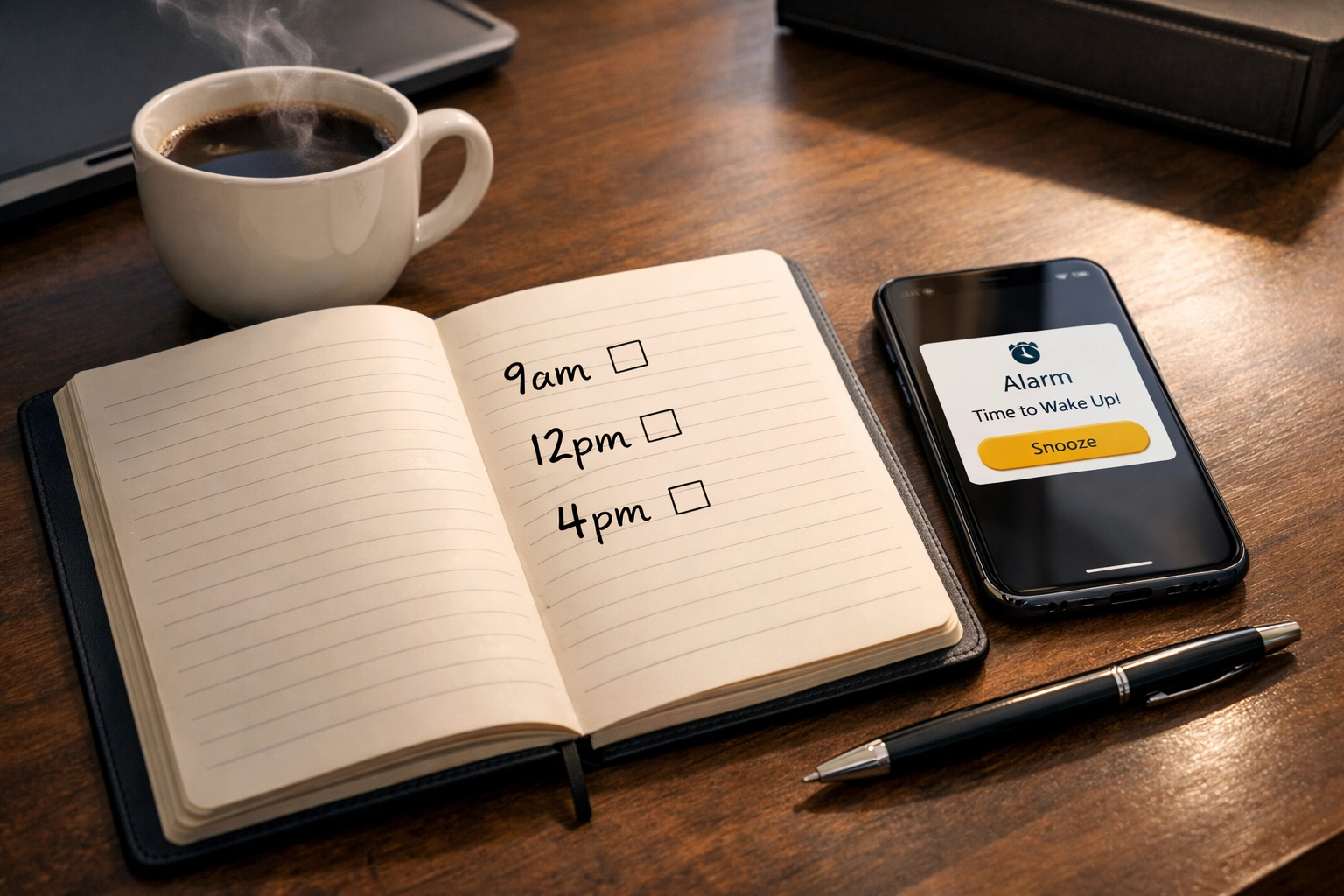
- Check for new enquiries at 9am, 12pm, and 4pm
- Set phone reminders
- Assign one person as "lead responder" each day
- Block 15-minute slots in your calendar specifically for enquiry follow-up
If you're a solo business owner, this means stopping what you're doing three times a day to check enquiries. Yes, it interrupts your workflow. But losing leads costs more than a few interruptions.
For teams, create a rota system where someone is always responsible for monitoring enquiries during business hours. This person doesn't need to solve every problem, but they need to acknowledge every enquiry and route it to the right person.
The goal is to respond to every enquiry within an hour during business hours. If you can't give a full answer, give a holding response: "Thanks for getting in touch. I'm looking into this for you and will have a proper answer by 3pm today."
This keeps the conversation alive whilst you gather the information you need.
Step 5: Measure, Review, and Improve
You can't improve what you don't measure.
Start tracking these three metrics:
- Average first response time: How long from enquiry to first response
- Response rate: What percentage of enquiries actually get a response
- Conversion rate by response time: How many enquiries convert based on how quickly you responded
Most CRM systems and enquiry management platforms track this automatically. If yours doesn't, create a simple spreadsheet and log it manually for a month.
What you'll likely find is shocking. You're probably responding slower than you think, and your conversion rates improve dramatically when you respond faster.
Review these metrics monthly. Look for patterns:
- Which channels have the slowest response times?
- What time of day do most enquiries come in?
- Are certain team members faster than others?
- Do faster responses actually lead to more sales?
Use this data to refine your process. Maybe you need cover during lunch hours. Maybe you need to check emails more frequently on Monday mornings. Maybe you need better mobile access to your enquiry system.
The businesses that win aren't necessarily the ones with the best product or the lowest price. They're the ones who respond first and follow up consistently.
Comparison: Manual vs Systematic Enquiry Handling
| Aspect | Manual Approach | Systematic Approach |
|---|---|---|
| Average Response Time | 12+ hours | Under 1 hour |
| Enquiries Missed | 10-30% (sitting in various inboxes) | Under 2% |
| Team Visibility | Low (unclear who's dealing with what) | High (everyone sees everything) |
| Follow-Up Consistency | Inconsistent (relies on memory) | Automated reminders and tracking |
| Conversion Rate | 15-25% | 35-50% |
| Customer Experience | "I never heard back" | "They responded so quickly" |
| Scalability | Breaks down as volume increases | Handles growth without adding staff |
| Cost per Acquisition | Higher (more leads needed) | Lower (convert more existing leads) |
What This Actually Looks Like in Practice
Let's walk through a real scenario.
A homeowner searches "bathroom fitters near me" on Google. Your ad appears. They click through to your website, like what they see, and fill out your contact form at 10:30am on a Tuesday.
Manual approach:
- Form lands in your Gmail
- You're on site
- You see it at 2pm
- You respond at 4pm when you're back at your desk
- They've already booked a consultation with a competitor who called them at 11am
Systematic approach:
- Form lands in your enquiry system
- Auto-response goes out immediately
- Alert pings your phone
- You call them at 10:45am from your van
- You book a quote for Thursday
- They cancel the other consultation because they've already found someone responsive
Same lead. Different outcome. The only difference is your system.
The Real Cost of Slow Responses
Let's do some quick maths.
Say you get 50 qualified leads per month from your marketing efforts. Each lead costs you £40 in advertising (that's £2,000/month in marketing spend).
At a 20% conversion rate, you win 10 jobs. If your average job value is £2,500, that's £25,000 in monthly revenue.
Now imagine you improve your response times and increase your conversion rate to 35%. Same leads, same marketing spend, but now you win 17-18 jobs. That's £42,500-£45,000 in monthly revenue.
An extra £20,000 per month. £240,000 per year. From the same marketing budget. Just by responding faster.
That's not theory. That's what happens when you stop losing leads to competitors who simply pick up the phone quicker.
Common Objections (And Why They Don't Hold Up)
"I'm too busy to respond that quickly"
You're too busy to make an extra £240,000 per year? The issue isn't time. It's priorities. Responding to leads needs to be as important as doing the work itself.
"Good clients will wait for me"
No, they won't. Good clients have options. They're comparing you against three other businesses. The first person who responds professionally wins. That's just reality.
"My work quality speaks for itself"
Your work quality is irrelevant if potential clients never get to see it because they've already booked someone else.
"I don't want to seem desperate"
There's a difference between desperate and professional. Responding quickly shows you're organised and value potential clients. That's attractive to buyers.
Your Next Steps
Here's what to do this week:
Monday: Audit where your enquiries currently come from. List every possible channel (web forms, phone, email, social media, etc.)
Tuesday: Choose one central place to collect all enquiries. Set up forwarding rules, integrations, or manual logging processes.
Wednesday: Create your priority system. Define what qualifies as hot, warm, and cold leads. Brief your team.
Thursday: Set up auto-responses for every enquiry channel. Include expected response times and alternative contact methods.
Friday: Build enquiry response into your daily schedule. Set three alarms: 9am, 12pm, 4pm. When they go off, check and respond to enquiries.
This isn't complicated. You don't need expensive software or a big team. You just need a system and the discipline to follow it.
The Bottom Line
Improving response times isn't about technology. It's about priorities.
When a lead comes in, they're telling you they're ready to buy. The question is whether you're ready to sell.
Every hour you wait, your competitors are getting calls. Every day you delay, you're paying for leads that book with someone else. Every week you put off fixing this, you're leaving tens of thousands of pounds on the table.
The businesses that grow predictably aren't the ones with the biggest marketing budgets. They're the ones who turn enquiries into clients by responding first and following up consistently.
You've already done the hard work of generating leads. Don't waste them by responding too slowly.
Start with step one. Centralise your enquiries. You'll see the difference within a week.