You're working harder than ever. Your diary is packed. The phone keeps ringing. Your inbox is overflowing.
Yet at the end of the month, revenue feels… random. Some months are brilliant. Others fall short. You can't quite predict what's coming next.
Here's the uncomfortable truth: being busy doesn't equal growth. It often just equals chaos dressed up as productivity.
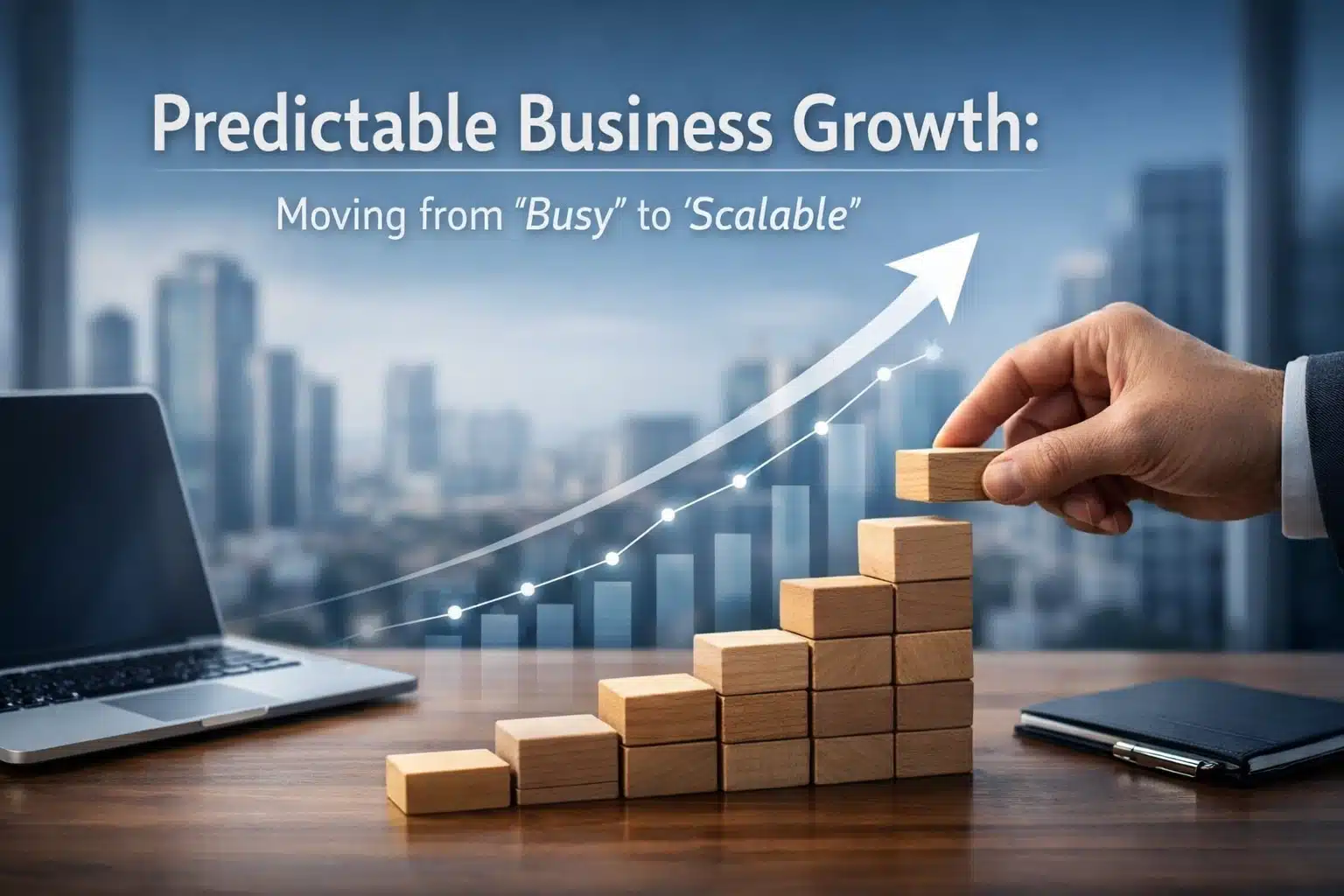
The difference between a business that's simply "busy" and one that's genuinely scalable comes down to one thing: systems.
What 'Busy' Actually Looks Like
Let's be honest about what busy really means in most service businesses.
You're responding to enquiries as they arrive. Chasing quotes you sent weeks ago. Juggling multiple jobs at once. Putting out fires. Making decisions on the fly because there's no time to think.
Everything depends on you being available. If you're away for a week, things fall apart. Staff wait for your approval. Customers don't hear back. Leads go cold.
This isn't growth. It's survival mode with a full calendar.
The problem isn't effort. You're working plenty hard. The problem is infrastructure. You're trying to scale a business built on reactive, ad-hoc decisions rather than repeatable systems.

What 'Scalable' Actually Means
Scalable doesn't mean complicated. It means predictable.
A scalable business has clear processes for how enquiries get handled. How quotes get followed up. How customers move through your service delivery. How decisions get made when you're not around.
It means documented workflows. Clear responsibility. Metrics that tell you what's working and what isn't.
Most importantly, it means you can predict next month's revenue with reasonable accuracy. Not perfectly: no one can: but within a range that allows you to plan, invest, and grow confidently.
That's the shift. From "I hope this month is good" to "Based on our pipeline and conversion rates, we're forecasting £X."
Why Systems Must Come Before Volume
Here's where most businesses get it wrong. They try to grow faster before building the systems to support that growth.
You invest in more marketing. More leads arrive. Then what?
If you don't have a reliable way to respond quickly, qualify properly, and follow up consistently, those leads leak. You're just pouring water into a bucket with holes in it.
Business growth systems aren't about bureaucracy. They're about reducing variance. When you have a documented process for handling enquiries, every lead gets the same quality of service. Response times become consistent. Nothing depends on whether someone "remembers" to follow up.
This creates predictable business growth because you can measure what's happening and improve it systematically.

The Five Pillars of Predictable Growth
Let's get practical. Moving from busy to scalable requires building infrastructure in five key areas.
1. Clear Goals and Metrics
Vague ambitions don't create predictable growth. "Grow the business" isn't a goal. It's a wish.
Instead, set specific targets tied to measurable outcomes. Revenue per month. New customers per quarter. Average response time. Conversion rate from enquiry to sale.
Pick 1-3 metrics for each priority area. Review them monthly. This creates accountability and shows you exactly where things are working and where they're not.
2. Know Your Customers Properly
Too many business decisions are based on assumptions rather than actual customer insight.
What problems are they really trying to solve? What makes them choose you over a competitor? Where do they get stuck in your process?
When you understand this properly, you can improve your service delivery, reduce acquisition costs, and increase retention. You're no longer guessing. You're responding to real needs.
3. Data-Driven Decision Making
Gut feel has its place. But predictable business growth requires data.
Track where your enquiries come from. Which marketing channels convert best. How long it takes to close a sale. What percentage of quotes become customers.
This information allows you to allocate resources intelligently. Stop spending on channels that don't convert. Double down on what's working. Spot problems before they become crises.

4. Documented Processes
This is where most small businesses resist. "We're too small for processes" or "We need to stay flexible."
That's backwards. Processes create flexibility because they free you from firefighting.
Document how enquiries get handled from first contact to closed sale. Write down your quality standards. Create templates for common scenarios. Establish who makes which decisions.
This doesn't make you rigid. It makes you consistent. New team members can get up to speed faster. Nothing depends on tribal knowledge. The business can operate when you're not there.
5. Scalable Infrastructure
Your technology and systems need to grow with you: or you'll hit a ceiling.
Can your current setup handle twice the enquiry volume? Can you track every lead without things falling through the cracks? Can you report on performance without spending hours in spreadsheets?
If not, you're building on shaky foundations. Investing in proper infrastructure now prevents costly overhauls later.
Making the Transition
Moving from busy to scalable isn't a one-day project. But it doesn't need to be overwhelming either.
Start with your biggest pain point. Is it slow response times? Leads getting lost? Inconsistent follow-up? Pick one area and systematise it.
Build a playbook for that process. Document what works. Train your team on it. Measure the results. Then move to the next area.
The goal is to reduce your dependence on heroic effort and replace it with reliable systems. You want two people capable of handling each critical function, not everything depending on one person having a good day.
Apply the "one-change rule": every time you add something new, simplify or systematise something else. This prevents complexity from accumulating as you grow.

What This Actually Gets You
Predictable business growth isn't an abstract concept. It has real business outcomes.
You can forecast revenue with reasonable accuracy. This allows you to plan hiring, invest in equipment, and make decisions confidently rather than reactively.
You reduce owner-dependence. The business can operate effectively when you're on holiday, ill, or focused on strategy rather than daily operations.
You improve customer experience because service delivery becomes consistent rather than dependent on who's available or how busy you are that day.
You increase profitability because you're not constantly firefighting, wasting time on tasks that should be systematic, or losing leads through poor follow-up.
Most importantly, you regain control. You move from feeling like the business runs you to actually running the business.
The Bottom Line
Being busy feels productive. But it's often just expensive chaos.
Scalable businesses aren't necessarily working harder. They're working smarter. They've built infrastructure that creates predictable outcomes rather than hoping for good months.
The shift requires investment: time to document processes, money for proper systems, effort to train teams. But the alternative is staying stuck in survival mode, working flat out with unpredictable results.
Predictable business growth comes from reliable infrastructure. Systems before volume. Process before speed.
It's not glamorous. But it works.
And it's the difference between a business that keeps you busy and one that actually grows.