You’ve spent the money. You’ve tweaked the website. You’ve probably spent a few late nights staring at Google Ads or your social media feed, wondering why the phone isn't ringing off the hook.
But here’s the cold, hard truth: for many SMEs, the problem isn't always getting the leads. It’s what happens, or doesn't happen, once those leads actually arrive.
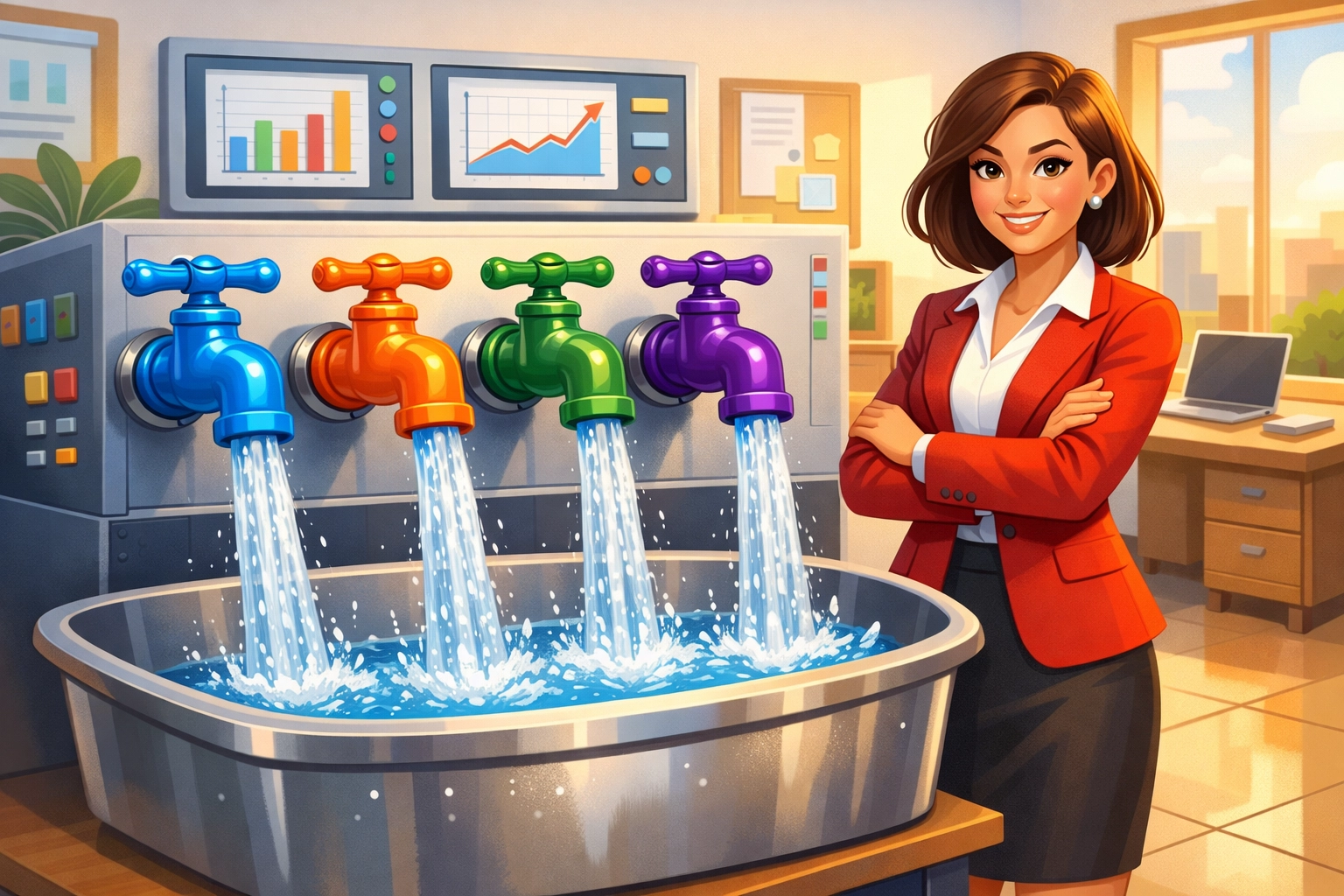
At Every Enquiry, we see it every day. Businesses are essentially pouring water into a leaky bucket. They focus all their energy on the tap (the marketing) while ignoring the massive holes in the bottom (the lead handling). If you aren't converting the enquiries you already have, spending more on marketing is just a faster way to lose money.
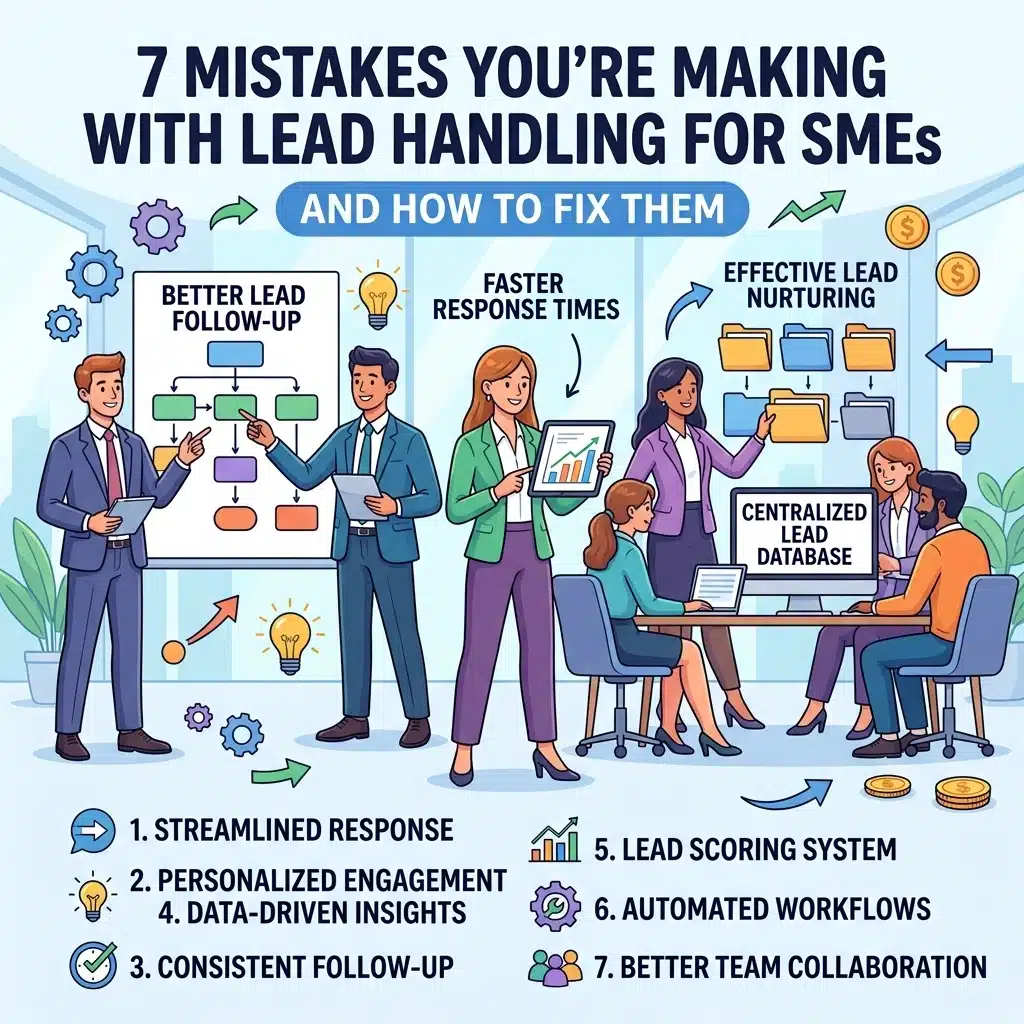
In this guide, I’m going to break down the seven most common mistakes small and medium businesses make with their enquiry handling. We’ll look at these through our core framework: Visibility, Response, and Conversion. If you want a predictable way to grow, you need to fix these holes.
The 3-Step Framework for Lead Success
Before we dive into the mistakes, let’s talk about how we view the world here at Every Enquiry. We believe every service business needs to master three stages:
- Visibility: Are the right people seeing you at the right time?
- Response: How quickly and professionally do you acknowledge the interest?
- Conversion: What systems do you have in place to turn that interest into a paid invoice?
Most businesses focus 90% of their effort on Visibility and 10% on the rest. We’re here to flip that.
Mistake 1: Relying on a Single Lead Source (The "Feast or Famine" Trap)
Many SMEs rely entirely on word-of-mouth or a single advertising channel. While referrals are fantastic because they come with built-in trust, they are also entirely outside of your control. You can’t "turn up" the referral dial when you have a quiet month.
When you rely on one source, you lack visibility across the wider market. If that source dries up, maybe a platform changes its algorithm or a key referral partner retires, your business is in trouble.
The Fix: Create a Marketing Haystack
You need a diversified approach. This doesn't mean you have to be everywhere, but you should have 3-4 reliable "taps" you can turn. This might include:
- Paid Search (Google Ads) for intent-based leads.
- Social Media Management for brand awareness and engagement.
- Email marketing to your existing database.
- Organic SEO to capture people looking for answers to their problems.
By spreading your risk, you ensure a steady flow of enquiries regardless of what one platform does.
Mistake 2: Vague or Missing Calls-to-Action (CTAs)
You’d be surprised how many websites make it difficult for a customer to actually hire them. We see "Submit" buttons, "Contact Us" pages hidden in footers, or worse, no clear instruction at all.
If a potential customer has to work to figure out how to give you money, they won't. They’ll go to a competitor who makes it easy. This is a fundamental error in website optimization.
The Fix: Be Specific and Direct
Don't just say "Contact Us." Tell them exactly what will happen next.
- "Get a Free Quote in 24 Hours"
- "Book Your 15-Minute Discovery Call"
- "Download the Pricing Guide"
Your CTAs should create a sense of movement. Use buttons that stand out and place them where the reader is most likely to make a decision. If you aren't sure where your website is failing, check out our post on why your website might be losing you money.
Mistake 3: The "Five-Minute" Failure (Slow Response Times)
This is the big one. According to research published in the Harvard Business Review, businesses that attempt to reach an enquiry within an hour are seven times more likely to have a meaningful conversation than those who wait even sixty minutes.
If you wait 24 hours? You might as well not have bothered getting the lead in the first place. In the world of SMEs, the "speed to lead" is often the only differentiator between you and the guy down the road.
The Fix: Systemise Your Response
You cannot rely on your memory or "getting to it after lunch." You need a dedicated enquiry handling system. This is why we focus so heavily on the power of prompt response.
If you can't pick up the phone, use automated SMS or email "auto-responders" that acknowledge the enquiry immediately. Even a message saying, "Hi, we've received your enquiry and Martyn will call you back within 30 minutes," is better than silence. For a deeper dive, read our 5-step framework for improving response times.
Mistake 4: Treating All Leads the Same (Lack of Segmentation)
A lead who has just downloaded a "Top 10 Tips" PDF is not the same as a lead who has filled out a "Request a Quote" form. If you treat them the same, perhaps by calling them both immediately to try and close a sale, you will annoy the first person and potentially miss the second.
The Fix: Use a CRM to Segment
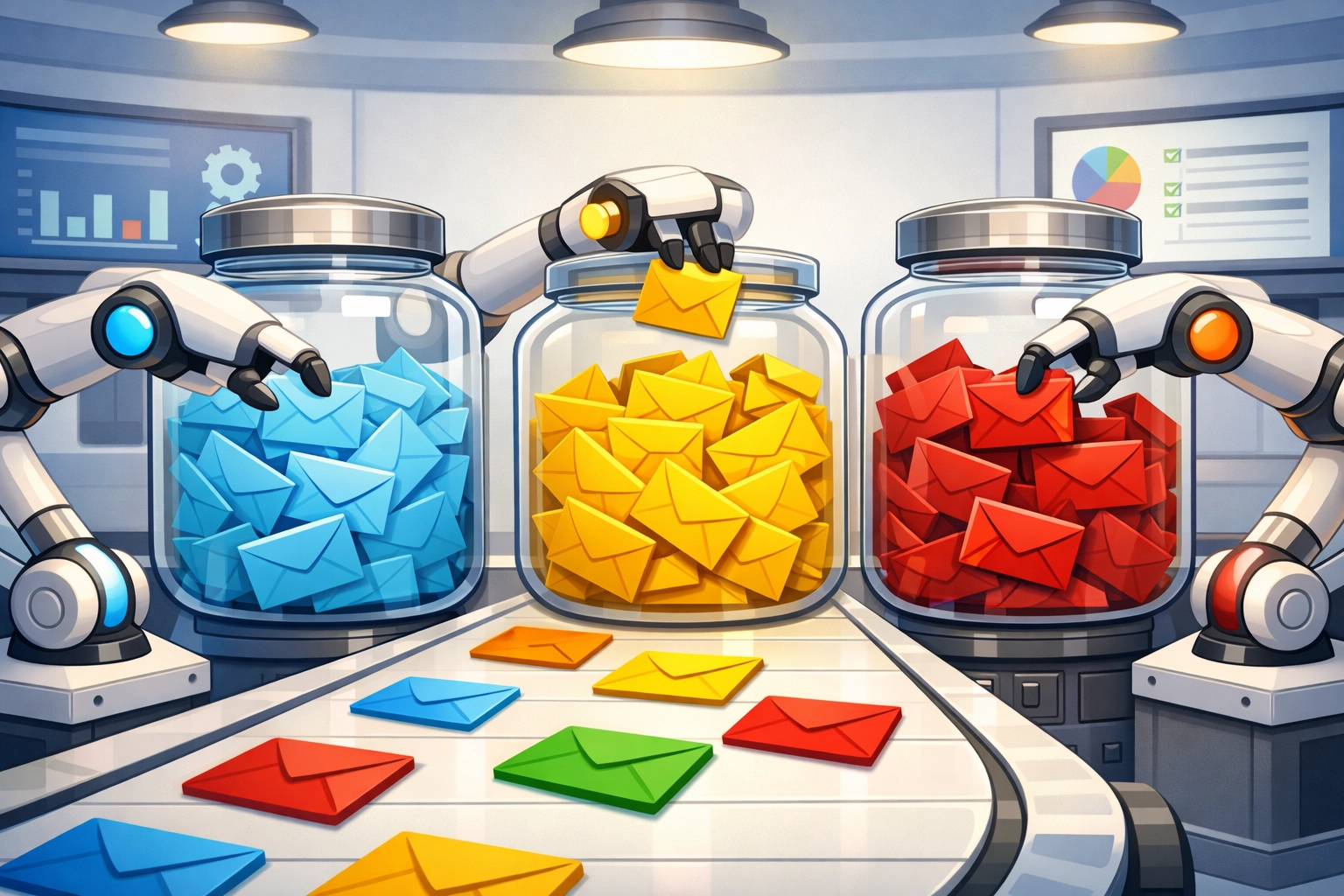
You need to categorise your leads based on their "buying intent."
- Top of Funnel (Awareness): They have a problem but aren't sure of the solution. They need education.
- Middle of Funnel (Consideration): They know the solution (your service) but are comparing you to others.
- Bottom of Funnel (Decision): They are ready to buy now.
By using a CRM (Customer Relationship Management) tool, you can tailor your messaging. Send educational content to the "Awareness" group and a direct call to the "Decision" group. This is the essence of conversion strategy.
Mistake 5: Focusing on "Features" Instead of "Solutions"
This is a classic "They Ask, You Answer" problem. Most SME owners are proud of their work. They want to talk about their 20 years of experience, their high-end equipment, or their "comprehensive suite of services."
The customer doesn't care.
The customer has a problem. They have a leaky roof, a tax bill they don't understand, or a marketing campaign that isn't working. They want to know one thing: Can you fix my problem?
The Fix: Address the Pain Points
Your lead handling, whether it's the initial phone call or the follow-up email, should focus entirely on the customer’s outcome.
- Instead of "We have 10 vans," say "We can get to you within 2 hours to stop that leak."
- Instead of "We are experts in Facebook Ads," say "We help you get a predictable flow of leads so you can stop worrying about where the next job is coming from."
Stop selling the plane; start selling the destination.
Mistake 6: The "One and Done" Follow-up
Most sales are made between the 5th and 12th contact. Yet, the vast majority of SMEs give up after one phone call or one email. If the prospect doesn't answer, the lead is often marked as "dead."
This is a massive waste of resources. People are busy. They get distracted. Their kid might have spilled juice on the carpet right as you called. It doesn't mean they aren't interested; it just means it wasn't the right moment.
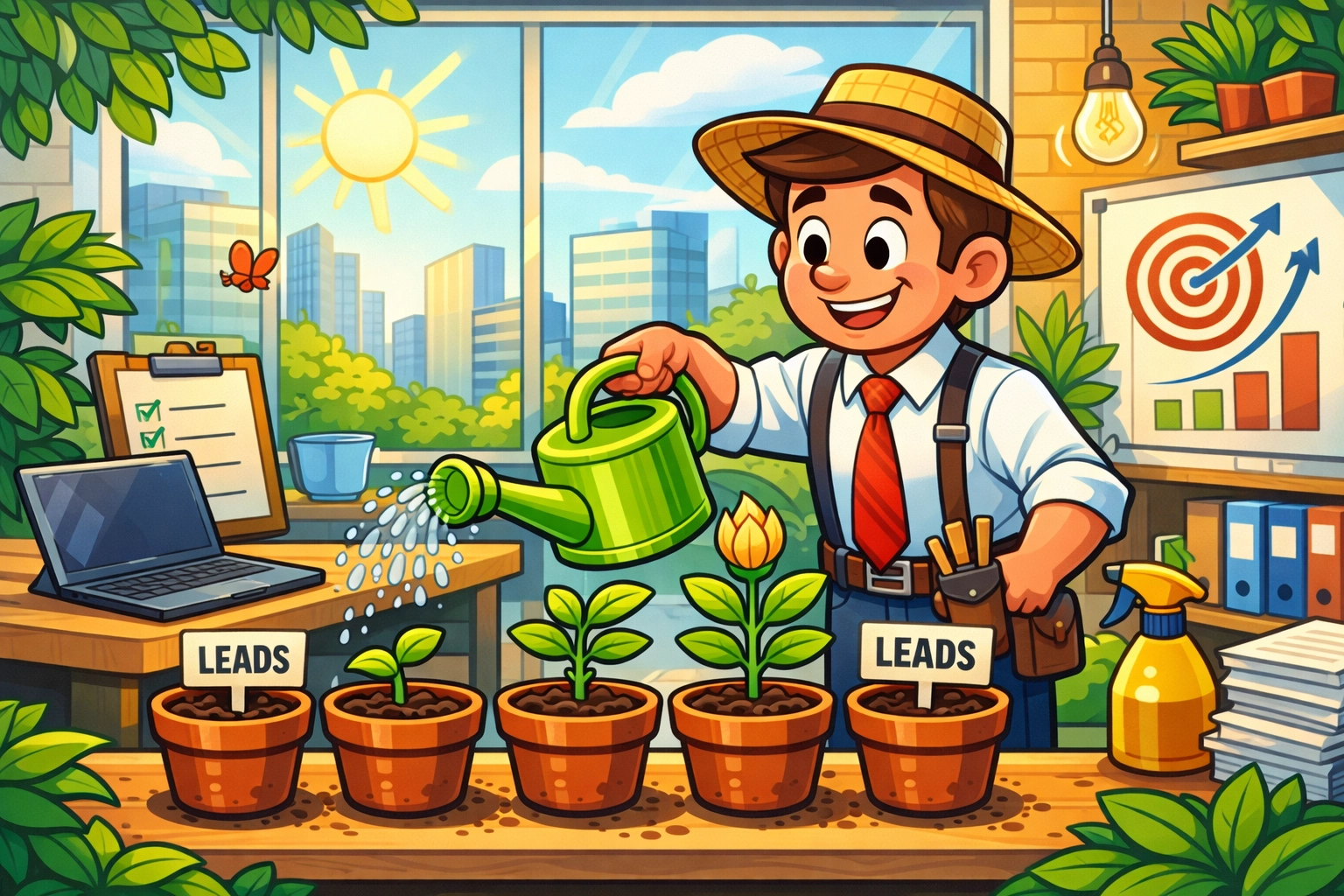
The Fix: Implement a Lead Nurturing Sequence
A lead isn't dead until they tell you to go away (or they buy from someone else). You need a multi-touch follow-up process:
- Day 1: Initial call + immediate email follow-up.
- Day 2: Second call attempt (different time of day).
- Day 4: SMS check-in.
- Day 7: Educational email (addressing a common question).
- Day 14: The "break-up" email (asking if they still need help).
Nurturing leads effectively is the difference between a 5% conversion rate and a 20% conversion rate. For more on this, see our article on 10 reasons your lead conversion isn't working.
Mistake 7: Buying Low-Quality Leads Without Vetting
In a desperate search for growth, many SMEs turn to "lead generation" companies that sell the same lead to five different businesses at once. This triggers a "race to the bottom" on price. You end up calling a lead who is already annoyed because four other people have called them in the last ten minutes.
The Fix: Quality Over Quantity
It is better to have 10 high-quality, exclusive enquiries than 100 "cheap" leads that don't convert. Focus on building your own lead generation assets, your website, your social presence, and your brand. If you do buy leads, ensure they are exclusive to you and that the vendor has a rigorous vetting process.
Lead Handling Methods: A Comparison
To help you understand where your business sits, let's compare the three common ways SMEs handle enquiries.
| Feature | The "DIY" Approach (Owner-Handled) | Digital Receptionist (Answering Service) | Every Enquiry (Managed System) |
|---|---|---|---|
| Response Time | Inconsistent (Whenever you're free) | Fast (But often just takes a message) | Instant (Integrated & Action-Oriented) |
| Lead Quality | High (You know your stuff) | Low (They don't know your business) | High (Qualified through your systems) |
| Follow-up | Rare (Too busy doing the work) | None (They just pass the lead on) | Automated & Managed Sequences |
| Cost | "Free" (But costs your time/sanity) | Low Monthly Fee | Scalable Investment based on growth |
| Visibility | Limited to your personal network | No impact | Full reporting across all channels |
| Predictability | Feast or Famine | Unpredictable | Predictable Growth |
The Cost of Inaction
What does a missed lead actually cost you?
Let’s say your average job is worth £1,000. If you get 20 enquiries a month but only convert 2 (10%) because your response is slow or your follow-up is non-existent, you’re making £2,000.
If you fix these seven mistakes and move that conversion rate to 25% (which is very achievable with the right services), you’re suddenly making £5,000 from the exact same number of enquiries.
You don't need more leads. You need to handle the ones you have with more respect for the investment you made to get them.

How Every Enquiry Can Help
We don't just "do marketing." We specialise in the entire journey from the first click to the final conversion. Our approach is designed specifically for service-based SMEs who are tired of the "spray and pray" method of advertising.
- Visibility: We optimise your digital presence so you are found by the people who need you most.
- Response: We help you implement systems that ensure no enquiry ever falls through the cracks.
- Conversion: We build the nurturing sequences and CRM integrations that turn "just looking" into "ready to buy."
If you’re ready to stop making these mistakes and start seeing real, predictable growth, check out our pricing or contact us today for a chat.
Frequently Asked Questions (FAQ)
1. I’m a one-person business; how can I respond in five minutes?
You can't always be on the phone, and that's okay. The key is automation. Use a "Digital Receptionist" or an automated SMS tool that tells the customer you've seen their enquiry and gives them a specific time you'll call back. It sets expectations and stops them from calling the next person on Google.
2. Is lead handling really more important than SEO?
Think of SEO as the road that leads to your shop. If the road is great but your shop door is locked when people arrive, the road doesn't matter. You need both, but most businesses find a much higher ROI in fixing their "shop door" (lead handling) before building more "roads" (SEO).
3. How many times should I follow up before it becomes annoying?
As long as you are providing value, you aren't being annoying. If every follow-up is "Do you want to buy yet?", that’s annoying. If your follow-up is, "Hey, I saw you were interested in [Service]. Here is a quick video explaining how we handle [Common Problem]," that is helpful.
4. What is the best CRM for a small business?
There is no "best," only the one you will actually use. For many SMEs, tools like HubSpot, Pipedrive, or even a well-organised Trello board are great starting points. The key is that it must allow you to track every lead from enquiry to sale.
5. Why shouldn't I just hire a cheap call answering service?
Standard call answering services are great for taking messages, but they rarely "sell" your business. They don't know your pricing, your availability, or your nuances. At Every Enquiry, we believe in integrated systems where the person or system answering the enquiry knows the context of the lead.
6. Does response time really matter that much for B2B?
Yes. B2B buyers are still people. They have deadlines and pressures. If they are reaching out to multiple vendors, the one who responds first often sets the agenda for the entire procurement process. Speed is a sign of professionalism.
7. What's the biggest "quick win" I can implement today?
Change your website contact form. Instead of just a "message" box, ask one qualifying question (e.g., "What is your biggest challenge with X?") and set up an automated "Thank You" email that includes a link to a helpful resource or your calendar.
Managing a business is hard enough without wasting your marketing budget. By addressing these seven lead-handling mistakes, you aren't just improving your sales: you're building a more resilient, professional, and predictable company.
If you want to see how we can help you fix your leaky bucket, take a look at our category on enquiry handling for more practical tips.